Free ChatGPT Plus for vets: who still qualifies, and how to claim
OpenAI says more than 20,000 people have claimed the free year. Here is the 12-month eligibility window, the claim steps and the bill to expect afterward.
OpenAI says more than 20,000 servicemembers and veterans have claimed a free year of ChatGPT Plus since the offer began.
It covers US servicemembers within 12 months of separation or retirement and veterans who left service within the past year.
You claim it yourself on a ChatGPT veterans page after a third-party military status check, not through the VA.
Plus normally costs $20 a month, and one guide warns the plan reverts to the paid rate after the year unless you cancel.
Quick read · 2 min
OpenAI's free year of ChatGPT Plus for the military is still open, and the company says more than 20,000 servicemembers and veterans have claimed it so far. The plan normally costs $20 a month.
Eligibility is tight. You must be a US servicemember within 12 months of separation or retirement, or a veteran who left within the past year. You sign up yourself on a ChatGPT veterans page and pass a third-party status check; the VA isn't involved.
Extras include more than 100 example chats written by OpenAI's veterans and a getting-started video.
One guide warns the plan reverts to the paid rate after 12 months unless you cancel.
OpenAI has in-person sessions in St. Louis, Nashville, Dallas and San Antonio this month, plus one online.
If you qualify, claim it while you are still inside the window, and mark the end date so the first paid month doesn't surprise you.
Free ChatGPT Plus for veterans is still available a year after it launched, and more than 20,000 people have already claimed it. OpenAI used Veterans Day to share that figure, along with a list of in-person classes running through November for people leaving the military.
The catch is timing. The offer isn’t a general military discount. It is built for the months around leaving the service, so you either have a separation or retirement date coming up within 12 months, or you left within the past year. Land inside that window and you get a year of a plan that normally costs $20 a month, worth $240 in total, plus job-hunting material written by OpenAI’s own veterans.
01
Who qualifies for free ChatGPT Plus for veterans
Two groups qualify, and both are defined by the transition out of uniform:
Servicemembers still on active duty whose separation or retirement is 12 months away or less.
Veterans who left military service within the past 12 months.
The offer is for the US military only. One veterans’ benefits guide lists the Coast Guard and Space Force among eligible branches, alongside the Marines, Army, Air Force and Navy. A veteran who left the service several years ago falls outside the window, however long they served.
It also isn’t run by the government. OpenAI has said the program has no tie to the Department of Veterans Affairs or the Defense Department, so nothing turns on automatically through your discharge paperwork. You have to sign up for it yourself.
02
How to claim the free year, step by step
You claim it through a dedicated veterans page on the ChatGPT website. A veterans’ benefits guide describes the steps like this:
Open the veterans claim page on the ChatGPT site.
Sign in to the ChatGPT account you want upgraded, or create a free account first.
Pick the option to verify your military status.
Complete the identity check run by an outside verification company.
Once you pass, Plus is switched on and you can start using it right away.
The same guide says approval is instant in most cases and that you don’t have to upload sensitive documents. When the program started, OpenAI named SheerID, a firm that confirms whether people belong to groups like the military, as the company handling that check. This year’s Veterans Day update from OpenAI thanks ID.me, a different identity service, alongside its community partners.
03
What you get beyond the $20 plan
The core is the regular ChatGPT Plus subscription, which brings faster responses and early access to new features. OpenAI added three extras aimed at people changing careers:
More than 100 example chats written by veterans on OpenAI’s staff, based on real tasks they faced. They are grouped by stage: planning your exit, the move itself, and settling into a civilian job.
A 30-minute getting-started video on OpenAI Academy, the company’s free training site, made by David Sperry, a 20-year Army veteran who works at OpenAI.
Onboarding help through OpenAI Academy, including live workshops.
The suggested uses are practical: turning military job descriptions into language a civilian recruiter understands, rehearsing interviews, getting plain-English explanations of benefits forms, and planning moves, schooling and money.
The idea came from inside the company. Vikki Lampton, an Army veteran who recruits for OpenAI’s robotics team, has said she started out by showing other people leaving the service how to use ChatGPT to describe their military work in civilian terms and get ready for interviews. Retired Gen. Paul Nakasone, a former NSA director on OpenAI’s board, has compared this sort of support to the GI Bill that helped veterans after World War II.
OpenAI has also addressed a harder question. Leaving the service can be a stressful time, and a company spokesperson said ChatGPT is trained to spot signs of distress and point people to real-world help, including resources made for veterans when it knows that’s who it is talking to.
04
What happens to your bill when the 12 months end
Plan for the end date now. One guide to the offer warns that once the free year finishes, the plan moves to the standard monthly charge unless you cancel, and it suggests putting the date in your calendar so it doesn’t catch you out. In the US, that standard charge is $20 a month.
That matters because the people this offer targets are often between paychecks. About 200,000 servicemembers leave the military each year, according to the VA’s transition program, and Katrina Mulligan, who leads national security partnerships for OpenAI for Government, said nearly 70% of veterans call finding work their biggest challenge. A year of free help with resumes and interviews is useful. A surprise charge the month after it ends is not.
A year in: 20,000 claims and more classes this month
OpenAI’s update gives a few examples of how people used the free year. Tilak Bhatnagar, an Air Force veteran, used it to get ready for a dozen interviews, explain his military work to civilian employers and compare job offers before joining a tech company. Sadarian Bell, also from the Air Force, turned nearly a decade of military healthcare work into a civilian resume and rehearsed interview answers out loud using voice mode. He called it his “career coach.” Navy veteran Kelli Ramirez used it to learn Amazon’s self-publishing process and has now published two books.
The training side has grown too. OpenAI Academy and its partners have run more than a dozen sessions reaching nearly 1,000 people from the military community, with seven more planned before the year ends. A workshop in Reston, Virginia, drew nearly 100 veterans and active-duty members, and at the American Legion’s yearly national gathering in Louisville, three sessions pulled in more than 80 of its members.
If you want help in person, these are the next dates OpenAI listed:
Nov. 12: St. Louis, run with NPower.
Nov. 14: Nashville, with Veterans Forge and the Wounded Warrior Project.
Nov. 17: a 30-minute session online.
Nov. 19 and Nov. 21: NPower events in Dallas and San Antonio.
06
Quick answers
Is ChatGPT Plus free for all veterans?
No. It covers US servicemembers within 12 months of separation or retirement and veterans who left the service within the past year.
How long does free ChatGPT Plus for veterans last?
Twelve months. After that, one guide says the plan switches to the normal $20 monthly charge unless you cancel.
Do I apply through the VA?
No. OpenAI runs the offer itself, and you prove your status through an outside verification service on the ChatGPT veterans page.
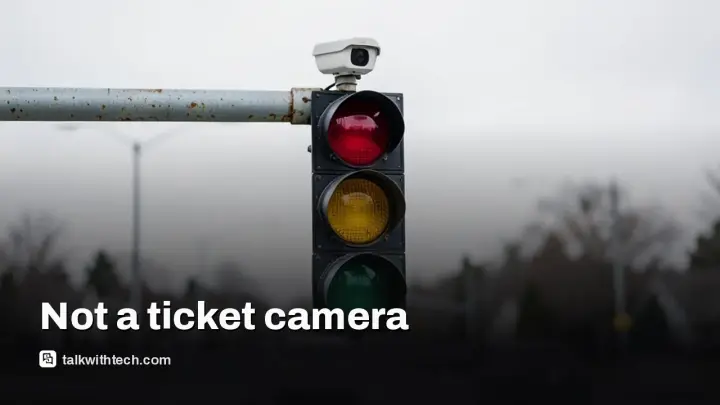
Those small white units above many intersections mostly decide when your light turns green. Here is how they work, what they store and how to spot real enforcement cameras.
8 min read
We use cookies to understand how readers use Talk With Tech, so we can make it better. Is that OK? Privacy policy
The Daily Brief
Today's biggest tech stories, in 5 minutes
Every morning, the news that matters from AI, phones, apps and the people shaping tech. Explained in plain English. Free.
One email a day. No spam, unsubscribe anytime. Privacy policy