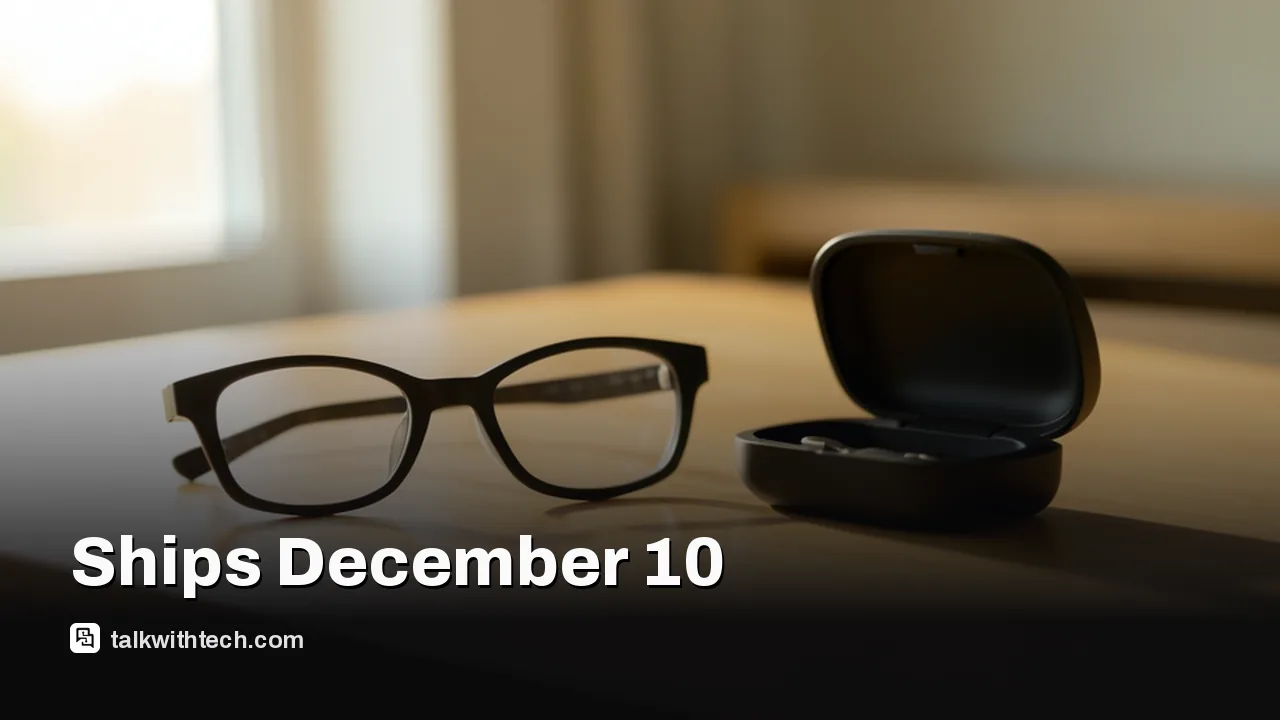
Google's Intelligent Eyewear smart glasses, built by Samsung, go on sale December 10, and preorders opened on November 12.
Warby Parker frames start at $395 in the US and Canada, while Gentle Monster frames start at $449 in the US and South Korea.
The glasses pair only with a Pixel 7 or newer, Galaxy phones on One UI 9.0 or later, and an iPhone 13 Pro or newer.
There is no screen in the lenses: you get a 12-megapixel camera, open-ear speakers, microphones and Gemini by voice.
Quick read · 2 min
Google's first Android XR smart glasses, called Intelligent Eyewear, go on sale December 10, and preorders opened on November 12. Samsung builds the hardware, while Warby Parker and Gentle Monster design the frames.
Warby Parker pairs start at $395 and are sold in the US and Canada.
Gentle Monster pairs start at $449 in the US and South Korea.
No UK launch has been announced.
The catch is phone support. You'll need an iPhone 13 Pro or newer, a Pixel 7 or newer, or a Galaxy phone running One UI 9.0 or later. Other Android brands aren't supported yet, and Google says it will share expansion plans in 2027.
There's no screen in the lenses. You talk to Gemini, take calls, play music, get spoken Maps directions and translate speech, and a 12-megapixel camera handles photos and video. Battery life is rated at nine hours, with a case that holds seven more charges.
The Google smart glasses release date is December 10. That’s the day Intelligent Eyewear, the first Android XR glasses built by Samsung with frames from Warby Parker and Gentle Monster, reaches buyers, and you can preorder a pair right now.
Here’s the twist that matters before you order: plenty of Android phones can’t use them. The glasses pair with Google Pixel phones, certain Samsung Galaxy models and newer iPhones, and nothing else for now. So an iPhone owner can wear Google’s glasses on day one while someone with a recent Xiaomi or Honor flagship can’t. Below is the full picture: dates, prices, the phone list, what the glasses actually do, and the one big feature that isn’t here yet.
01
Google smart glasses release date and where you can buy them
Preorders opened on Thursday, November 12, and retail sales start on December 10. Because you buy the glasses from an eyewear brand rather than from Google, the store you pick also decides where they ship.
Warby Parker Intelligent Eyewear: sold in the US and Canada, from $395.
Gentle Monster Intelligent Eyewear: sold in the US and South Korea, from $449.
United Kingdom: neither brand’s launch list includes the UK, and no UK price or date has been given.
Buying through an optical chain has a practical upside. Warby Parker and Gentle Monster have physical stores, so you can try a frame on before paying, and the eyewear brand is your first stop for problems with the device or your prescription. Google says the support work is split between the companies behind the scenes.
02
How much the frames cost, and what each brand offers
The electronics are identical in every pair. What changes is the frame, the lenses and the starting price.
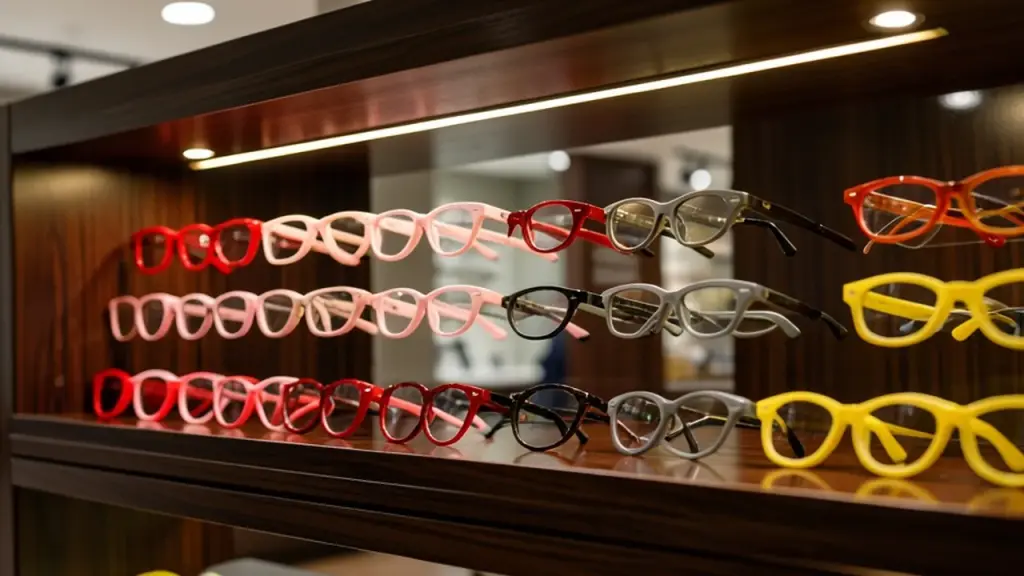
Warby Parker, from $395: three shapes called Alden, Reid and Wren, each as optical glasses or sunglasses. Colors are Jet Black, Saddle and Pine, with prescription, lens and width options. That works out to 14 variations.
Gentle Monster, from $449: six bolder frames in shades such as yellow, gray, pink and dark red, with clear, blue, brown or tinted lenses. Most designs take prescriptions, and there are 16 variations in total.
Across both brands there are 30 designs. The starting prices are what Google and its partners have announced; costs for prescription lenses on top haven’t been spelled out, so check the final total at checkout.
03
Which phones work with Google’s smart glasses
You need one of three phone families, and only recent models. The Glasses companion app supports:
An iPhone 13 Pro or any newer iPhone.
A Google Pixel 7 or newer.
Samsung’s Galaxy S, Galaxy S FE, Galaxy Z Fold, Z Flip and Fold Ultra lines, as long as the phone runs One UI 9.0 or higher.
Phones from other Android makers, including Oppo, Honor and Xiaomi, aren’t supported at launch. A Google spokesperson said the company will share more about plans to widen phone support in 2027, after launch, but gave no list or date.
The iPhone support is more than a basic Bluetooth link. The glasses carry Made for iPhone certification, which lets them use a fast Wi-Fi connection to move photos and videos, and the iOS app does the heavy processing and saves clips of up to 90 seconds straight to Apple Photos. On an iPhone, Gemini can place calls, read your notifications and send one-to-one messages, iMessage included.
Watch owners get an extra: a Pixel Watch or Galaxy Watch can control the glasses with gestures, such as a double pinch to play or pause. Fitbit Air support is due next year.
04
What the glasses do, and the screen they don’t have
There’s no display in these lenses. Think of them as headphones, a camera and Gemini that you wear on your face, closer in idea to Meta’s Ray-Ban glasses than to a headset.
Gemini by voice: these are the first devices with a new “Hey Gemini” wake phrase, though “Hey Google” still works. You can ask about what you’re looking at, such as a mural or an event poster, and have Gemini check your calendar or add something to a shopping list.
Calls, messages and music: two open-ear speakers handle calls and audio from Spotify, Apple Music, YouTube Music and Audible, and the glasses can summarize notifications you missed.
Navigation and translation: Google Maps gives spoken turn-by-turn directions, and live Google Translate covers more than 70 languages.
Camera: a 12-megapixel ultra-wide camera shoots photos and video at up to 3K, with stabilization and HDR.
Accessibility: Gemini Guided Vision describes surroundings out loud for people with low vision, for example reading small print or telling colors apart.
Google has shown versions with a display built into the lens, which could put directions or live captions in front of your eyes. Juston Payne, Google’s senior director of product management for XR, says those are being tested by people outside Google and remain on the plan, but there is no release window. If an on-lens screen is what you want, these first models won’t give you one.
The frames weigh around 41 grams, which keeps them close to ordinary glasses. Inside is Qualcomm’s Snapdragon AR1 Gen 1 chip with 2GB of RAM and 64GB of storage, plus Bluetooth 5.4, Wi-Fi 6E and IPX4 splash resistance.
Battery: rated at nine hours, with a charging case that holds seven full recharges.
Controls: a touchpad on the arm for taps and swipes, a capture button, and voice.
Off switch: a physical switch turns the smart parts off so they work as plain glasses.
On privacy, a white light shows people nearby when you’re taking a photo or video, and recording stops if that light is covered. Google also says images Gemini looks at aren’t kept in your Gemini History or used for ads or AI training.
06
What this means if you’re thinking of buying
For most people the decision comes down to two checks. First, your phone: if it isn’t on the list above, the glasses won’t pair, whatever you pay. Second, your expectations: this generation is about hearing and talking to Gemini, not seeing information in your lenses.
If both checks pass, preordering through Warby Parker in the US or Canada, or Gentle Monster in the US, gets you in line for December 10. Trying a frame on in a store first is the safest way to judge fit and weight before you commit.
07
Quick answers
When do Google’s smart glasses come out?
They go on sale December 10. Preorders opened on November 12 through Warby Parker and Gentle Monster.
Do Google’s smart glasses work with an iPhone?
Yes, with an iPhone 13 Pro or newer. They’re Made for iPhone certified and save photos and videos to Apple Photos.
Do the Google glasses have a display?
No. The first Intelligent Eyewear models rely on audio, a camera and Gemini. Display versions are in testing with no release date.