Tuesday, 20 October 2026

iPhone made in USA? Nearly 100 parts now are, but not the phone

Apple is putting up to $100 million into a Pennsylvania titanium maker for the foldable iPhone Duo. Here's which parts are American-made and what that changes.

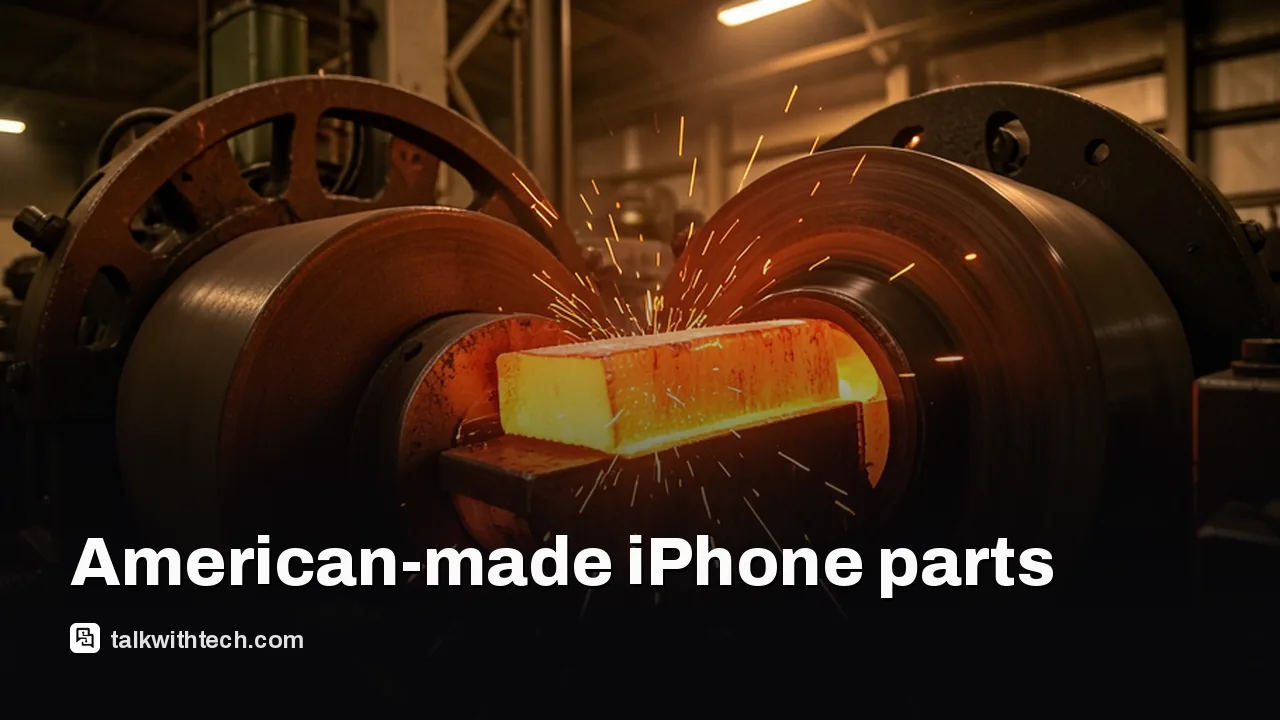
A glowing metal slab moving through rolling machinery in a forge

The short version

  • Apple says US companies make nearly 100 components in the iPhone Duo and iPhone 18 Pro, across more than a dozen states.
  • It will commit up to $100 million over three years to Perryman, a Pennsylvania titanium maker supplying iPhone Duo.
  • Delaware-based Qnity Electronics will make films for the iPhone 18 Pro's variable aperture camera.
  • The phones themselves are still not assembled in the US; the parts push is part of Apple's $600 billion US pledge.
Quick read · 1 min

Apple says US companies now make nearly 100 components in the iPhone Duo and iPhone 18 Pro, from suppliers in more than a dozen states. The newest deal commits up to $100 million over three years to Perryman, a Pennsylvania company that will supply recycled titanium for the foldable iPhone Duo's enclosure.

Delaware's Qnity Electronics will also make films for the iPhone 18 Pro's variable aperture camera.

  • All iPhone and Apple Watch cover glass sold worldwide will come from Corning in Kentucky by the end of 2026.
  • TSMC's Arizona plant will make more than 100 million Apple chips this year.
  • The phones are still not assembled in the US.

The move is part of Apple's $600 billion US manufacturing pledge and could make iPhone supply more predictable.

The titanium shell of Apple’s first foldable iPhone will come from a family-owned mill in Pennsylvania. On Tuesday, Apple pledged as much as $100 million across three years to Perryman Company, which will supply titanium for the iPhone Duo, and added that US companies now make nearly 100 components across the iPhone Duo and iPhone 18 Pro.

So is the iPhone finally made in the USA? Not quite, and the difference matters. Apple still doesn’t assemble iPhones in America. What it’s doing is moving more of the parts inside them onto US soil, piece by piece. For buyers, that touches everything from how scratch-resistant your screen is to whether the next launch sells out.

01

Is the iPhone made in the USA now?

No. The iPhone is not assembled in the United States. Apple’s long-running answer to that criticism is that many of the parts come from American manufacturers, and Tuesday’s announcement puts a number on it: nearly 100 components in its two newest premium phones are produced by US companies in more than a dozen states.

The work sits under Apple’s American Manufacturing Program, launched in 2025 as part of a $600 billion, four-year pledge to invest in US manufacturing and innovation by the end of 2029. By Apple’s count, it buys from suppliers in every one of the 50 states, backing more than 450,000 jobs in America. Apple CEO John Ternus also promoted the announcement in a post on X.

Rows of automated equipment in a chip factory clean room
02

The two new deals: titanium and camera films

Apple named one new partner and expanded work with another.

  • Perryman Company (Pennsylvania). Apple is committing up to $100 million over three years. Perryman melts, forges and rolls titanium at its site in Houston, Pennsylvania, and will supply the grade 5 titanium used in the iPhone Duo’s enclosure. Grade 5 is a strong titanium alloy, and the metal Perryman supplies contains at least 80% recycled material.
  • Qnity Electronics (Delaware). Qnity joined the program in March and will produce specialized films in America for the adjustable aperture on the iPhone 18 Pro’s 48MP main camera, which Apple calls the Fusion camera.

That variable aperture is the headline camera feature of the iPhone 18 Pro. The aperture is the opening that lets light into the lens. The phone adjusts it automatically, opening wider in dim light and adjusting in bright scenes for sharper detail. Apple calls it the most advanced camera system it has made.

Apple chief operating officer Sabih Khan said the company is proud to be expanding its program and supporting “U.S. jobs.”

03

The other American parts inside your iPhone

Apple also listed progress at five existing US suppliers. Together they show which parts of an iPhone are now most American:

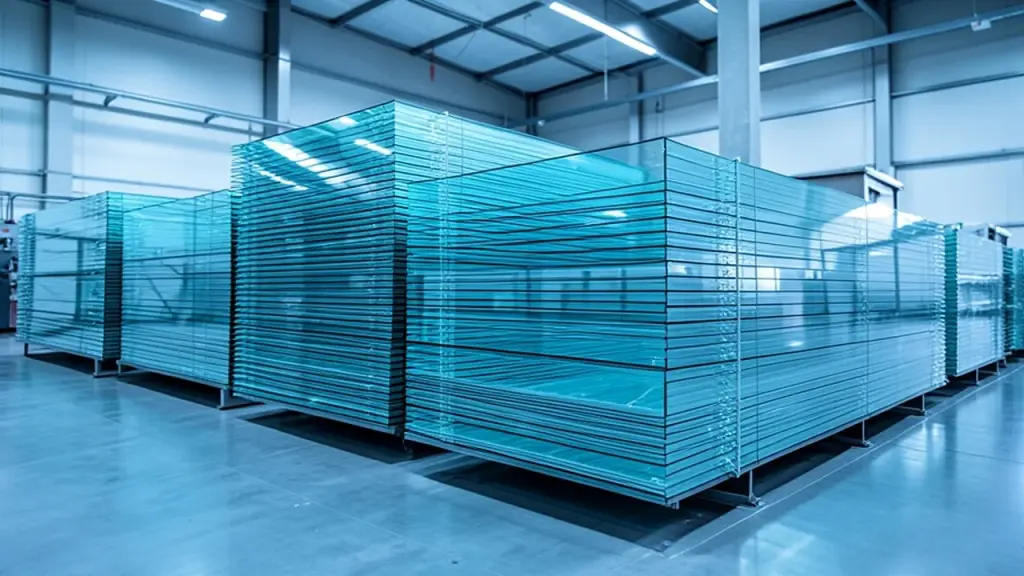
  • Screen glass from Kentucky. Corning, an Apple partner since the first iPhone in 2007, makes specialty glass including Ceramic Shield in Harrodsburg, Kentucky. By the end of 2026, Apple says all the cover glass for every iPhone, including the Duo, and every Apple Watch sold worldwide will come from that one plant.
  • Chips from Arizona. TSMC’s Arizona plant will make more than 100 million chips for Apple products in 2026, used in iPhone, iPad and Apple Watch. Construction on its north campus is continuing.
  • Radio parts from Colorado. Broadcom is expanding its Fort Collins facility under a $1.5 billion investment announced in July, making radio frequency components that help devices connect to networks. The multiyear deal covers more than 15 billion US-made chips.
  • Face ID lasers from Texas. Coherent supplies the laser technology behind Face ID from Sherman, Texas. It also supports features including the redesigned Dynamic Island on the iPhone 18 Pro and 18 Pro Max.
  • Chip packaging in Arizona. Amkor Technology broke ground on a large chip packaging and testing plant in Peoria, Arizona, in September 2025. Apple is lined up as one of its earliest customers, and Amkor expects more than 3,500 local hires across the plant’s first two phases.
Sheets of specialty glass stacked on factory racks
04

What this means for iPhone buyers

You won’t see a price change or a “Made in USA” sticker from this. Apple didn’t link the announcement to iPhone prices, and none of the components named change how your phone works.

The practical effect is on supply. Chips and cover glass are bottleneck parts: if they run short, phones don’t ship. Making more of them closer to home can cut shipping delays and reduce the risk of trade-policy surprises, which could make launch seasons more predictable.

There’s a catch. When all of the world’s iPhone cover glass comes from a single Kentucky plant, any problem there affects every buyer, everywhere. Concentrating a must-have part in one place makes supply simpler to manage but riskier when something goes wrong.

05

Why Apple keeps making these announcements

Apple regularly faces accusations that the iPhone isn’t made in America, and these announcements are its rebuttal. Each new partner adds a US factory, jobs and a domestic source for a critical material, which helps Apple’s case with politicians and customers alike.

Apple is also using its Advanced Manufacturing Center in Houston, Texas, a 20,000-square-foot site that opened in August, where Apple engineers teach smaller manufacturers skills like final assembly and circuit board design. The same building holds Apple’s AI server factory, and Apple plans to start building the Mac mini there this year.

Final iPhone assembly is the piece still missing. Until that moves, the honest label is “iPhone with a lot of American parts.”
06

Quick answers

Which iPhone parts are made in the USA?

Apple says nearly 100, including iPhone Duo titanium, iPhone 18 Pro camera films, cover glass, Face ID lasers, radio chips and processors made in Arizona.

Where is the iPhone Duo titanium made?

At Perryman Company’s site in Houston, Pennsylvania, using titanium with at least 80% recycled content.

Will a US-made iPhone cost more?

Apple hasn’t announced any price changes tied to these partnerships.

You're reading the quick version.