Saturday, 28 November 2026

AI cyberattack Switzerland: 4 break-ins and a 24-hour patch rule

Swiss officials confirmed five attacks run with AI agents, four of them successful, as Italy and Britain report the same fast, automated pattern on their networks.

Dark network operations room with server racks and blurred monitors at night

The short version

  • Switzerland's National Cyber Security Centre confirmed five attacks carried out with AI agents, and four of them got in.
  • Three targeted critical infrastructure operators and two of those succeeded, with no major outages reported and no victims named.
  • Italy and Britain report the same pattern: automated agents chaining old weaknesses at high speed and low cost.
  • The Swiss agency wants critical patches on internet-facing systems installed within 24 hours, plus MFA or passkeys everywhere.
Quick read · 2 min

Switzerland's National Cyber Security Centre has confirmed the country's first cyberattacks carried out with AI agents. Of five cases reported in recent days, four ended in a break-in, including two at critical infrastructure operators. No major outages were reported, and neither the victims nor the attackers have been named.

The agents work on their own: they scan for weak passwords and known, unpatched flaws, try an attack, and switch methods if blocked. Italy saw several agents break into many systems within hours, and Britain reports a marked rise in AI-assisted attacks since September.

  • Tools named in the warnings include ARTEX, CyberStrikeAI, PentAGI and a DeepSeek-branded red-team agent.
  • The FBI says ARTEX can get inside a network in less than three hours.
  • Switzerland wants critical patches on internet-facing systems within 24 hours.

For everyday users, the best defense is unchanged: MFA or passkeys, updates and unique passwords.

Four out of five. That is how often attackers using AI agents managed to break into Swiss organizations in the first confirmed cases of their kind, and two of the victims run critical infrastructure. The figures, the first AI cyberattack Switzerland has officially counted, came from Florian Schütz, who directs the country’s National Cyber Security Centre (NCSC), in an interview with the public broadcaster SRF this week.

Why should anyone outside Switzerland care? Because the attacks don’t depend on anything Swiss. The AI agents went after weak passwords and known, unpatched flaws on systems facing the internet, basic gaps that are not unique to any one country. Italy’s national response team and Britain’s NCSC describe the same pattern on their own networks, and the main tool named in the warnings is already on the FBI’s radar.

01

What the AI cyberattack in Switzerland actually hit

The Swiss NCSC has five confirmed cases, all reported to it in recent days. Three went after critical infrastructure operators, and two of those three got in. Across all five cases, the attackers broke into systems four times.

In Switzerland, critical infrastructure covers suppliers of things like electricity, drinking water and telecoms, SRF reported, and the targeted operators come from at least two sectors. Small and medium-sized businesses were also hit, and they came forward to the agency on their own. Schütz said there were no major outages.

Some things are still unknown:

  • Who the victims are. The NCSC isn’t naming them and leaves it to each organization to speak for itself.
  • Who is behind it. No group has been identified.
  • Why the count changed. The agency’s first advisory, published on Tuesday, said AI agents had compromised the victim’s systems in every case it knew of. By Thursday’s interview the tally was four break-ins out of five, and neither the advisory nor the broadcast explains the difference.
Electrical substation in a mountain valley at dusk
02

How an AI agent breaks in without a human at the keyboard

The Swiss agency calls the tools “agentic offensive frameworks”. In plain terms, these are AI programs that hunt for security holes on their own, choose an attack tool, check whether it worked and then plan the next move. Security teams use the same kind of software legitimately to test their own defenses, which is part of why it is easy to get.

Speed is the real change. The agents can scan for known flaws and run many attacks at once, in a fraction of the time a human hacker would need. When a defense blocks one route, they switch to another known method. That squeezes the window a company has to notice an intrusion and react.

Italy’s CSIRT Italia, which watched some campaigns firsthand, saw several agents working in parallel break into a large number of systems within a few hours. In one setup built on an open-source DeepSeek agent kit, a coordinator handed out jobs to five agents covering everything from gathering information to breaking in and staying hidden. The Italian team said the agents even wrote malicious code on the fly to slip past security software on computers.

The frameworks named in the Swiss and Italian warnings are:

  • PentAGI
  • CyberStrikeAI
  • A DeepSeek-branded red-team agent, an open-source tool whose Red Team Mode uses a built-in prompt to get around the safety limits of the AI model underneath
  • ARTEX

The Swiss NCSC listed ARTEX and CyberStrikeAI as examples of agents anyone can reach online, not as the tools used in its five cases. It says the number of such tools freely available has nearly doubled since October. That counts tools, not attacks.
03

Italy and Britain are seeing the same pattern

This isn’t a one-country story. CSIRT Italia described mass break-in campaigns in a bulletin this week. Britain’s National Cyber Security Centre published guidance saying it has seen a marked rise in AI-assisted attacks since September 2026.

The British agency’s findings are the most reassuring part of the picture, oddly enough. The holes being used are old ones: passwords left inside code stored online, badly set up cloud systems, logins with no password or a default one, and weak points in APIs (the connectors apps use to talk to each other). What’s new is how fast, persistent and cheap the attacks have become. The British agency also notes that the frameworks are noisy, which makes them easier to catch.

Some UK incidents knocked internet-facing services offline for a while. Others gave the attackers a foothold for more automated activity later.

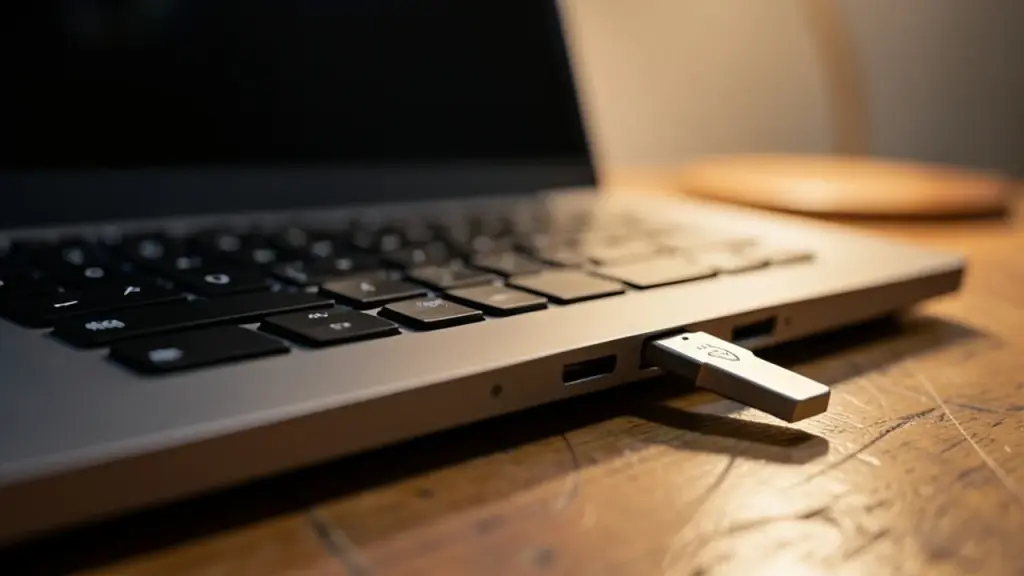
Hardware security key plugged into a laptop on a desk
04

The US link: ARTEX and state hackers

ARTEX is the name that connects these European warnings to North America. The FBI says ARTEX needs less than three hours to get inside a network. Microsoft, for its part, said this week that government-backed hacking groups in North Korea and China have picked it up.

It has also already hit a major institution. The European Commission has confirmed that attackers using ARTEX got into its human resources, medical reimbursement and translation systems, in an intrusion first detected on October 22.

05

What this means for your workplace and your accounts

For most people, the risk sits with the organizations that hold their data and run their services: the water utility, the phone company, the small firm that does their payroll. Raphael Reischuk, a co-founder of Switzerland’s National Test Institute for Cybersecurity, told SRF he expects a major wave of attacks and that many smaller companies lack the resources to keep systems up to date.

Schütz summed up the logic in one line: if there is no vulnerability, an AI agent can’t get in either. That makes the basics more valuable, not less. For you, that means turning on multi-factor authentication or passkeys wherever a service offers them, and not reusing passwords, since compromised credentials are one of the links these agents chain together.

06

The 24-hour rule and other fixes the agencies want

The three agencies agree on one goal: give attackers less time. Their advice overlaps:

  1. Patch fast. Switzerland wants critical updates on internet-facing systems installed within 24 hours of release. Italy says to fix flaws already being exploited first.
  2. Expose less. Cut down what can be reached from the internet, using allow lists, geo-blocking and a login in front of services. Italy adds: switch off remote management screens you don’t need, and cut off systems that can’t be patched quickly.
  3. Lock the doors. Put MFA or passkeys on webmail, VPNs and anything else reachable online, and give accounts only the access they need.
  4. Watch the traffic. Each agent action can look like normal user traffic, so the clues are in context: bursts of requests, high error rates, odd data volumes and unusual sources.
  5. Set traps. Britain suggests bot challenges on valuable pages and decoy credentials, called honeytokens, to catch and slow agents.

The Swiss NCSC is also sharing technical warning signs of these attacks with critical infrastructure operators, and Italy has published indicator feeds that it says change quickly and only hold for their stated timeframes.

07

Quick answers

Did the AI cyberattack in Switzerland cause blackouts or water outages?

No major outages were reported. Two critical infrastructure operators were breached, but the NCSC hasn’t named them or described any disruption.

Which AI tools are hackers using?

Warnings from Switzerland and Italy name ARTEX, CyberStrikeAI, PentAGI and a DeepSeek-branded red-team agent. Switzerland hasn’t said which ones were used in its own five cases.

How do I protect myself from AI-driven attacks?

Use MFA or passkeys, keep devices and apps updated, and use a different password for each account. The agents mostly exploit old, known weaknesses.

You're reading the quick version.