Friday, 27 November 2026

Ken Kutaragi Xbox claim: why he told Microsoft no on purpose

The father of PlayStation says turning down Microsoft was a plan to pull it into consoles, and he now warns AI and prices could end them.

Two unbranded game consoles side by side on a living room media stand

The short version

  • Ken Kutaragi says he refused a Microsoft offer of free hard drives and licenses so the company would build its own console.
  • He calls that refusal his secret intention and says the two companies later grew the console business together.
  • Kutaragi also denies the PlayStation was revenge on Nintendo, saying he loves Nintendo and its games.
  • He now warns that high hardware prices and small AI systems could one day make consoles unnecessary.
Quick read · 1 min

Ken Kutaragi, the engineer who led the first PlayStation, says he turned down a Microsoft offer on purpose. In a talk at a UK games event, he recalled Microsoft's boss offering Sony free hard drives and license rights. He said no, hoping Microsoft would then build its own console. It did, and the original Xbox launched in November 2001.

He also rejected the old idea that the PlayStation was revenge on Nintendo, saying he loves Nintendo and its games. And he warned that rising hardware prices and small AI systems could one day make consoles unnecessary, while stressing that this is his own view, not Sony's.

  • His Microsoft story is his memory of a private meeting.
  • He now runs Cyber AI Entertainment.
  • Sony stops making physical game discs in January 2028.

The Ken Kutaragi Xbox story just got a twist nobody expected: the man who built the first PlayStation says he wanted Microsoft to make a console, and he said no to its offer on purpose to make that happen. Speaking at the Game Republic New Horizons event in Middlesbrough, in the north of England, Kutaragi described a private meeting with the head of Microsoft and called the refusal his “secret intention.”

If he is right, one of the biggest rivalries in gaming started as a deliberate push. And Kutaragi had more to say, about Nintendo, about prices and about whether you will need a console at all in the future.

01

What Ken Kutaragi says happened with Microsoft and Xbox

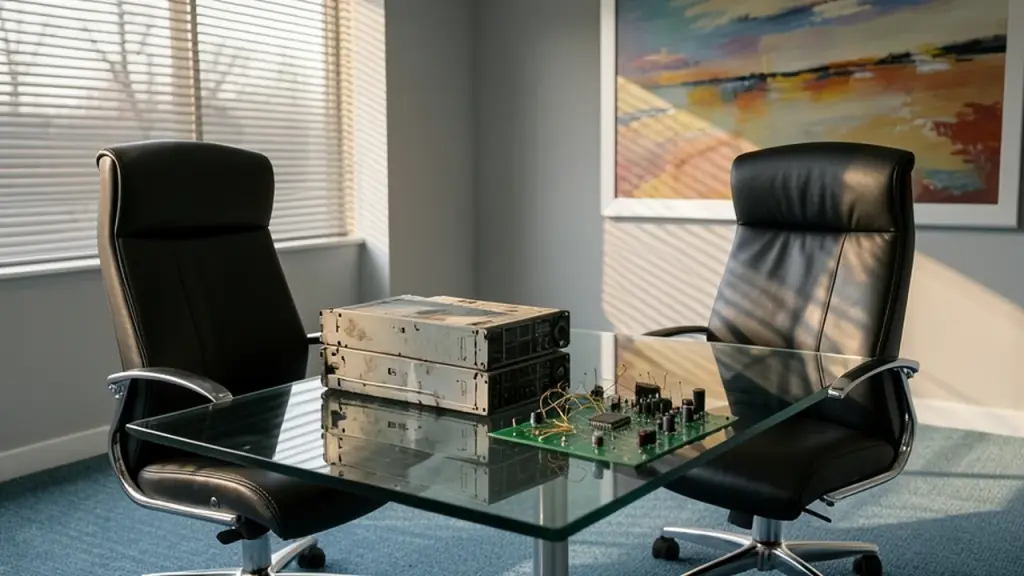
Kutaragi says Microsoft tried to bring Sony in as a partner, and he refused so Microsoft would go it alone. In his telling, he sat down one-to-one with Microsoft’s boss and showed what Sony was building for real-time 3D graphics in the home.

Microsoft’s answer, he says, was an offer: it would send Sony free hard disk drives and hand over some license rights. Kutaragi described the executive as “so arrogant” and says he answered with a single word, no.

His reasoning is the surprising part. He says he hoped that a refusal would push Microsoft to create its own games platform beyond the PC. Microsoft did exactly that, he says, and spent huge sums doing it. Afterward, in his words, the two companies worked together to open up the field, and he insists all of it was very intentional.

He didn’t name the Microsoft executive in the remarks that have been reported, and he gave no date for the meeting.

Meeting room table with old hard drives and a circuit board prototype
02

How the original Xbox turned out

Microsoft launched the first Xbox in November 2001, and it found success quickly thanks to games like Halo: Combat Evolved. It went straight into a three-way fight with Sony’s PlayStation 2 and Nintendo’s GameCube, which reached US stores in the same month.

So whatever pushed Microsoft into hardware, the result is easy to see. A software company best known for Windows became a console maker, and the PlayStation gained a rival with very deep pockets.

It’s worth treating Kutaragi’s version with some care. This is one person’s memory of a private meeting, told many years later, and it casts him as the one who saw the future. It could be exactly right. It could also be a good story that got polished over time. Read it as his account, not settled history.

03

“Totally no”: the Nintendo revenge myth

Kutaragi used the same interview to knock down an even older tale, that Sony made the PlayStation to get back at Nintendo. Asked about it, his answer was blunt: “Totally no.”

The background is real. Sony and Nintendo worked together on a CD add-on for the Super Nintendo, and the project got a long way before Nintendo backed out and announced a deal with Philips instead. That Philips partnership led to the CD-i, which flopped. Sony carried on with its own disc-based machine, and the PlayStation arrived in Japan in 1994 and in the US and Europe in 1995.

Plenty of people have told that split as a betrayal that fueled a grudge. Kutaragi says the press invented that angle. He describes taking the bullet train to Nintendo’s headquarters every week, feeling like part of the team, and even being mistaken by one staff member for a Nintendo employee. He says one of his counterparts there was his best business friend and that he loves Nintendo games.

He has deep roots in Nintendo hardware, too. He designed the sound chip in the Super Nintendo and called that work a very nice collaboration.

Small connected computing modules on a desk with a dark TV behind
04

The fight inside Sony nobody remembers

The bigger battle, by his account, was at home. Kutaragi says many at Sony saw games machines as toys and wanted to stick to what the company already did. He recalls an older colleague crying and protesting that Sony was “not a toy company.”

That resistance didn’t stop him. The PlayStation became a huge hit, and Sony’s games division turned into the company’s most profitable business. Kutaragi led PlayStation from its first console through three generations and left Sony in 2007, shortly after the PlayStation 3 launched. The PS3 had a rough start, and his time at the top ended with it.

05

Why Kutaragi thinks you may not need a console

Here is the part that matters most for your next purchase. Kutaragi now warns that the console itself could fade away. “The age may be coming where we don’t need any consoles,” he said, calling it “a real danger.”

He points to two forces. The first is price. Graphics cards and other core parts have become so expensive that he compares a high-performance gaming PC to the cost of a car, and he calls the situation unhealthy. Since the PS4 era, Sony and Microsoft have built consoles that look more and more like PCs inside, which makes porting games easier but ties console costs to PC parts. If chip and GPU prices keep climbing, cheap consoles get harder to sell.

In an earlier talk at the same event, he also questioned the way big games are made, saying that spending several years with several thousand people is almost impossible to sustain. He added that gaming hardware has become “super expensive” for more and more players.

The second force is AI. Kutaragi now runs Cyber AI Entertainment and also heads Ascent Robotics, and he is dean of the information science faculty at Kindai University. His vision is a network of small, energy-efficient AI systems that talk directly to each other, instead of giant data centers or pricey boxes under the TV. He says that kind of platform would be neither a phone nor a living room console.

He was clear that this is his personal view and not Sony’s official position.
06

What this means for you as a player

For now, nothing changes in your living room. The next round of consoles will still be boxes you plug into a TV, and small AI systems are years away from running complex 3D games without lag. What Kutaragi’s warning does flag is cost. If parts stay expensive, the hobby gets pricier, and that is already showing in recent hardware.

Discs are another cost question he has weighed in on. Last month he said he understood fans’ frustration with Sony’s plan to stop making physical game discs, which takes effect in January 2028, but argued that pressing discs no longer makes economic sense. If you care about owning games, that date is the one to keep in mind.

07

Quick answers

Did Ken Kutaragi really cause Microsoft to make the Xbox?

He says his refusal of a Microsoft partnership offer was meant to push it into consoles. That is his own account of a private meeting with Microsoft’s boss.

Did Sony make the PlayStation as revenge on Nintendo?

Kutaragi says no. He says he loves Nintendo and calls the revenge story a media invention.

What is Ken Kutaragi doing now?

He is CEO of Cyber AI Entertainment, heads Ascent Robotics and is dean of the information science faculty at Kindai University.

You're reading the quick version.