Monday, 19 October 2026

European Starlink alternative for phones: four carriers team up

Vodafone, Orange, Deutsche Telekom and Telefonica want shared satellite airwaves so your phone works in dead zones, without relying on Elon Musk.

A hiker on a remote mountain ridge holding a phone up toward the dusk sky

The short version

  • Deutsche Telekom, Orange, Telefonica and Vodafone signed a letter of intent to explore a joint bid for satellite spectrum.
  • The goal is phone-to-satellite coverage in dead zones, offered wholesale to every mobile network in Europe.
  • The carriers will build ground networks but need an outside partner, not yet chosen, to supply the satellites.
  • The move lands amid a growing US-EU fight over whether Europe can favor its own companies for these airwaves.
Quick read · 1 min

Vodafone, Orange, Telefonica and Deutsche Telekom are studying a shared bid, set out in a new letter of intent, for the satellite airwaves that let normal phones connect to satellites in dead zones. It's being read as the first step toward a European rival to Starlink.

The four would build the ground network and sell access to every mobile carrier on equal terms, but they won't build satellites themselves. A partner hasn't been chosen. The spectrum they want, in the 2 GHz band, frees up when current licenses expire in May 2027.

  • Existing deals, including O2's Starlink service in the UK, stay in place.
  • The EU wants to reserve most of the band for European firms.
  • US officials have threatened retaliation if it does.

Nothing changes for phone users yet, but the fight over who controls satellite coverage in Europe is heating up.

Four of Europe’s biggest phone companies don’t own a single satellite between them for this plan, yet they want to take on Starlink in space. The four, Vodafone, Orange, Telefonica and Deutsche Telekom, have put their names to a formal pledge to study a shared bid for the airwaves that let ordinary phones connect straight to satellites, a move widely seen as the start of a European Starlink alternative.

If you’ve ever lost signal on a hiking trail, a rural road or a ferry, this is about you. Phone-to-satellite service is how carriers plan to wipe out dead zones, and whoever controls it in Europe decides the price, the coverage and who gets access.

01

What the four carriers actually agreed

They agreed to talk seriously, nothing more yet. The letter of intent commits the four to explore a combined bid for mobile satellite services spectrum, the radio frequencies set aside for satellite links, when Europe hands out new rights next year.

The plan they describe has three parts:

  • Wholesale access for everyone. The service would be sold to all mobile networks on equal terms, not kept for the four founders.
  • European ground control. The carriers would build the ground network and run the key coordination and monitoring work from inside Europe.
  • Someone else’s satellites. They won’t build or pay for a constellation directly. A satellite partner, still to be picked, would supply that.

The companies say the aim is coverage in underserved areas, tougher public networks and protection for critical communications, plus support for a homegrown constellation. Their statement doesn’t name Starlink. It doesn’t need to.

A communications satellite orbiting above Europe at night
02

Direct-to-device, explained in plain English

Direct-to-device, often shortened to D2D, means your normal phone talks to a satellite overhead when there’s no cell tower in range. No dish, no special handset. Today it mostly handles texts and basic data, but it’s improving fast.

Starlink already sells this through phone companies. It works with T-Mobile in the US, and in the UK, Virgin Media O2, which is part-owned by Telefonica, offers a satellite service through Starlink. SpaceX also has bigger ambitions: it wants spectrum of its own so it can sell mobile service directly, without local carriers in the middle.

That’s the real fear. One industry analyst at Ookla, Luke Kehoe, put it bluntly: European carriers don’t want to end up merely reselling someone else’s satellite service on someone else’s terms. Owning the airwaves would give them more leverage in any deal.


03

Why 2027 is the deadline that matters

The prize is a slice of the 2 GHz band, frequencies that carry signals a long way and suit satellite-to-phone links. The current licenses expire in May 2027. Right now they’re held by EchoStar, whose share is due to pass to SpaceX after a spectrum purchase, and Viasat, each with a block of 2x15MHz.

The European Commission has proposed splitting the band into three:

  1. one-third for government use, tied to IRIS2, the EU’s planned secure satellite network;
  2. one-third for European newcomers;
  3. one-third open to both EU and non-EU operators.

Under that plan, outside players such as Starlink, Amazon Leo and AST SpaceMobile would be competing for a 10MHz block. SpaceX has lobbied against the idea, warning in a confidential paper that it would leave European customers worse off and could cause signal interference.

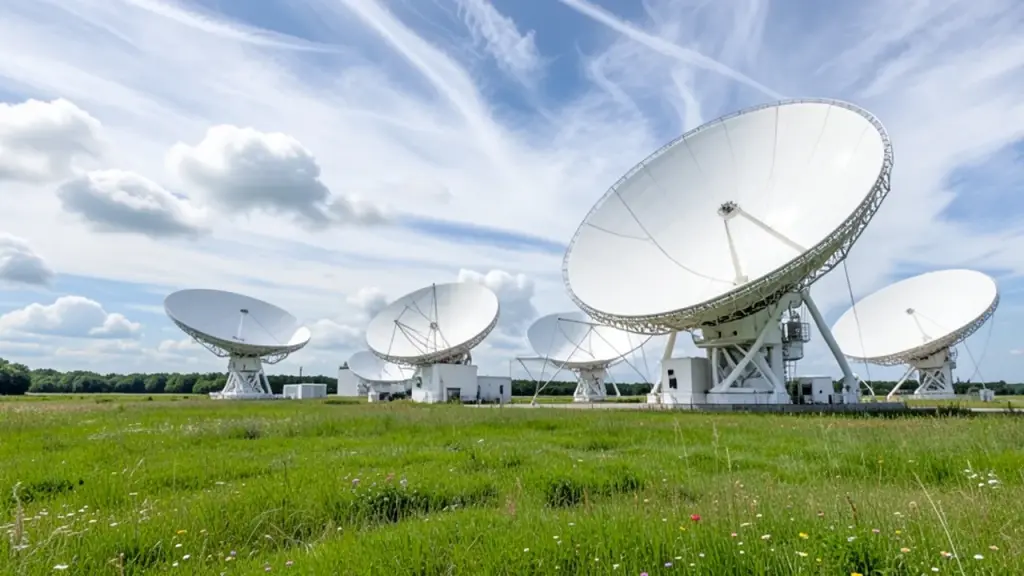
Large satellite dishes at a ground station in a green field
04

The US pushback

Washington isn’t happy. FCC Chairman Brendan Carr has said the US regulator could put similar limits on European satellite companies in return. Andrew Puzder, the US ambassador to the EU, warned that retaliation could be devastating for European firms given the size of the American market.

The timing adds heat. The announcement follows a dispute over a disruption last week to Starshield, the military version of Starlink, in Ukraine. It isn’t the consumer service, but it sharpened worries in Europe about relying on space infrastructure it doesn’t control. French President Emmanuel Macron had already urged European companies to team up on satellite capacity.

05

What this means for your phone in the UK and US

For now, nothing changes. All four carriers say their existing satellite deals stay in place, and the partnerships are tangled:

  • Vodafone runs a joint venture with AST SpaceMobile called Satellite Connect Europe, which welcomed the news.
  • Orange has also teamed up with AST SpaceMobile.
  • Deutsche Telekom sells Starlink broadband to businesses and plans to offer Starlink’s phone service in 2028.
  • Virgin Media O2 in the UK keeps its Starlink-powered service.

If you’re a Vodafone or O2 customer in the UK, the long-term upside is more competition for satellite coverage, which should mean better prices and fewer customers locked into a single provider. The open-access model also matters for smaller networks, which could buy satellite coverage on fair terms instead of being shut out.

In the US, AT&T, T-Mobile and Verizon announced their own joint effort earlier this year to pool rural and dead-zone spectrum for satellite providers. Europe’s move follows the same logic. For Americans, the bigger story may be the trade fight, since any US retaliation over spectrum could ripple into tech and telecom deals on both sides.

06

The open questions

There are plenty. The group needs a satellite partner. European names such as Eutelsat and the planned IRIS2 network are often mentioned as alternatives to Starlink, but nobody has been picked. The carriers still have to win the spectrum. And critics warn that sovereignty shouldn’t become a shield that protects big incumbents from competition, a balance Brussels now has to strike.

The next milestone is the EU’s spectrum award ahead of the May 2027 license expiry. Until then, this is a statement of intent, not a service you can sign up for.

07

Quick answers

Is Europe building its own Starlink?

Not directly. Four carriers plan to bid for satellite spectrum and build ground networks, but a separate partner would provide the satellites.

Will this affect O2’s Starlink satellite service in the UK?

No. The carriers say their existing satellite partnerships remain in place while they explore the joint bid.

When could a European satellite phone service launch?

No date has been set. The key spectrum licenses expire in May 2027, and the group still needs to win them and choose a satellite partner.

You're reading the quick version.