What is SpaceX Starmind? A million-satellite AI cloud, decoded
SpaceX now has US permission to fill orbit with flying AI computers. Here is how Starmind would work, the deadlines it must hit, and why astronomers are upset.
The FCC gave SpaceX conditional approval on November 25 to put up to 1 million Starmind satellites into orbit.
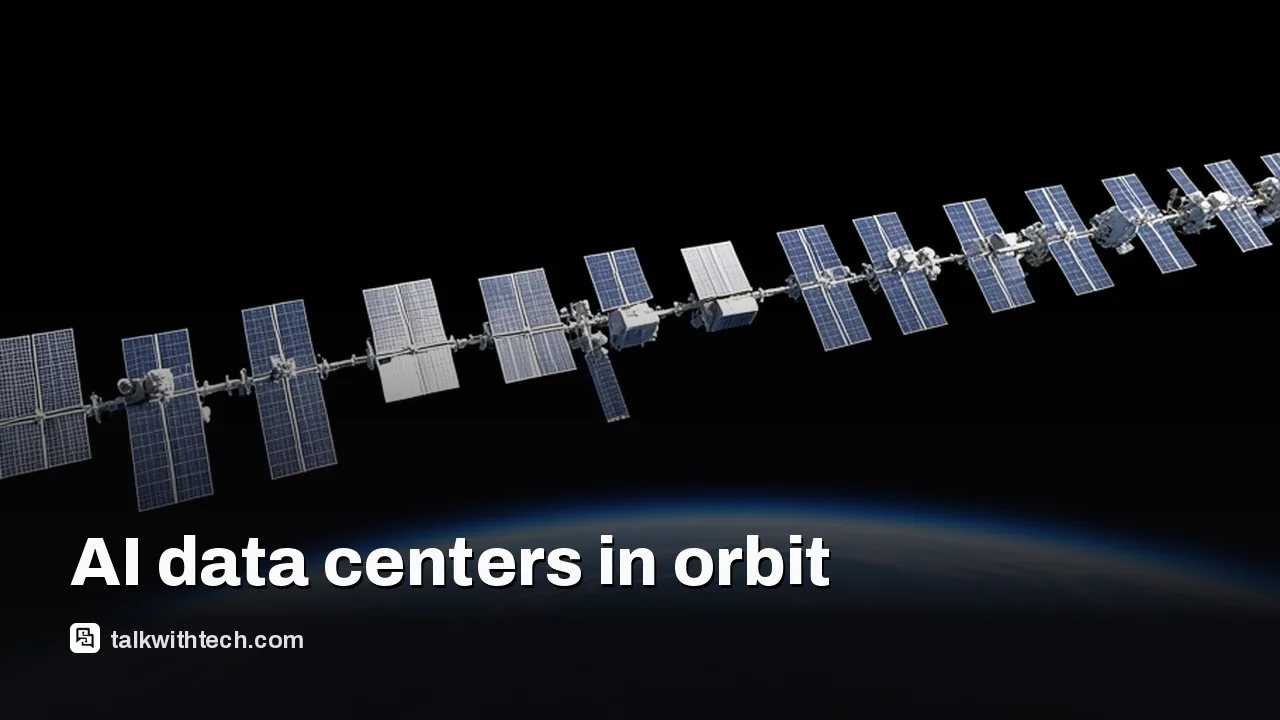
Each Starmind satellite is meant to be a small solar-powered data center carrying Nvidia AI chips and talking to other satellites by laser.
SpaceX must have its first satellite working by November 25, 2033, and all 1 million in orbit by November 2040.
Amazon, Viasat and the American Astronomical Society objected, but the FCC rejected their challenges.
Quick read · 1 min
Starmind is SpaceX's plan to turn satellites into flying AI data centers. Every one would pack Nvidia AI chips plus solar panels and heat radiators, pass data to other satellites by laser and send results to Earth through Starlink. On November 25, the FCC gave conditional approval for up to 1 million of them, the first US approval of its kind.
First working satellite due by November 25, 2033; SpaceX itself aims for late 2027.
500,000 by November 2038 and all 1 million by November 2040, or the license is void.
Amazon, Viasat and US astronomers objected; the FCC rejected their challenges.
The pitch is endless solar power with no land or water needs. Critics point to cooling, launch costs, debris and bright streaks in the night sky. SpaceX still has to file a final debris plan before flying satellites above 600 kilometers.
Since 1957, humans have launched roughly 28,000 satellites in total. SpaceX now has US permission to launch up to 1 million more, and these ones wouldn’t beam internet or take pictures. They would run artificial intelligence. That project is called Starmind, and on Wednesday, Nov. 25, the Federal Communications Commission (FCC) gave it conditional approval.
So what is SpaceX Starmind? In short, it’s a planned network of satellites that each work as a small data center, the warehouse-style buildings full of computer chips that power chatbots and cloud apps. The FCC called it the first time the US has ever authorized a constellation of data centers in space. If it works, some of the computing behind the AI tools you use could one day happen hundreds of kilometers above your head instead of in a building near a power plant. If it doesn’t, it will be one of the most expensive bets in the history of the space business.
01
What is SpaceX Starmind, in plain terms?
Starmind is SpaceX’s name for a swarm of AI computing satellites. Every satellite would pack three things: radiators to dump heat, solar panels for electricity, and the AI chips that do the actual work. The satellites would pass data between each other with lasers and send finished results down to Earth through SpaceX’s Starlink internet network, while ground controllers keep a radio connection as a fallback.
The chips come from Nvidia. In August, SpaceX said each Starmind satellite will include Nvidia Rubin GPUs and Vera CPUs, the same family of hardware Nvidia sells for big AI data centers on the ground. (A GPU is the graphics-style chip that does most AI work; a CPU is the general-purpose brain of a computer.) SpaceX has said its site in Bastrop, Texas, will build these AI satellites, separate from the Redmond, Washington, plant that makes Starlink satellites.
SpaceX first asked the FCC for approval in January, days before it merged with Elon Musk’s AI company, xAI. Since then AI has moved to the center of how SpaceX sells itself. The company has pitched a long-term “total addressable market” of $28.5 trillion, with nearly $23 trillion of that in business AI uses. Starmind is the piece meant to turn that pitch into hardware.
02
What the FCC actually approved, and the deadlines SpaceX must hit
The approval lets SpaceX fly Starmind satellites between 500 and 1,002 kilometers up (about 310 to 623 miles). It is conditional, and the conditions have teeth. Here is the timetable written into the order:
November 25, 2033: at least one Starmind satellite must be in its assigned orbit and operating.
Two years after that: 100,000 satellites operating. That alone is nearly nine times the size of today’s Starlink fleet.
November 2038: 500,000 satellites.
November 2040: the full 1 million.
Missing those deadlines would void the authorization. The FCC also attached rules on communications backups, regular progress updates and a detailed plan for limiting orbital debris.
Two big questions are still open. The FCC hasn’t yet approved how SpaceX will handle debris from satellites flying above 600 kilometers (about 373 miles), and SpaceX must file a final debris plan before it deploys any Starmind satellite at that height. SpaceX has also asked for an exception to the rule that dead satellites at these altitudes must fall back and burn up in the atmosphere. It wants the option to park some retired ones in other orbits, including around the Sun. The FCC has put that request on hold.
SpaceX’s own timeline is far more aggressive than the FCC’s. The company aims to launch the first Starmind satellites in the third quarter of 2027, on its fully reusable Starship rocket, and says the Bastrop factory could start producing them as early as late 2027.
03
Why would anyone put a data center in space?
The pitch is about power, land and water. Data centers on Earth use huge amounts of electricity, need large plots of land and often drink up water for cooling, and the rapid build-out has met a growing backlash in US communities. Musk argues that the future of AI computing is in orbit, where sunlight is effectively unlimited and there are no neighbors to complain. In some orbits, solar panels could collect sunlight nearly around the clock.
SpaceX’s application went further, and the FCC repeated its grand language in its own release: the agency said the plan could move humanity closer to a Kardashev II civilization, a science-fiction-flavored term for a society that can capture the full energy output of its star. That’s a vision, not an engineering result, and it’s worth reading as Musk’s ambition rather than a promise.
The critics’ case is practical. Getting rid of heat is harder in space, not easier, because there’s no air to carry it away; it has to radiate out through panels. Then there’s the cost of building and launching hardware at this scale, the risk of collisions, and the question of how well delicate chips survive radiation and wild temperature swings. Google is already testing that last point with a prototype satellite for its Project Suncatcher effort, which launched on a SpaceX rocket in October and has run an AI model in orbit.
04
Why Amazon and astronomers fought the plan
Three groups asked the FCC to block Starmind: Amazon, which is building its own satellite internet network, the satellite operator Viasat, and the American Astronomical Society (AAS). In a March petition, Amazon called the proposal a lofty ambition rather than a real plan and argued it could take SpaceX centuries to get a million satellites up. The FCC rejected all three challenges.
The launch math explains Amazon’s doubt. Starship can carry at most 60 of SpaceX’s newest Starlink satellites per trip, so building out the planned 100,000-satellite next-generation Starlink network alone would take about 1,700 launches. Satellites of that kind are expected to last about five years, so a fleet also needs constant replacement. Starmind would sit on top of all that.
Astronomers worry about the sky itself. The AAS says its early simulations suggest that if all 1 million satellites go up, people across the globe might spot tens of thousands of them without a telescope, and reflected sunlight could streak telescope images. The FCC said concerns about scientific research fell outside its authority, and that SpaceX’s commitment to work with the National Science Foundation was enough on the optical astronomy question. The AAS said it was “disheartened and dismayed” by the decision. There’s history here: at California’s Zwicky Transient Facility, Starlink streaks showed up in 18 percent of twilight images by August 2021.
Nothing changes for your phone, your Starlink dish or your ChatGPT habit this year. No Starmind satellite exists in orbit yet, and the FCC’s first hard deadline isn’t until late 2033. Here’s what it does mean in practice:
For AI users: if the plan works, part of the computing behind AI services could move off the ground. That wouldn’t change what you type or see, but it could affect how fast companies can add AI capacity and what it costs them.
For communities near data centers: supporters say orbital computing could ease pressure on local power grids, land and water. That’s the main promise, and it’s still unproven.
For stargazers: the sky impact depends on the satellites’ size, materials and orbits, which aren’t final. Expect this fight to continue as SpaceX files its debris plan.
For SpaceX shareholders: the company listed on Nasdaq in June, and Starmind is a core part of its AI story, separate from the Trump Account share pledge that made headlines the same week.
06
Who else wants to build data centers in orbit?
SpaceX has the first approval, but it isn’t alone. The FCC says it is still reviewing other orbital data center proposals and will rule on each through its normal process. The main rivals:
Google: testing satellites for Project Suncatcher, with its first ones due to fly on a Blue Origin New Glenn rocket no earlier than 2029.
Starcloud: a company based in Redmond, Washington, that has applied to run 88,000 data center satellites and has already flown an AI test satellite.
Blue Origin: the rocket company has proposed 51,600 satellites under an effort it calls Project Sunrise.
Cowboy Space: formerly Aetherflux, it has applied for a 20,000-satellite constellation.
Sophia Space: a California startup aiming for a much smaller 10-satellite network for high-performance computing.
For scale, the largest constellation ever operated is today’s Starlink network at about 11,000 spacecraft. Starcloud’s plan alone would be several times bigger than that, and Starmind would dwarf them all.
07
Quick answers
Is SpaceX Starmind the same as Starlink?
No. Starlink beams internet to homes and phones. Starmind satellites would run AI computing and use Starlink to send results back to Earth.
When will Starmind satellites launch?
SpaceX aims for the third quarter of 2027 on Starship. The FCC’s official deadline for the first working satellite is November 25, 2033.
Will I be able to see Starmind satellites?
Possibly. The American Astronomical Society’s early simulations suggest people could spot tens of thousands without a telescope if all 1 million fly, but the final design will decide that.
The FDA cleared Neuralink's first late-stage brain implant study, for people with ALS. It is not a green light to sell the device, and big questions remain.