Amazon Leo failure: what losing 40 satellites means for service
A Vulcan rocket broke down about 10 minutes after liftoff, taking a full batch of Amazon's Starlink rivals with it and grounding the launcher Amazon booked most.
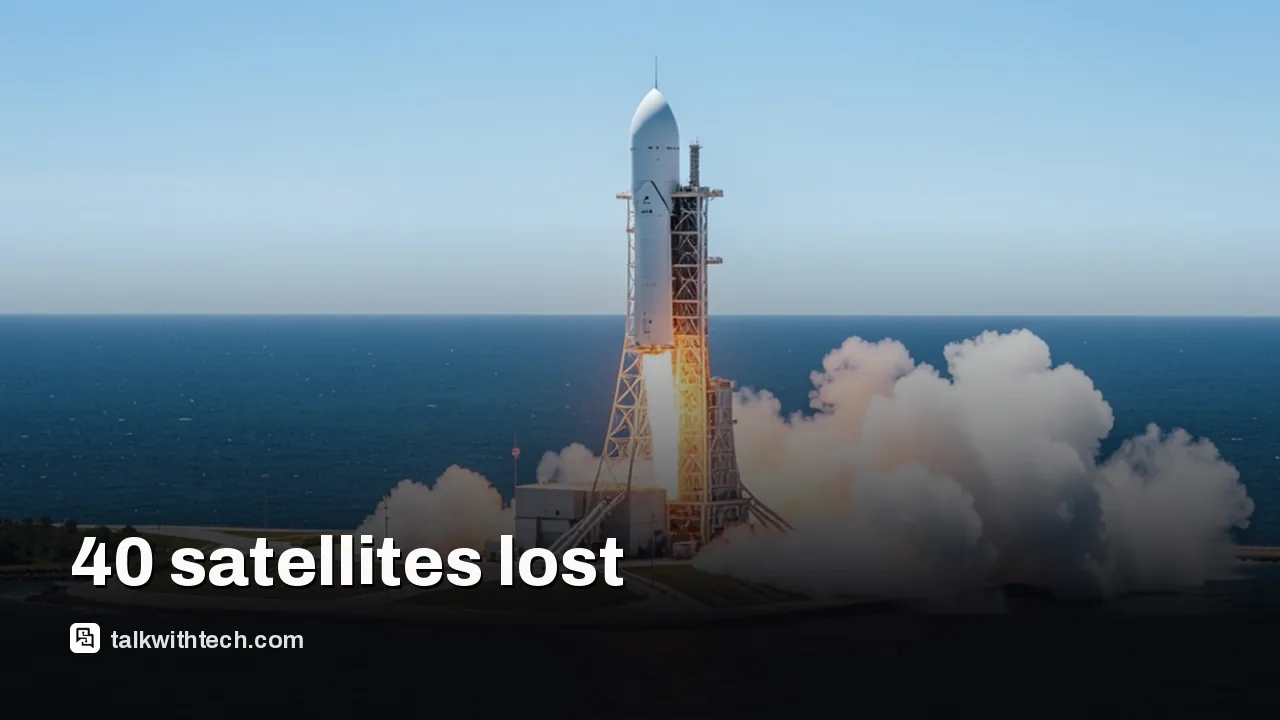
A ULA Vulcan rocket failed about 10 minutes into flight on Sunday, and all 40 Amazon Leo satellites on board were lost.
It was the first full mission failure for United Launch Alliance since Boeing and Lockheed Martin set it up in 2006.
The flight was the first of 38 Vulcan launches Amazon bought, so a long grounding could slow the whole Leo buildout.
Amazon still has only a few hundred Leo satellites up, against more than 11,000 for SpaceX's Starlink.
Quick read · 2 min
A United Launch Alliance Vulcan rocket failed about 10 minutes after liftoff from Cape Canaveral on Sunday, November 15. All 40 Amazon Leo internet satellites on board were lost. ULA says the problem struck during the upper-stage burn and that it has no specific data yet.
Why it matters: Amazon Leo is meant to rival Starlink for home internet, especially in rural areas. This was the first of 38 Vulcan launches Amazon bought, and the rocket is now grounded. Blue Origin's New Glenn, another big Amazon launcher, has not flown since it exploded in May.
Amazon has a few hundred Leo satellites up; Starlink has over 11,000.
Amazon had hoped for early service this year and has not given a new date.
Its FCC target is 1,616 satellites in orbit by July 2028.
Next, ULA's investigation decides how long Vulcan stays on the ground, and with it how fast Leo can grow.
The Amazon Leo failure came about 10 minutes after a clean-looking liftoff. On Sunday, November 15, a United Launch Alliance Vulcan rocket climbed away from Cape Canaveral with 40 of Amazon’s internet satellites on top, then broke down during its upper-stage burn and never reached orbit. All 40 satellites were lost.
If you live somewhere cable and fiber never reached, this matters more than a single bad launch day. Amazon Leo is the company’s answer to Starlink, and it needs thousands of satellites in space before it can sell fast home internet widely. Sunday’s flight was supposed to be the first of 38 Vulcan launches Amazon has paid for. Now that rocket is grounded while engineers hunt for the cause, and nobody can yet say for how long.
01
What went wrong on the Vulcan flight
ULA says its Vulcan suffered an anomaly roughly 10 minutes into the flight and did not deliver the Amazon payload to orbit. The company admitted it had no specific data yet on what happened, and it promised Amazon full visibility into the investigation.
Here is what the public launch timeline shows:
The rocket lifted off from Space Launch Complex 41 at 12:40 p.m. ET, near the very end of its launch window, after a hold at T-minus 20 seconds for a technical issue.
The six strap-on solid boosters, which caused trouble on two earlier Vulcan flights, appeared to work normally and fell away about a minute and 40 seconds after liftoff.
The two methane-fueled BE-4 engines on the first stage seemed to fire longer than ULA’s pre-launch timeline called for, and stage separation looked late.
The hydrogen-fueled Centaur upper stage then started a planned burn of just over 12 minutes, and that is where ULA says the problem struck.
Live animation from ULA’s telemetry also showed the Centaur twisting in unusual ways early in its burn. It’s not known yet whether the countdown hold had anything to do with the failure. The launch had already slipped twice that weekend, once when a nitrogen supply plant used by several launch companies went down and once over network problems between the rocket and ground systems.
The BE-4 engines are built by Jeff Bezos’ Blue Origin. The engines on Sunday’s rocket had been modified after a New Glenn rocket exploded on its pad in May, a blast investigators linked to an oxygen valve in one of those engines. Blue Origin is reportedly helping with the new investigation, but whether the BE-4s played any role is still an open question.
02
Why the Amazon Leo failure hurts more than 40 satellites
The lost hardware is only part of the damage. The bigger problem is that Amazon has bet heavily on rockets that keep stumbling.
Amazon’s launch contracts for Leo are spread across four rocket families:
13 launches on SpaceX’s Falcon 9
24 on Blue Origin’s New Glenn
38 on ULA’s Vulcan
24 on Europe’s Ariane 6
ULA has already flown eight successful Leo missions on its older Atlas V rocket. But Vulcan was meant to carry the biggest share from here, and New Glenn has not flown again since its May explosion. With both of Amazon’s largest heavy-lift options on hold at the same time, the company is leaning on Falcon 9 (owned by its direct rival) and Ariane 6 to keep the buildout moving.
Amazon itself warned back in July that none of its launch partners’ repeated, overlapping delays had been predictable, and that they had eaten through the slack in its schedule. Sunday’s loss lands on top of that.
03
What this means if you were waiting for Amazon Leo internet
Short version: expect the wait to get longer, not shorter. Amazon had hoped to begin early Leo internet service this year, and it has not announced a new timeline since the failure.
Satellite internet only works well once enough satellites are overhead to cover you at all times. Sunday’s flight would have lifted the total launched to 436. Instead, Amazon sits at a few hundred in orbit, about 12% of what it needs for full global coverage. One count puts it at 398 satellites deployed across 14 launches since 2025, and another at around 390 actually in service.
US regulators have already given Amazon more time once. The Federal Communications Commission approved the 3,232-satellite constellation in 2020, and after Amazon fell behind, it granted a 24-month extension. The new targets are 1,616 satellites in orbit by July 2028 and the full 3,232 by July 2029. Every month Vulcan stays grounded makes those dates harder to hit.
For readers in the US, UK and Canada weighing a dish today, the practical takeaway is simple. If you need rural broadband now, Leo is not a realistic option yet, and this failure pushes it further out. If you are happy where you are, there’s no reason to sign a long contract elsewhere just because of this news either.
04
How Amazon Leo compares with Starlink after the loss
The gap is enormous. Starlink already flies over 11,000 satellites and serves millions of customers worldwide. Amazon has a few hundred.
SpaceX’s biggest advantage is that it launches Starlink on its own rockets, so it controls its schedule. Amazon has to buy rides from other companies, and when those rockets are grounded, its whole plan stalls. Sunday showed exactly how exposed that model is.
Amazon is putting on a brave face. It said on X that every launch carries risk, especially first missions like this one, which it called LV-01, and that it still trusts ULA to learn from the flight and deliver on its plans for Vulcan.
ULA says it will work with Amazon and other agencies to find the cause, fix it and return to flight as fast as it can. Past Vulcan problems with its solid boosters led to reviews that lasted months, and this failure is more serious because the payload was lost.
The pain spreads beyond Amazon. Vulcan is under contract for roughly half of the US military’s national security launches over the next few years, and the Pentagon had been waiting on this very mission before clearing the rocket to fly those payloads again. NASA Administrator Jared Isaacman offered his agency’s help on X, saying the country needs ULA for Artemis and its Moon plans.
It was ULA’s first outright mission failure since Boeing and Lockheed Martin formed the company in 2006, a record its Atlas V built over two decades.
06
Quick answers
What caused the Amazon Leo failure?
Nobody knows yet. ULA says an anomaly hit during the Centaur upper-stage burn about 10 minutes after liftoff, and its investigation has only just started.
Did Amazon lose all 40 satellites?
Yes. The rocket never reached orbit, so none of the 40 Amazon Leo satellites on board could be deployed.
When will Amazon Leo internet be available?
Amazon has not given a new date. It had aimed to start early service this year, and its regulatory deadline is 1,616 satellites in orbit by July 2028, but the Vulcan grounding makes every target harder.
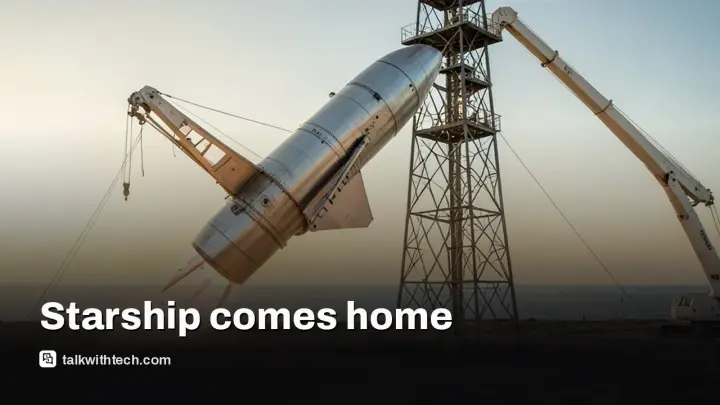
The booster missed its tower landing and crashed into the Gulf. Now the upper stage gets the first attempt ever to catch a spacecraft coming back from orbit.