Thursday, 12 November 2026

iMac M6 vs M4: faster chip, same look, and when to skip it

The M6 iMac adds cores, Wi-Fi 7 and much faster storage at $1,499, but M4 owners and anyone with a spare monitor have cheaper paths.

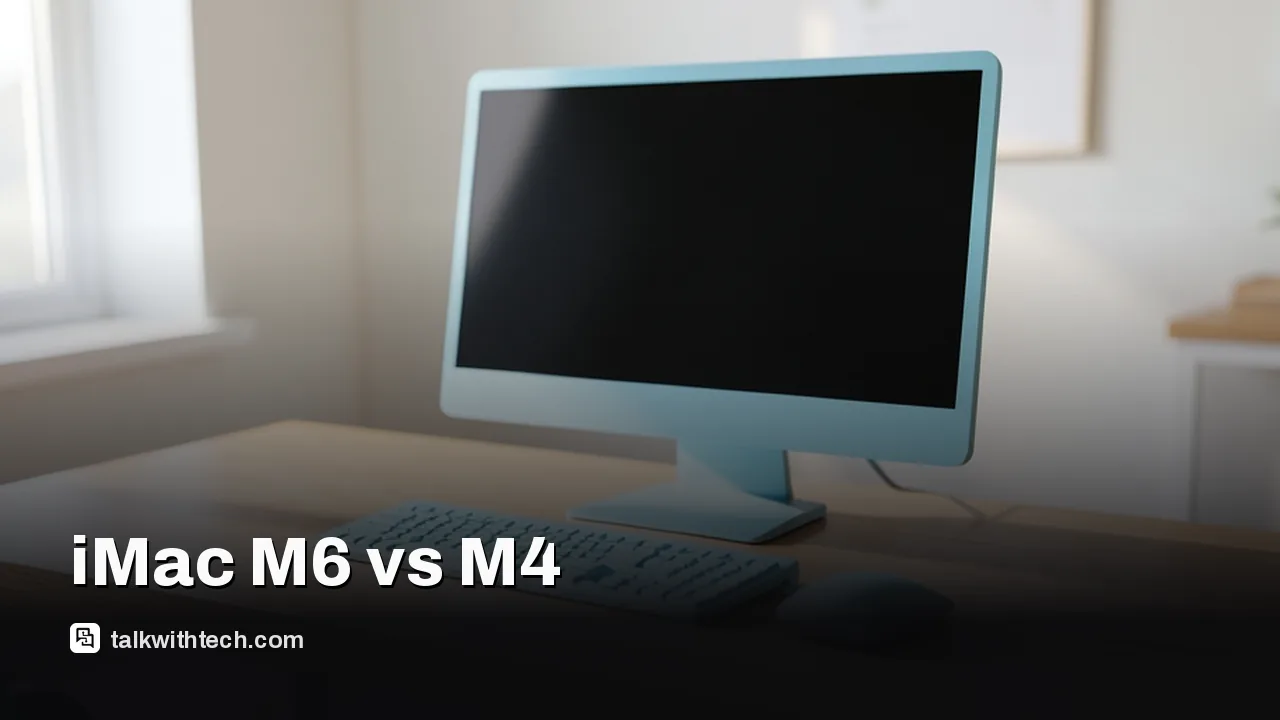
Slim pastel all-in-one desktop computer on a wooden home office desk

The short version

  • Apple's iMac with M6 went on sale November 6 at $1,499 in the US, £1,499 in the UK and $2,099 CAD in Canada.
  • Compared with the M4 model, it adds two CPU and two GPU cores, Wi-Fi 7, Bluetooth 6 and SSDs up to twice as fast.
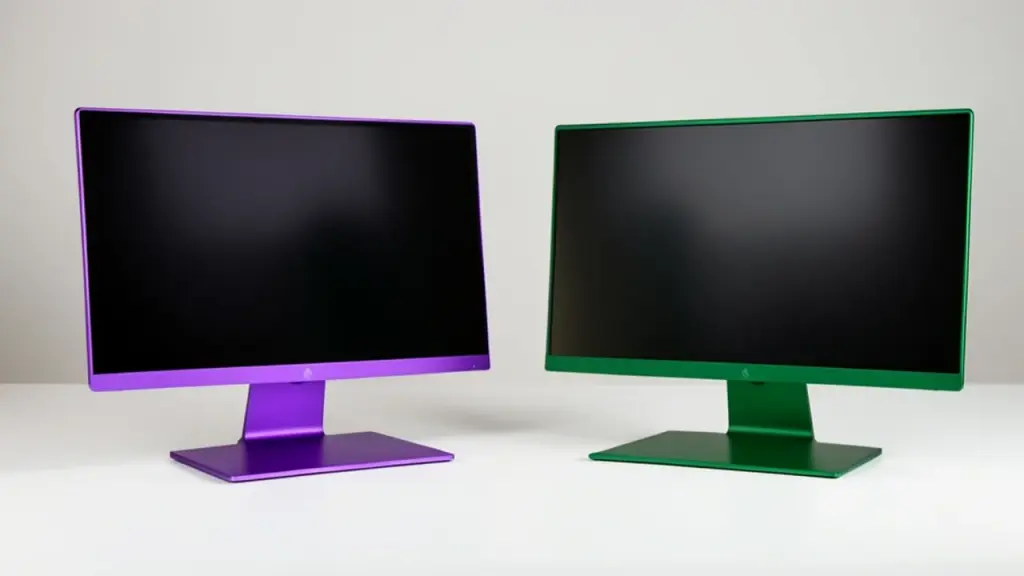
  • The 24-inch screen, camera, speakers, colors and overall design carry over almost unchanged from the M4 iMac.
  • Reviewers say M4 owners can skip it, while Intel and M1 iMac owners get the biggest jump.
Quick read · 1 min

Apple's iMac with M6 is a speed upgrade in a familiar shell. It starts at $1,499 in the US, £1,499 in the UK and $2,099 CAD in Canada, and it went on sale November 6.

Compared with the M4 iMac, you get two extra CPU and GPU cores, much faster graphics and storage, Wi-Fi 7 and Bluetooth 6. The design, the 24-inch screen, the camera and the colors are all unchanged, and the stand still doesn't raise or lower.

  • M4 owners: reviewers say there's little reason to buy again.
  • M1 and Intel owners: this is a big jump.
  • Already own a monitor: a Mac mini with the same chip and 24GB costs far less and may be smarter.

If you want one box with everything included, the 12-core $1,699 model is the one to pick for extra ports and a second external display.

The iMac M6 vs M4 question comes down to this: Apple put a chip two generations newer inside a body that hasn’t changed since 2021. The M6 iMac starts at $1,499, has two more CPU cores and two more GPU cores than its predecessor, and roughly doubles SSD speed, yet from across the room you couldn’t tell the two apart.

That matters if you’re shopping right now, because the older M4 iMac is still around at retailers and refurbished, and a Mac mini plus a monitor is a real rival. Below is what actually changed, what you pay in the US, UK and Canada, and who should buy, upgrade or walk away.

01

iMac M6 vs M4: what’s actually different

The difference is almost entirely inside. Apple skipped the M5 for the iMac, so the jump is from M4 straight to M6, and the core counts rise on both models.

  • Chip: the base iMac now has a 10-core CPU and 10-core GPU, and the higher model gets 12 of each. The top M4 iMac stopped at 10 and 10.
  • AI hardware: each GPU core now has a Neural Accelerator, alongside a Dual 16-core Neural Engine.
  • Memory bandwidth: up to 170GB/s, up from 120GB/s on the M4 version.
  • Storage speed: Apple claims SSD reads and writes are up to twice as fast.
  • Wireless: Wi-Fi 7 and Bluetooth 6 replace Wi-Fi 6E and Bluetooth 5.3, thanks to Apple’s N1 wireless chip.
  • Wired networking: 2.5Gb Ethernet now comes on the 12-core model, a step up from the Gigabit port on the M4 iMac.

Apple’s own claims are bold. It says the M6 runs Microsoft Excel up to 1.5x faster than the M4 iMac, doubles graphics performance in Affinity, doubles ray-traced gaming performance and processes local AI prompts in LM Studio up to five times faster. Those are best-case numbers from Apple’s chosen tests, so independent results matter more.

Two colorful all-in-one desktop computers side by side on a table
02

How much faster the M6 iMac really is

Independent benchmarks show a solid but smaller CPU gain than the marketing suggests. One review measured Geekbench 6 CPU scores about 20 percent above the M4 model, while another round of testing found single-core results roughly 25 percent higher and multi-core about 36 percent higher.

Graphics and storage are where the new model pulls away. The same Geekbench testing put GPU performance at more than double the previous iMac, and SSD speeds also more than doubled. That storage jump is a bigger deal than it sounds on a machine that starts with only 16GB of memory, because the system leans on the drive when memory runs short.

Gaming is still modest. Cyberpunk 2077 ran at about 50 fps at 1080p on default settings in one review, and 1080p was the practical ceiling for smooth play in other big games too. Local AI is similar: the M6 is quicker, but with memory capped at 32GB, larger models struggle.

03

What stays exactly the same

Nearly everything you see and touch carries over. Reviewers describe the M6 iMac as physically identical to the M4 model: same dimensions, same colors, same screen.

  • The 24-inch 4.5K Retina display with 500 nits of brightness, with nano-texture glass as a paid option.
  • The 12MP Center Stage camera with Desk View.
  • The six-speaker sound system and three-microphone array.
  • The stand, which tilts but still doesn’t adjust for height.
  • Seven colors: silver, purple, blue, orange, pink, green and yellow, with matching USB-C accessories.
  • Two Thunderbolt 4 ports on the base model or four on the higher one, plus a headphone jack and the magnetic power connector.

The screen size is the sore point. One review argues 24 inches now feels cramped when 27- and 32-inch monitors are common, especially as the faster chip makes the iMac more tempting for creative work.

Compact desktop computer box beside a large external monitor
04

iMac M6 price in the US, UK and Canada

The iMac M6 costs $1,499 for the 10-core model and $1,699 for the 12-core model in the US. In the UK the starting price is £1,499, and in Canada it’s $2,099 CAD for the 10-core version and $2,299 CAD for the 12-core one.

Whether that’s a price rise depends on what you compare it with. The M4 iMac launched in 2024 at $1,299, so against that original sticker the M6 costs $200 more. But Apple raised the M4 model’s price earlier this year, and the M6 matches where the M4 ended up, which is why some reviewers call the price unchanged. In Canada, the $2,099 CAD start equals the M4 price after Apple’s June increase there.

Education pricing helps a little. Students and teachers pay $1,449 or $1,599 in the US, and $2,029 CAD or $2,159 CAD in Canada.

Upgrades add up fast. In Canada, moving to 24GB of memory adds $300 CAD, and the same goes for 512GB of storage. In the US, one review’s recommended setup, the 12-core model with 24GB, comes to just under nineteen hundred dollars.
05

Who should upgrade, and who should skip it

Your current computer decides this more than the new one does.

  • You own an M4 iMac: skip it. Reviewers agree the gains won’t change spreadsheets, browsing or video calls, and the M4 already supports Apple Intelligence.
  • You own an M1 iMac: this is a real step up. Apple claims up to 2.5x faster Excel work and up to 12x faster LM Studio prompts versus the M1 iMac.
  • You still use an Intel iMac: the jump is huge, with Apple claiming up to 18x faster performance than its most popular Intel model.
  • You edit video, run local AI or want two external displays: go for the 12-core model. It’s the only one with four Thunderbolt ports, support for two 6K screens, nano-texture glass and 32GB of memory.
06

The cheaper alternatives worth a look

If you already have a monitor, or don’t mind buying one, the Mac mini is the strongest rival. A Mac mini with the same M6 chip and 24GB of memory costs just under eleven hundred dollars, which leaves about eight hundred dollars for a bigger, brighter, height-adjustable display compared with a similarly specced iMac.

A discounted or refurbished M4 iMac is the other option. For everyday family use it does the same jobs, keeps getting macOS updates and looks identical. Just check that any deal beats the M6’s $1,499 by a meaningful amount, since you give up Wi-Fi 7, the faster drive and two cores.

The iMac still wins on simplicity. You get a screen, speakers, camera, keyboard and mouse in one box with one cable, and reviewers still rate it the best all-in-one around.

07

Quick answers

Is the M6 iMac worth it over the M4?

Only if you need faster graphics, storage or local AI. For everyday tasks, M4 owners won’t notice enough difference to justify buying again.

Does the M6 iMac have a bigger screen?

No. It keeps the same 24-inch 4.5K Retina display as the M4 model, with nano-texture glass offered on the 12-core version.

When did the M6 iMac come out?

Preorders opened October 28, and it reached customers and stores on November 6.

You're reading the quick version.