Thursday, 26 November 2026

Neuralink FDA approval: who can join LINK, and what comes next

The FDA cleared Neuralink's first late-stage brain implant study, for people with ALS. It is not a green light to sell the device, and big questions remain.

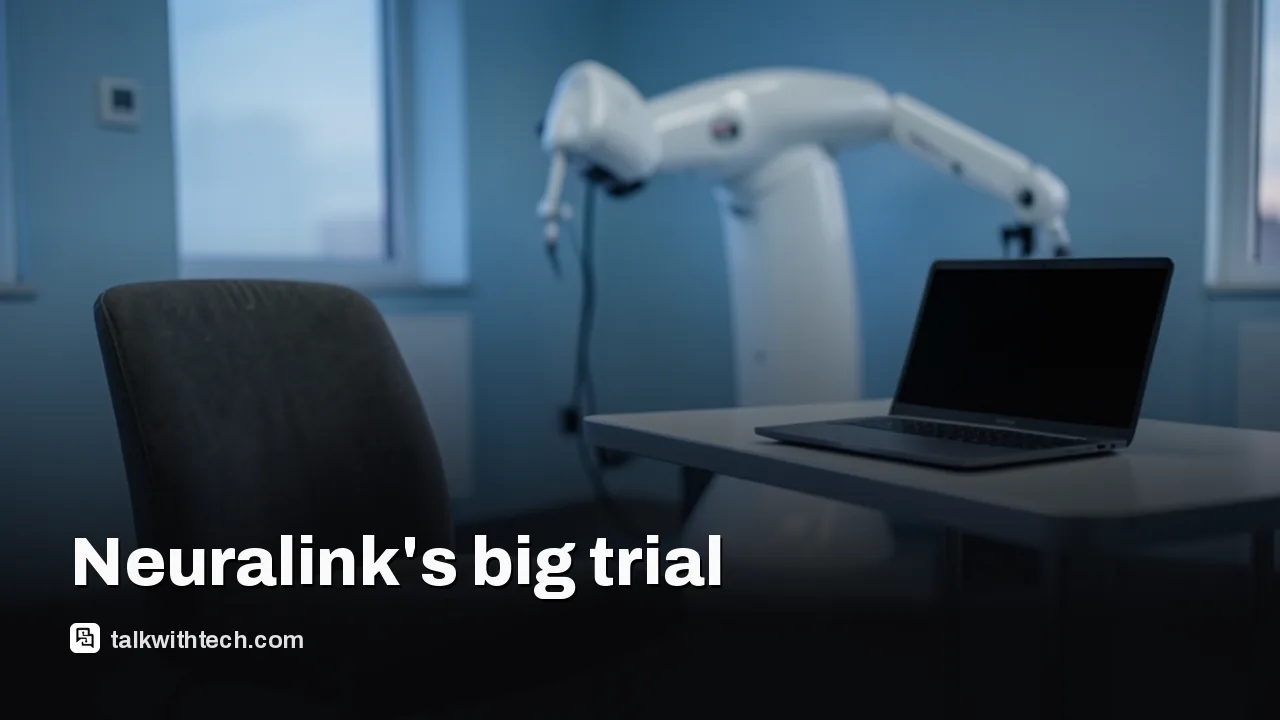
Empty research lab with a laptop and a surgical robot arm in the background

The short version

  • Neuralink says the FDA has cleared LINK, the first late-stage US trial of an implantable brain-computer interface.
  • The study is aimed at people with severe paralysis from ALS and builds on more than 30 earlier participants.
  • The approval lets Neuralink recruit and test patients; it does not let the company sell the implant.
  • Neuralink has not said how many people it will enroll, which sites will take part or when results could come.
Quick read · 1 min

Neuralink says the FDA has cleared it to start LINK, the first late-stage trial of an implantable brain-computer interface in the US. The study is for people with severe paralysis caused by ALS and follows earlier work with more than 30 people who already use the company's N1 implant.

This is the kind of final test regulators rely on before deciding whether a device can be sold. So this is a big step, but not a sales approval. Neuralink hasn't said how many people it will enroll, which hospitals will take part or how long the study lasts.

  • Eligible volunteers pay nothing for the device, surgery or care.
  • Travel is covered for the participant and a caregiver.
  • Risks include infection, bleeding, seizures and device problems.

People with ALS who are interested can register through Neuralink's website, ideally after talking with their neurologist.

The Neuralink FDA approval announced on Wednesday, November 25, is not permission to sell a brain chip. It is permission to run LINK, which Neuralink describes as the first decisive, late-stage trial of an implantable brain-computer interface in the US, and it is aimed squarely at people living with ALS.

That difference matters if you or someone you love has ALS (amyotrophic lateral sclerosis, the disease that slowly destroys the nerve cells that control muscles). That kind of trial is the large, final-phase study regulators use to decide whether a medical device can go on the market. Getting to this stage puts Neuralink closer to a real product than it has ever been, but the company has not shared how many people it will take, where they will be treated or how long the study will run.

01

What the Neuralink FDA approval actually allows

The clearance lets Neuralink recruit volunteers and test its system under a clinical plan the FDA has signed off on. Neuralink posted the news on X, saying LINK builds on its work with more than 30 people who already have its implant.

Those earlier studies were early feasibility trials, the small first round that checks basic safety and whether a device works at all. LINK is the next level. Neuralink says it will measure how well people with severe paralysis from ALS can control digital devices by thought, with the focus on practical results that make them more independent in daily life. It will also track long-term safety and how reliable the hardware stays over time.

The device itself is still investigational. Neuralink’s own trials page says plainly that its devices have not been approved by the FDA or any other regulator. If LINK produces strong results, Neuralink can use that data to ask for marketing clearance. If it doesn’t, the road gets longer.

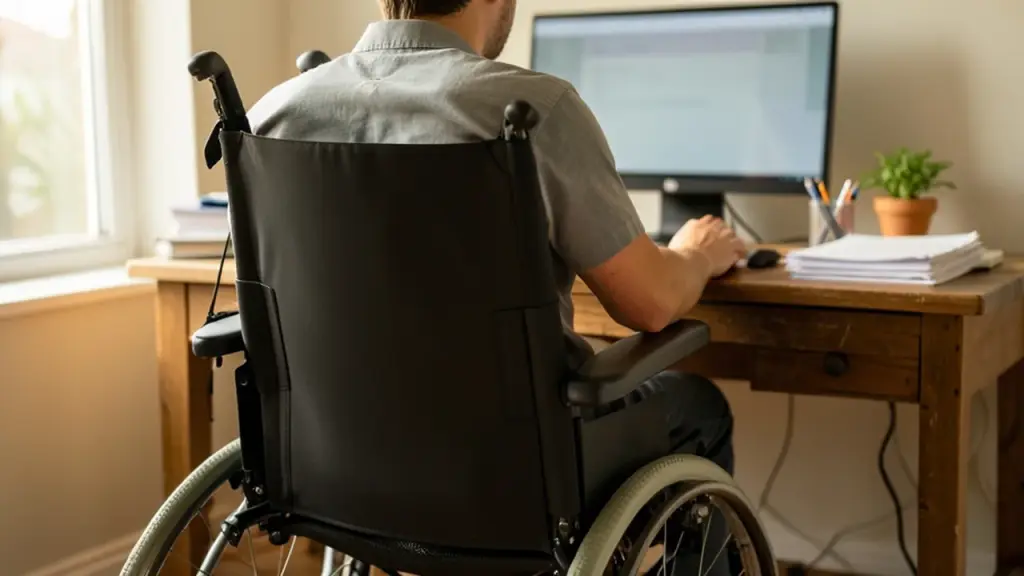
Person in a power wheelchair at a desk facing a computer monitor
02

How the N1 implant and R1 robot work

Neuralink’s system has two main parts. The N1 implant, roughly the size of a coin, sits in an opening in the skull. A surgical robot called R1 then threads very thin, flexible electrode wires into the brain.

Those wires listen to the part of the brain that plans hand movement. When a person imagines moving their hand, software turns those signals into commands. Once the system is tuned to that person, they can move a cursor and use left, right and middle clicks without touching anything.

In practice, earlier participants have used it for far more than clicking. Reported uses range from sending messages to writing code, 3D modeling, schoolwork, creative projects and gaming. Bradford Smith, Neuralink’s first participant with ALS, said last year that the implant gave him freedom, hope and quicker ways to communicate.

03

Who can join the LINK trial, and what it costs

Neuralink says people with ALS may be eligible, but it hasn’t listed the other medical requirements or a target number of participants. Anyone interested is directed to Neuralink’s website to learn more and register interest.

Here is what the company’s trials page promises eligible volunteers:

  • No cost to you: the device, the procedure and related care are provided.
  • Travel covered: study travel is paid for the participant and a caregiver.
  • Support team: help before, during and after surgery.
  • You can leave: taking part is voluntary and you can withdraw at any time.

Neuralink has not said which hospitals will run LINK. Its earlier feasibility work took place in the US, Canada and Britain, and its trials page lists University College London Hospitals among its sites. Whether people in the UK or Canada can join this new late-stage study hasn’t been made clear.

The risks are real. This is brain surgery, and the possible problems include infection, bleeding, seizures and device failures. Neuralink’s very first patient, Noland Arbaugh, who received his implant in January 2024, lost some cursor control a few weeks later when several of the 64 threads pulled out of his brain. Neuralink restored control by changing its recording software rather than operating again.

Clinical study binders and a pen on a table in a hospital waiting area
04

What this means for people with ALS and their families

For now, the realistic benefit is access. If you have ALS and severe paralysis, LINK is a chance to try one of the most advanced brain implants for free, under close medical watch, with travel paid for you and a caregiver.

It is not a cure. The implant does not stop ALS or restore movement in the body. What it aims to restore is digital independence: typing, browsing, messaging and working on a computer without hands or voice. For someone losing speech, that can mean staying in touch with family and staying in charge of their own affairs.

If you’re weighing it, three practical steps help. Talk to your neurologist first, since they know your health and can judge whether surgery is sensible. Ask Neuralink directly where the study sites are and how much travel and follow-up time is involved. And read the informed consent document closely, because Neuralink says costs are covered as that document describes.

05

How Neuralink compares with Synchron and China’s Neuracle

Neuralink is not alone, and it is not first to market. In March 2026, China’s National Medical Products Administration approved Neuracle Medical Technology’s NEO implant for commercial sale, the first invasive brain-computer interface any regulator had cleared as a product. NEO is far narrower: eight electrodes rest on the brain’s outer membrane rather than going into brain tissue, and it drives a robotic glove for adults aged 18 to 60 with quadriplegia from a neck spinal cord injury.

In the US, Synchron, Neuralink’s best-known rival, has hit a bump. It paused enrollment in the trial of its second-generation Stentrode after finding a problem with the lead, the cable that carries signals to the implanted electronics. Synchron says no safety issues were found and the pause was its own decision, not one ordered by the FDA. That trial was meant to pave the way to Synchron’s own final-phase study, which it needs before the FDA can approve the device for sale.

Money is pouring in, too. Neuralink was reportedly valued as high as $42 billion in private share sales as of this summer, while Merge Labs, the brain-interface startup Sam Altman of OpenAI helped found, raised $252 million before going public about its work in January.
06

Quick answers

Is Neuralink FDA approved?

No. The FDA has cleared Neuralink to run a late-stage clinical trial called LINK. The implant is still investigational and is not approved for sale.

When will Neuralink be available to buy?

Neuralink hasn’t given a date. It first needs results from LINK, and then an FDA decision on marketing clearance.

How do I sign up for the Neuralink trial?

Neuralink says people with ALS may be eligible and points them to its website to learn more. Check with your neurologist before applying.

You're reading the quick version.