The Galaxy S26 Ultra beats the Pixel 11 Pro XL clearly on chip speed, charging, video and extras like the S Pen and DeX.
The Pixel 11 Pro XL has the brighter screen, a wider 42MP selfie camera and Qi2.2 magnets built in.
Samsung raised the 256GB Ultra to $1,399.99 on October 1, while Google cut the Pixel 11 Pro XL by $350 to $949 in late October.
Battery tests disagree: one lab called it a tie, two others had the Galaxy lasting longer on the web.
Quick read · 1 min
The Samsung Galaxy S26 Ultra is the stronger phone on paper and in most tests. Its Snapdragon chip is about 40% faster than the Pixel 11 Pro XL's Tensor G6 on one core, it charges at 60W against 45W, it records 8K and 4K at 120 fps on the phone, and it adds the S Pen, Privacy Display and DeX.
The Google Pixel 11 Pro XL fights back with a brighter screen, a wide 42MP selfie camera, built-in magnets for accessories and a cleaner Android. Battery results are mixed: one lab called it a tie, two others favored the Galaxy on web use.
Galaxy S26 Ultra 256GB: $1,399.99 list after an October 1 increase.
Pixel 11 Pro XL 256GB: $1,299 list, cut to $949 in late October.
Both get seven years of updates.
Pick the Galaxy for power and extras, the Pixel for value and photos.
If you’re stuck on Pixel 11 Pro XL vs S26 Ultra, here’s the short answer: the Samsung Galaxy S26 Ultra is the more powerful, more complete phone, and the Google Pixel 11 Pro XL is the brighter, simpler one. What has changed in the last few weeks is the price. Samsung raised its US list prices on October 1, and Google then took $350 off every Pixel 11 Pro XL in late October, which brought the 256GB model down to $949.
That flips an old rule. For most of the year the Ultra was the phone you paid extra for. Today, at list price, the Pixel is the cheaper of the two, so the real question is whether Samsung’s extra speed, charging and S Pen are worth a few hundred dollars more to you. Below are the test results, the prices and a clear verdict for different kinds of buyers.
01
Pixel 11 Pro XL vs S26 Ultra prices in the US right now
The Pixel is cheaper at list price at every storage size, and the gap grows as you add storage. Samsung added $100 to its 256GB and 512GB Ultra models and $200 to the 1TB model on October 1, so the 256GB Galaxy S26 Ultra now lists at $1,399.99. The 256GB Pixel 11 Pro XL lists at $1,299.
256GB: the Pixel lists $101 below the Galaxy.
512GB: the Pixel lists $181 below, and it comes with 16GB of RAM where Samsung’s 512GB model has 12GB.
1TB: the Pixel lists $351 below.
Google’s late-October cut: $350 off all Pixel 11 Pro XL models and colors, so the 256GB phone starts at $949. Each step up to 512GB and then 1TB costs a little over $100.
Trade-ins: stack on top of the cut. Trade in a Pixel 10 Pro XL and the 256GB Pixel 11 Pro XL can fall to $249.
Street prices move a lot. During Amazon’s Prime Big Deal Days in early October, the 256GB Galaxy dropped to $949.99 while the Pixel sold for $999, and the Galaxy was back at $1,049.99 by mid-October. So the cheaper phone at checkout can change from one week to the next. Holiday sales are starting, so check both before you buy.
02
Speed: Samsung’s chip is in a different class
The Galaxy S26 Ultra is much faster, and it isn’t close. It runs a tuned version of the Snapdragon 8 Elite Gen 5 that Samsung labels “for Galaxy”, with its two main cores clocked at 4.74 GHz instead of 4.6 GHz. The Pixel uses Google’s own 3nm Tensor G6.
Geekbench 6 single-core: 3,785 for the Galaxy, 2,713 for the Pixel, about 40% in Samsung’s favor.
Geekbench 6 multi-core: 11,563 against 7,453, about 55% ahead.
3DMark Steel Nomad Light graphics test: 2,761 points for the Galaxy, 1,207 for the Pixel.
For texting, browsing and photos you’ll rarely feel this. Where it shows is in demanding games and in a phone you plan to keep for five years or more. The Pixel’s graphics chip, made by Imagination, also lacks ray tracing and has weaker support among game makers.
03
Screen and design: the Pixel is brighter, the Galaxy is tougher
The Pixel 11 Pro XL has the brighter screen, while the Galaxy has the better glass and more tricks. The Pixel’s 6.8-inch LTPO OLED (a panel that can drop its refresh rate to save power) runs at 120Hz. Google rates it at up to 3,600 nits. One lab measured 2,333 nits with most of the screen lit and 3,118 nits at peak, against 1,480 and 2,800 nits for the Galaxy. Another measured a peak of 2,877 nits for the Pixel and 1,806 for the Galaxy.
The Galaxy’s 6.9-inch Dynamic AMOLED 2X screen fights back in other ways. It reflects less light, it sits under Gorilla Armor 2 rather than the Pixel’s Gorilla Glass Victus 2, and it adds two things no Pixel offers:
Privacy Display, which narrows viewing angles for the apps or notifications you choose, so the person next to you on the train sees less.
An integrated S Pen, for notes and sketching. Google has no phone with stylus support.
Both phones stop at IP68 water resistance. The Ultra is bigger, but the Pixel is 12 grams heavier and has a much more prominent camera bar. The Pixel also has HiLight, colored LEDs in the flash that glow for Gemini or for calls from chosen contacts. Testers found it limited and more of a novelty.
04
Battery and charging: the tests don’t agree
On battery life there is no clean winner, because the labs got different results. The Pixel has the bigger cell, 5,115mAh against 5,000mAh, but the Galaxy’s more efficient chip claws that back.
One lab rated them almost even, at 16:45h for the Pixel and 16:23h for the Galaxy, and called it a tie.
A second lab’s web test over 5G had the Galaxy at 16 hours 10 minutes and the Pixel at 14 hours 28 minutes.
A third had a wider gap in browsing, 20 hours 10 minutes against 12 hours 17 minutes, though the Pixel won its video playback test by about 90 minutes.
Charging is easier to call. The Galaxy supports 60W wired charging against 45W for the Pixel, and in one test it reached 77% in 30 minutes while the Pixel reached 54%. Another lab saw a full charge in 49 minutes for the Galaxy and 1 hour 9 minutes for the Pixel. The Pixel’s 45W figure needs its new Extreme Charging mode, which you switch on per session when the battery is below 50%.
The Pixel’s real charging win is magnets. It has Qi2.2 magnets built in, so magnetic chargers, wallets and car mounts snap on with no case. The Galaxy also does 25W wireless, but you need a magnetic case to reach that and to use magnetic accessories.
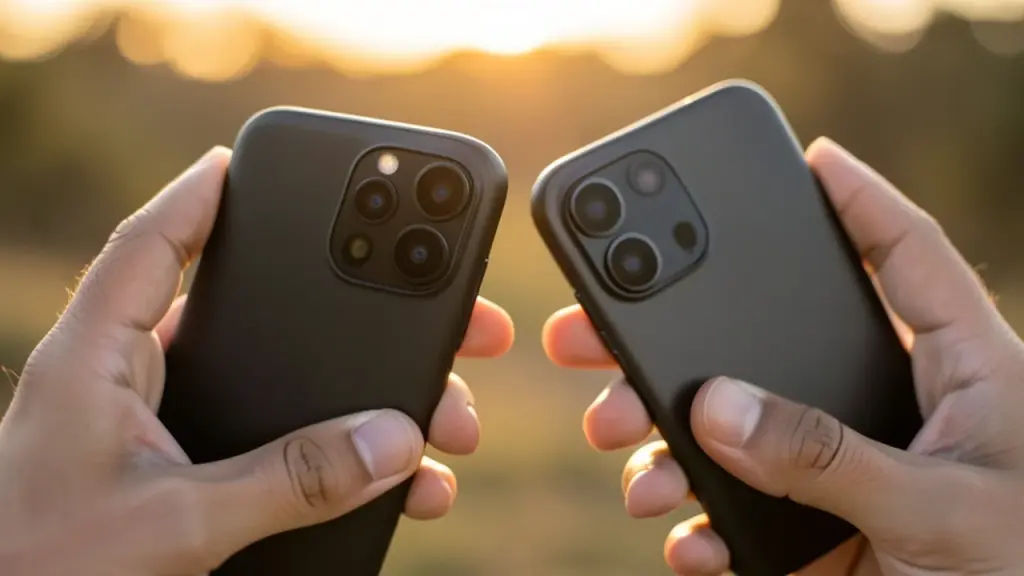
The Galaxy covers more zoom levels on paper, but the Pixel often matches it in practice. Samsung gives you two zoom cameras, at 3x and 5x, next to its 200MP f/1.4 main sensor. Google sticks to one 5x telephoto, a 48MP unit with a larger sensor, beside a 50MP main camera, and fills in 3x by blending the telephoto with the main camera.
Daylight 1x: very similar. The Pixel may resolve slightly more detail, and the Galaxy’s colors are warmer and more saturated.
2x: a clear Galaxy win; the Pixel’s 2x detail disappoints.
3x: the Pixel’s blended shots are often sharper in the middle of the frame than the Galaxy’s dedicated 3x camera.
10x: the Galaxy wins in bright outdoor light; the Pixel wins in dim scenes.
Night ultrawide: a modest Galaxy win, because this year’s Pixel ultrawide is weaker in low light than last year’s.
Selfies: the Pixel’s 42MP ultrawide fits far more people in, while the Galaxy’s 12MP camera gives cleaner selfies day and night.
Video is Samsung’s. The Ultra records 8K at 30 fps and 4K at 120 fps on the phone, has a proper Pro video mode, the APV pro video format and a very steady Horizon Lock mode. The Pixel shoots 4K at 60 fps and only reaches 8K through Video Boost, which processes your clip in Google’s cloud.
06
What each phone means for everyday use
For daily life, the choice comes down to how you use your phone, more than to benchmark scores. Both get seven years of Android and security updates. Because the Galaxy went on sale about five months earlier, a Pixel bought now should stay supported a few months longer, assuming each company counts from launch.
Pick the Galaxy S26 Ultra if you:
play demanding games or keep phones for many years;
want the S Pen, Privacy Display or DeX, Samsung’s desktop mode for an external monitor;
shoot a lot of video or want the fastest top-ups;
already own a Galaxy Watch and use the Samsung Health Monitor app for blood pressure and ECG, which needs a Samsung phone.
Pick the Pixel 11 Pro XL if you:
want the brightest screen for outdoor use;
take group selfies often;
use magnetic accessories and don’t want a special case;
prefer a clean phone with no duplicate apps, and want Android features and Pixel Drops first;
want 512GB or 1TB of storage for less money.
Side-by-side reviews still lean toward the Galaxy as the better all-rounder. The Pixel’s new $949 starting price makes it the better value if speed isn’t your top priority.
07
Quick answers
Is the Pixel 11 Pro XL cheaper than the Galaxy S26 Ultra?
Yes at list price: $1,299 against $1,399.99 for 256GB, and Google’s late-October cut takes the Pixel to $949. Sale prices for the Galaxy have dipped as low as $949.99, so compare on the day you buy.
Which has better battery life?
It depends on the test. One lab called it a tie, and two others had the Galaxy lasting longer on the web, while the Pixel did better on video playback. The Galaxy charges noticeably faster.
Does the Pixel 11 Pro XL have a stylus or 3x zoom lens?
No. There’s no S Pen support and no dedicated 3x camera, though the Pixel’s blended 3x photos hold up well against the Galaxy’s.
Reviews are in. The OLED MacBook Pro wins on blacks, contrast and weight, but the mini-LED model still matches its speed and lasted longer in one battery test.