Saturday, 7 November 2026

touchscreen MacBook Pro rumor: Nov. 6 launch and M5 Pro/Max inside

Both rumors came true. Apple’s first touchscreen MacBook Pro ships November 6 with M5 Pro and M5 Max chips, an OLED screen and a $2,899 starting price.

MacBook Pro
Photo: Jack Baty from Grand Rapids, MI / CC BY-SA 2.0 (modified)

The short version

  • Apple’s first touchscreen MacBook Pro, called MacBook Pro with PROLED XDR Display, ships on Friday, November 6.
  • As rumored, it uses M5 Pro and M5 Max chips rather than M6, so the upgrade is the screen and design.
  • Prices start at $2,899 for the 14-inch and $3,399 for the 16-inch, $400 above matching non-touch models.
  • Touch works in existing apps because macOS turns taps into clicks, and several big apps are getting touch updates.
Quick read · 1 min

The rumors were right. Apple’s first touchscreen MacBook Pro, officially the MacBook Pro with PROLED XDR Display, went on pre-order on October 28 and ships on Friday, November 6. It uses the M5 Pro and M5 Max chips rather than the newer M6.

Prices start at $2,899 for the 14-inch and $3,399 for the 16-inch, $400 more than matching non-touch models. For that you get a tandem OLED screen with up to 2,000 nits of brightness, touch that works with existing apps, a Dynamic Island in place of the notch and a lighter body, with the 14-inch at three pounds.

Speed is unchanged from the non-touch M5 models, so this is a display and design upgrade. It suits photographers, editors and artists; most people will get better value from the $1,999 M6 MacBook Pro.

Back in 2010, Steve Jobs called touchscreen laptops “ergonomically terrible.” Now Apple is selling one. The first touchscreen MacBook Pro goes on sale on Friday, November 6, and it runs the M5 Pro and M5 Max chips, exactly as the mid-October rumor said.

If you’ve been waiting to see whether the reports were right before spending that much on a laptop, the answer is in. The release date held, the chips are the ones the rumor named, and Apple has now filled in what the rumors couldn’t: the price, the weight and how touch actually works on a Mac.

01

The touchscreen MacBook Pro release date and price

The touchscreen MacBook Pro was announced on October 28 at Apple’s “Pro and Tell” event in Los Angeles, with pre-orders opening that day and deliveries plus in-store sales starting November 6. Its official name is MacBook Pro with PROLED XDR Display, and it comes in 14-inch and 16-inch sizes, in Space Black or Silver.

US pricing starts at $2,899 for the 14-inch model and $3,399 for the 16-inch. That is a $400 premium over the equivalent non-touch MacBook Pro models, which Apple keeps selling. The extra money doesn’t buy a newer chip, more base memory or a bigger starting SSD; it pays for the new screen and body. Apple says the first rollout covers 30 countries and regions.

The November 6 date also matches the overnight store reset Apple had planned for November 5 into November 6, the clue that first pointed to a Friday release.

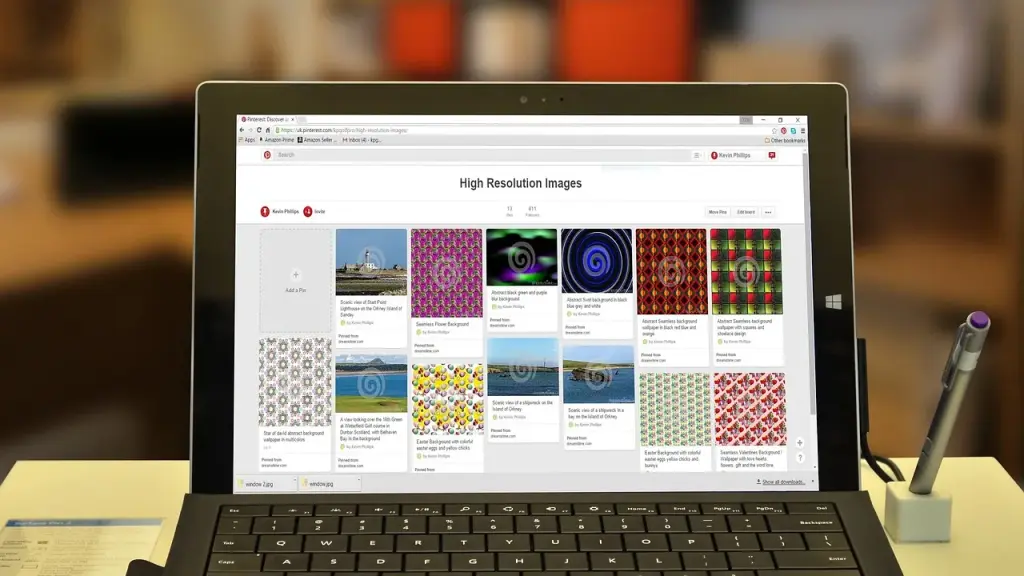
Concept image of a laptop with a touch-enabled display
02

Why it has M5 Pro and M5 Max chips instead of M6

The touchscreen MacBook Pro uses the same M5 Pro and M5 Max chips Apple introduced in its March MacBook Pro models. Early reports had linked the redesign to M6 Pro and M6 Max, but by mid-October the story had changed: Apple was reportedly skipping those chips to speed up work on the M7.

That leaves an odd split in Apple’s laptop range. The plain M6 chip went into the cheaper 14-inch MacBook Pro, which starts at $1,999 and has no touchscreen. The touch models keep the M5 Pro and M5 Max with the same CPU, GPU and memory options as the non-touch versions, up to 128GB of unified memory and up to 16TB of storage.

Apple did make one change under the hood: a new cooling design that steers warm air away from the OLED panel. There is still no base-chip touchscreen model. Earlier reports said a cheaper version with an M7 chip could follow as soon as next spring, but Apple hasn’t confirmed that.

Play video: Overtime Episode 084: iPhone 18 Pro - a fantastic pro camera experience
03

How touch works on the new MacBook Pro

Touch on the new MacBook Pro works alongside the keyboard and trackpad rather than replacing them. You can swipe to scroll a webpage, pinch to zoom a photo, draw, drag slides from one presentation into another, double-tap a window to fill the screen and flick windows into tiled positions.

Apple says the touch sensor sits inside the display panel, which avoids extra lag. Because macOS turns a tap into a click, many apps you already use should respond to touch on day one. Apple also redesigned the hinge so the screen wobbles less when you press it, and added video stabilization so your camera feed stays steady if you touch the screen during a call.

Developers can go further with dedicated gesture tools. Apple says Microsoft 365, Zoom, Canva, Notion, Lightroom, DaVinci Resolve and Blender are among the apps getting touch-specific updates later this year.

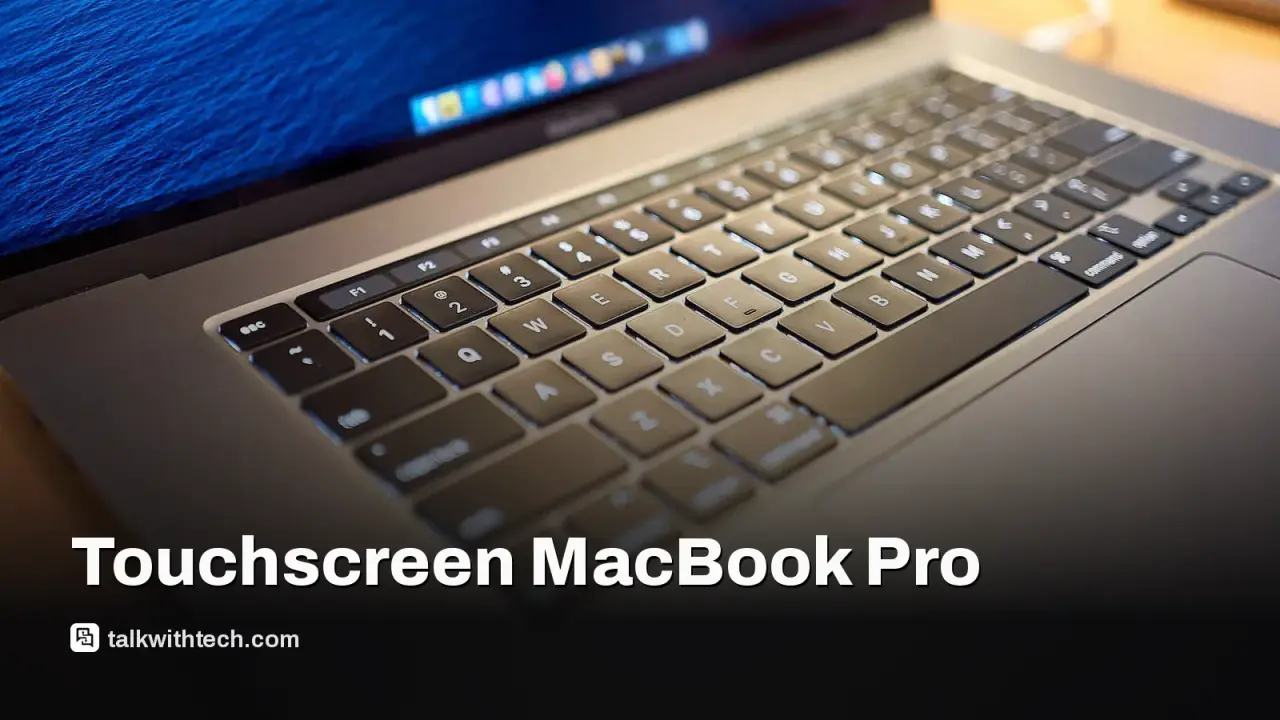
Slim laptop on a desk showing a keyboard and trackpad
04

The OLED screen and Dynamic Island, explained

The display is tandem OLED, two stacked OLED layers like the ones in the iPad Pro, which lets every pixel light up on its own for deeper blacks and less glow around bright objects. Whether you are watching HDR video or working in a normal document, it can hit a peak of 2,000 nits. It refreshes between 10Hz and 120Hz, and covers both the P3 and Adobe RGB color ranges that photographers use. A nano-texture finish is optional.

Thinner borders stretch the screens to 14.2 inches and 16.3 inches. The notch is gone, replaced by a small Dynamic Island that holds Spotlight, Live Activities and Siri AI, much like the pill-shaped area on recent iPhones. As rumored, Apple also brought back the glowing Apple logo on the lid.

The body is up to 1mm thinner, and the 14-inch model now weighs three pounds, about half a pound less than before, while the 16-inch weighs four. Ports stay generous: three Thunderbolt 5, HDMI, an SDXC card slot, MagSafe and a headphone jack.

05

What the touchscreen MacBook Pro means for buyers

For most people, this isn’t the MacBook to buy. If you mainly write, browse and stream, the $1,999 M6 MacBook Pro costs far less and is plenty fast for everyday work, and a non-touch M5 Pro model gives you the same performance as the touch version for $400 less.

The touchscreen model makes sense for people who will use the screen itself: photo and video editors who want a bright, color-accurate OLED, illustrators who like to work with their hands, and anyone who has missed touch after years on an iPad. Early hands-on testers said the lighter body was obvious the moment they picked it up and that the screen stole the show.

There are catches. Testers noticed fingerprints building up on the glass and some instability when tapping the top corners, even with the new hinge. Apple adds an oil-repelling coating to fight smudges, and recommends a soft, slightly damp cloth on a powered-off laptop for cleaning, never spraying liquid onto the screen. Some reviewers also wondered how full-screen games will handle the Dynamic Island cutout, something full reviews should answer.

If you already own a recent M5 Pro or M5 Max MacBook Pro, you won’t get any extra speed from switching. The upgrade is the display, the touch input and a lighter body.
06

Quick answers

When does the touchscreen MacBook Pro come out?

It went on pre-order on October 28 and reaches customers and Apple Stores on Friday, November 6.

Which chips are in the touchscreen MacBook Pro?

The M5 Pro and M5 Max, the same chips as Apple’s non-touch high-end MacBook Pro models. There is no M6 version with a touchscreen.

How much does the touchscreen MacBook Pro cost?

It starts at $2,899 for the 14-inch and $3,399 for the 16-inch in the US, $400 more than equivalent non-touch models.

You're reading the quick version.