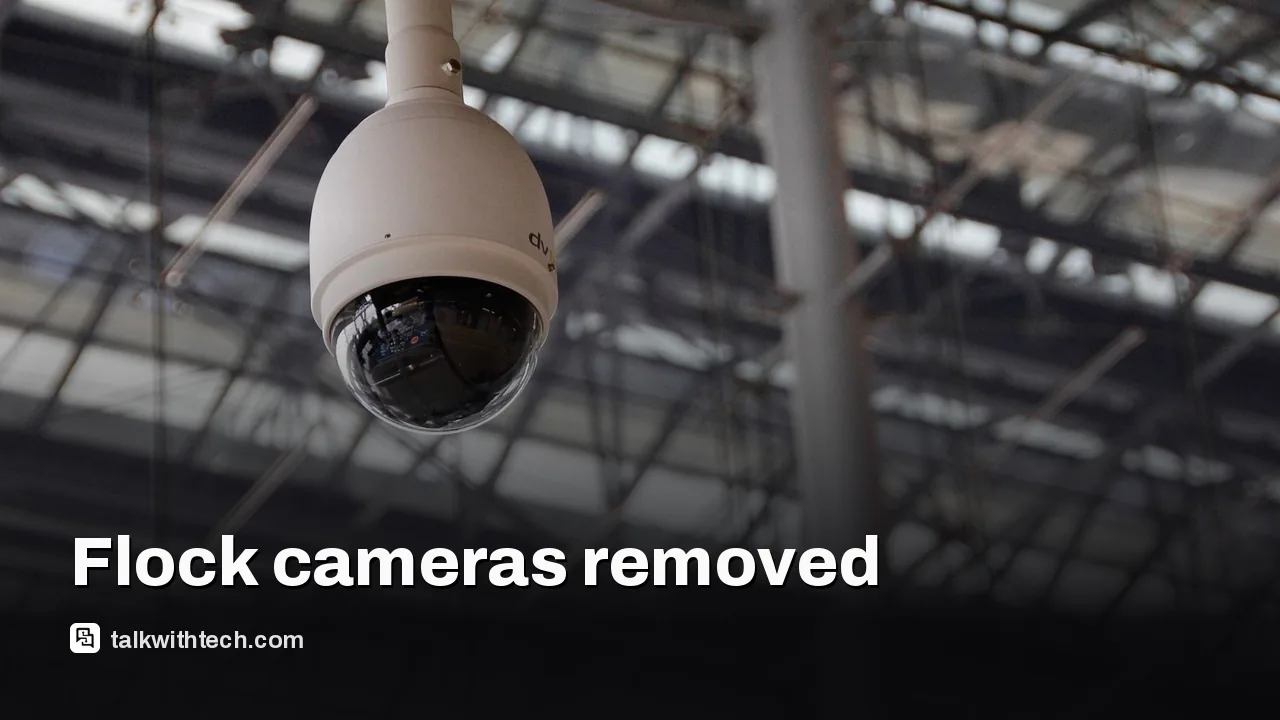
Elgin College removed Flock cameras after data sharing worries
Elgin Community College tried to cancel its Flock surveillance contract after worries about data sharing with federal agencies and access abuse, ending with cameras finally removed after months of back-and-forth.
In 2025, Elgin Community College installed six Flock safety cameras to improve campus safety.
By late 2025, the college warned that Flock was sharing data with Customs and Border Protection, and that access to feeds was being misused.
The college repeatedly tried to end the contract; Flock initially refused, and the cameras remained until the contract expired and were removed in April 2026.
The incident highlights tensions between campus safety tech, data sharing, and privacy rights.
Quick read · 1 min
Elgin Community College installed six Flock safety cameras in April 2025 to boost campus safety. By late 2025, concerns emerged that the system shared data with federal agencies and that access to feeds wasn’t tightly controlled. The college tried to end the contract, but the vendor resisted. After months of back-and-forth and camera coverings that were repeatedly removed during service, the cameras were removed in April 2026 when the contract expired. This highlights the balancing act between safety needs and privacy rights on campus. If your school uses surveillance tech, ask about data sharing, access controls, and retention now to avoid surprises later.
The story starts with a campus safety decision that spiraled into a dispute over data and access. In April 2025, Elgin Community College in Illinois installed six Flock safety cameras to help monitor campus activity. By September that year, the school’s leadership began raising concerns about how data collected by those cameras might be shared with Customs and Border Protection, along with worries that camera feeds were not adequately secured and that both law enforcement and company staff could be abusing their access. The tension grew into a fight over whether the cameras should stay on campus at all.
Elgin’s administration sought to cancel the contract, but Flock reportedly refused to remove the cameras, saying the school had not violated the agreement. The college then tried a more aggressive approach: cover the cameras to block footage and push the vendor to take them down. The back-and-forth escalated as crew members from an unmarked vehicle appeared to remove the coverings, prompting ongoing clashes between the college and the vendor over who was responsible for the footage and the ongoing presence of the cameras.
By December 2025, officials had offered to pay for the remaining months of the contract in an effort to end the arrangement, but still faced silence from Flock. After months of this tug-of-war, the college’s contract eventually expired, and Flock removed the cameras in April 2026. The episode has left campus administrators and privacy advocates asking hard questions about how surveillance tech is used in schools and who has access to the data those cameras collect.
For readers, the takeaway isn’t just about one college’s decision. It illustrates a broader debate playing out on campuses across the United States: safety tools can come with privacy costs, and contracts with vendors can give outside companies and agencies the keys to sensitive footage. The question now is how schools balance security needs with student privacy and civil liberties when choosing and managing surveillance tech.
01
What Flock cameras do and what the concerns were
Flock markets its cameras as safety tools that can detect unusual activity, help with incident response, and provide data to administrators and sometimes law enforcement. In this case, the college raised alarms about potential data sharing with a federal agency and about who could access the feeds. Privacy advocates warn that even seemingly neutral security systems can expose sensitive information about students and staff if access controls are weak or data is shared beyond the campus community.
02
What happened when the college tried to cancel
The college says it attempted to terminate the contract and remove the cameras after raising concerns in 2025. Flock reportedly pushed back, saying there was no contractual violation. The college then started covering the cameras, only to have services personnel uncover them again during service visits. The back-and-forth continued until the contract ended and the cameras were removed in April 2026.
03
What this means for students and staff
On campus safety, there’s a familiar tension: you want to feel protected, but you don’t want your movements and data tracked without clear safeguards. When vendors can share feeds with outside agencies or when access controls aren’t crystal clear, students may worry about who is watching and why. For families, this raises questions about what data schools collect, how it’s used, and how easily it can be turned over to third parties.
04
What schools and families can do now
1) Ask hard questions during vendor selection about data sharing, retention, and access controls. 2) Push for clear, written limits on who can view feeds and under what circumstances. 3) Demand transparency in any partnerships with government agencies. 4) If cameras are deployed, require an opt-out path or regular audits of who accessed footage and when.
Even with this case behind them, schools will keep evaluating camera programs. The core questions remain: Do the security benefits justify those data and privacy costs? And how will districts ensure accountability if they use surveillance tech in the future?
06
Quick answers
What happened at Elgin Community College?
The school installed six security cameras in 2025, faced data-sharing and access concerns, tried to cancel the contract, and the cameras were removed in April 2026 after the contract expired.