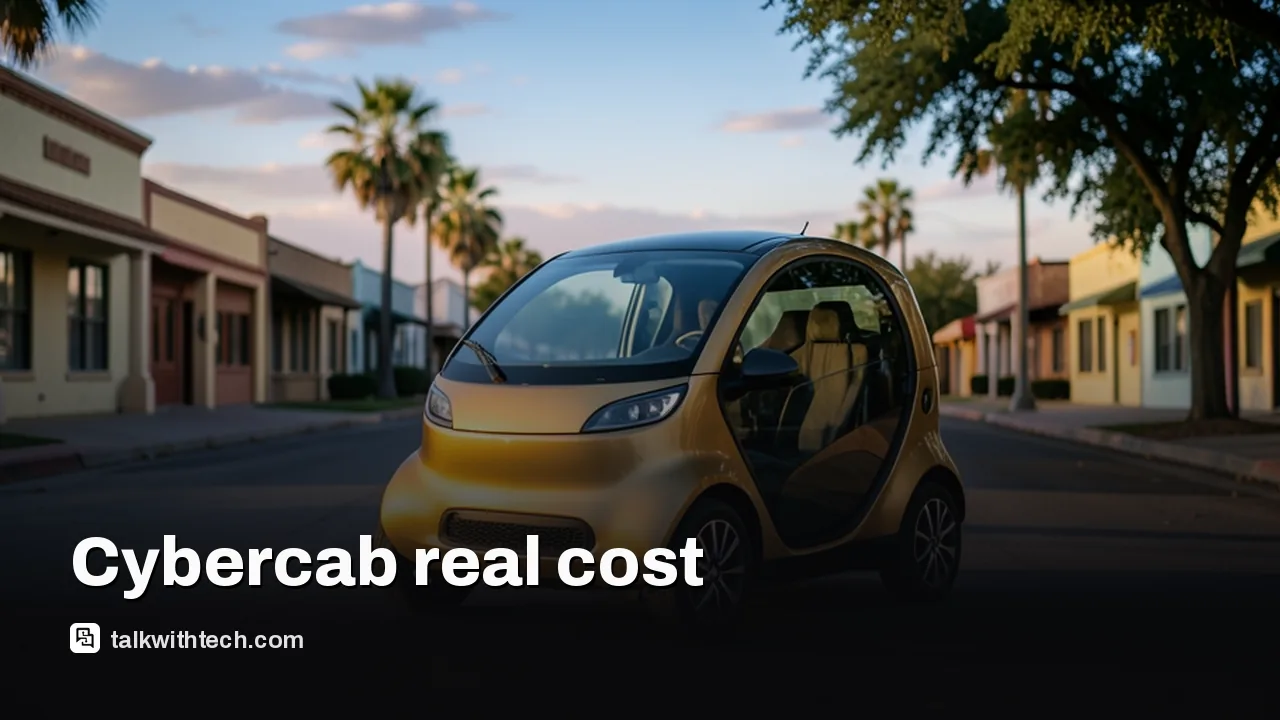
Tesla is inviting select US customers to order a Cybercab for personal use at $29,990 before taxes.
The car will not drive without a $299 monthly Autonomy Subscription, and ordering takes a $1,000 non-refundable deposit.
It only works inside Tesla's Robotaxi zones in Texas and Florida, and owners may not use it for paid rides.
NHTSA is still reviewing how Tesla certified a car with no steering wheel or pedals, and insurance is not included.
Quick read · 1 min
The Tesla Cybercab price for personal buyers is $29,990, but that sticker is only the start. Tesla is sending invitations to select customers, and every car comes with a required Autonomy Subscription of $299 a month. Without it, the two-seater has no way to move, because there is no steering wheel or pedals.
Ordering takes a $1,000 deposit you can't get back, and the estimated delivery is December 2026 in Austin. The car can only operate inside Tesla's Robotaxi zones in Texas and Florida, and the order terms ban using it for paid rides or deliveries.
Over five years, the fee adds $17,940, for a baseline of roughly $47,600.
Insurance is not covered by the subscription.
Federal safety regulators haven't ruled on the car's design yet.
Elon Musk says wider sales depend on regulators, and even he called the $299 fee too high.
The Tesla Cybercab price is $29,990, and for the first time you can actually order one for yourself. The catch sits one line down on the order page: a $299-a-month Autonomy Subscription that the car can’t run without, because it has no steering wheel and no pedals.
Tesla’s Robotaxi account on X said on Friday that it has started inviting select customers to buy the gold two-seater for personal use. If you have been waiting since Elon Musk first showed the car in 2024 with a promised sub-$30,000 price, this is the moment. It is also the moment to read the fine print, because the real cost, where the car can go and what you are allowed to do with it all look very different from that original pitch.
01
Tesla Cybercab price: what you really pay
The sticker price is $29,990 before taxes, and the subscription is mandatory. On the order page, the $299 monthly plan is already ticked, with the first month included in the purchase. After that, it’s billed every month until you cancel.
Here is how the costs stack up, using the figures Tesla and early reports have shared:
Car: $29,990 before taxes.
Order deposit: $1,000, and Tesla says it is non-refundable.
Autonomy Subscription: $299 a month, which works out to $3,588 a year.
Five years of the plan: about $17,940 on top of the sticker, even with the free first month.
Five-year baseline: roughly $47,600, before insurance, charging and taxes.
That five-year figure is more than a new Model 3 or Model Y, cars you can drive anywhere in the country. Tesla says the subscription covers the self-driving system, maintenance and towing. It does not cover auto insurance, so that bill comes separately.
Musk himself doesn’t seem to love the number. Replying to YouTuber Marques Brownlee on X, he said the fee was too high and suggested something closer to $115 a month, in line with what Tesla charges for Full Self-Driving and connectivity on its other cars. Full Self-Driving currently costs $99 a month. Tesla has not said it will lower the Cybercab fee.
02
Why canceling the subscription leaves you with a parked car
On any other Tesla, dropping Full Self-Driving just means you drive yourself again. The Cybercab has no manual fallback, so if the subscription ends, the car can’t legally go anywhere on public roads. In practice, it becomes a very expensive ornament.
The terms add more pressure on owners:
Tesla only needs to give 30 days’ notice before raising the subscription price.
If Tesla changes the rules and you keep using the service, you accept the new terms automatically.
If you cancel, or Tesla suspends your access, there’s no partial refund for the rest of that month.
The fine print says regular maintenance is required for the car to operate, along with the subscription.
03
How to buy a Tesla Cybercab, and who can
Right now, you can only buy a Tesla Cybercab if Tesla invites you. There is no public order page. The invitation email warns that initial availability is limited, and Tesla hasn’t said how it picks buyers or how many cars are set aside for private sale.
If you do get an invitation, here is what the order involves:
Accept the invite and place the order with the $1,000 non-refundable deposit.
Keep the pre-selected $299 monthly Autonomy Subscription, since the car won’t run without it.
Take delivery in Texas. The order page lists Austin with an estimated December 2026 date, and reports say deliveries are limited to five Texas cities: Dallas, Austin, San Antonio, Fort Worth and Houston.
Expect a limit of one Cybercab per buyer.
The December window isn’t guaranteed. Tesla had said for a while that it wanted Cybercabs on sale by the end of the year, and this offer keeps that promise on paper.
04
Where a personal Cybercab can actually drive
The car only operates inside Tesla’s existing Robotaxi service areas. Ashok Elluswamy, Tesla’s AI lead, said it will run unsupervised in the same places as Robotaxi, just serving the owner instead of paying riders. Today those zones cover eight cities: Tampa, Orlando and Miami in Florida, plus Houston, Austin, Fort Worth, San Antonio and Dallas in Texas.
Outside those zones, the car simply won’t operate. And the zones may be smaller than the maps suggest. After checking thousands of addresses in the Robotaxi app, an independent tracker concluded that the area where Tesla really accepts pickups and drop-offs covers only 59% to 78% of the advertised zones in six cities. In Austin, where these cars are being delivered, the figure was about 59%.
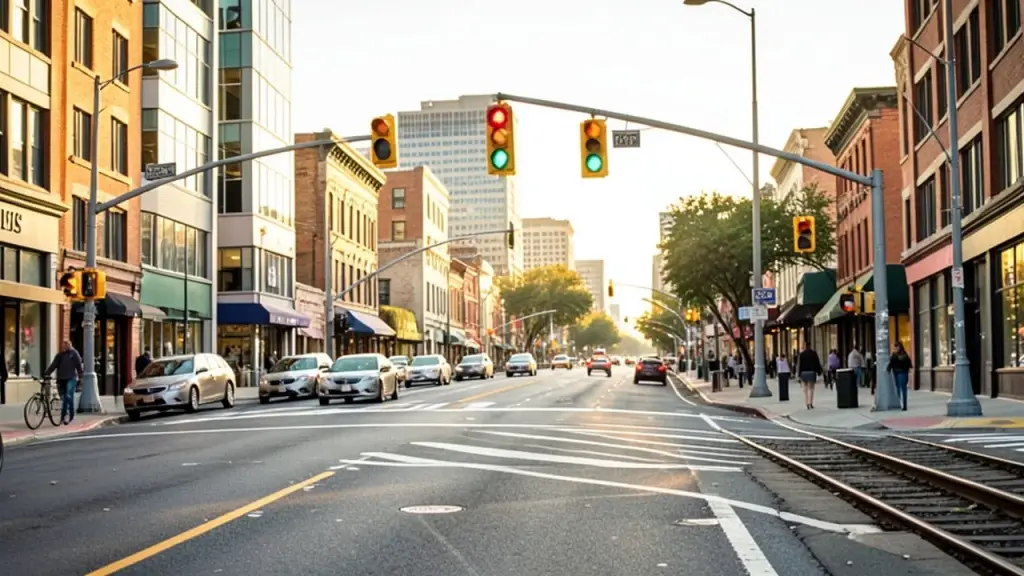
Railroad crossings seem to be one reason. In Houston, a tracker found the app quoting roughly 40 minutes for a two-block downtown trip, apparently because the car routed around rail lines. Musk has said Cybercab sales will open nationwide as regulators approve them, but there is no date, and nothing in the offer mentions the UK or Canada.
A big part of the 2024 pitch was that owners could add their Cybercab to Tesla’s ride-hailing network and earn money while they slept. The order terms rule that out for now. Owners can’t use the car for commercial purposes, so no Uber, no DoorDash and no Tesla Robotaxi network to help cover the $299 fee.
Elluswamy has floated the second quarter of 2027 as a possible date for owners’ cars to start earning on Tesla’s network. Until then, early buyers pay full price with no way to earn it back.
Tesla’s own fleet tells you where its focus is. The company told investors during its third-quarter earnings call that most Cybercabs would stay Tesla-owned and work as robotaxis. A crowd-sourced tracker counts 278 Cybercabs in operation, about 40 percent of the Robotaxi fleet, which began giving rides in Austin in September. Tesla also plans to wind down Cybertruck production around mid-2027 to make more room for robotaxis.
06
The open questions: insurance, liability and NHTSA
The biggest unknown isn’t the price. It’s whether the car is cleared to be on the road in private hands. Federal safety standards require traditional controls like a steering wheel and pedals, and the National Highway Traffic Safety Administration opened an audit into how Tesla self-certified the Cybercab soon after it started carrying passengers.
NHTSA has asked Tesla to show that a car with no brake pedal meets rules that require one. Tesla answered on October 30 and asked for its entire response to be kept confidential. The agency hasn’t ruled, and Tesla is taking deposits anyway.
Other questions are still open:
Insurance: Tesla hasn’t explained how personal insurers will cover a car with no human driver.
Liability: it’s unclear how blame is split between owner and Tesla if the car causes a crash while driving itself.
Parking: the car still has to sit somewhere once it drops you off, inside the zone.
For context on what you get: the Cybercab seats two, has a 21-inch center touchscreen and 20.1 cubic feet of cargo space, and you control trips through the Tesla app. It’s built at Gigafactory Texas, which began production earlier this year.
07
Quick answers
How much is the Tesla Cybercab?
The Cybercab costs $29,990 before taxes, plus a required $299 monthly Autonomy Subscription and a $1,000 non-refundable deposit to order.
Can you drive a Tesla Cybercab yourself?
No. It has no steering wheel or pedals, so it only moves under Tesla’s self-driving system, and only inside Robotaxi service areas in Texas and Florida.
Can I use a Cybercab for Uber or Tesla Robotaxi?
Not yet. The order terms ban commercial use, and Tesla’s AI lead has floated the second quarter of 2027 as a possible start for customer cars joining the network.
Nvidia's longtime CFO is now its interim boss after Jensen Huang's exit. Here's her background, what interim really means, and the test she faces Tuesday.
IBM is dropping visa and green card sponsorship for most roles in its biggest division. Here's who is hit, the year-end choice, and where sponsorship still exists.
6 min read
We use cookies to understand how readers use Talk With Tech, so we can make it better. Is that OK? Privacy policy
The Daily Brief
Today's biggest tech stories, in 5 minutes
Every morning, the news that matters from AI, phones, apps and the people shaping tech. Explained in plain English. Free.
One email a day. No spam, unsubscribe anytime. Privacy policy