Cyberattack European supermarkets forced fridges into 50°C defrost
The October hack that turned French supermarket freezers into heaters has since spread to other countries, reached blood banks and led France to accuse Iran.
Hackers switched supermarket fridges and freezers in France into a nonstop defrost cycle set to 50 degrees Celsius on an October night.
French prosecutors later said roughly 700 sites were affected and at least 15 fires broke out.
A second wave on November 2 hit stores in Sweden, Belgium, Ireland, the Netherlands, Luxembourg and Estonia.
France has blamed a hacking unit it links to Iran's Revolutionary Guard, an accusation Iran rejects.
Quick read · 1 min
On an October night, hackers took over refrigeration controls at French supermarkets and forced fridges and freezers into a nonstop defrost cycle set to 50 degrees Celsius. Stores including Intermarché, Super U and Leclerc threw out spoiled food. Prosecutors later counted roughly 700 affected sites and at least 15 fires.
A Dutch outage at Albert Heijn that same weekend turned out to be a different kind of incident: its parent company shut down its own IT systems after spotting suspicious activity, halting deliveries for nearly two weeks.
A second wave on November 2 hit grocers in Sweden, Belgium, Ireland, the Netherlands, Luxembourg and Estonia.
Three French blood banks were targeted too, but supplies were saved.
France blames a unit tied to Iran's Revolutionary Guard. Iran rejects that.
Researchers had warned in August about flaws in the type of controllers involved. Swedish officials say exposed devices now need updating or patching.
Shop workers in France opened up one October morning to freezers blowing hot air. Overnight, hackers had reached into the refrigeration controls of hundreds of stores and switched them to a defrost cycle that never ended, with the target temperature set to 50 degrees Celsius (122 degrees Fahrenheit). The cyberattack on European supermarkets had begun, and it did not stay in France.
Nothing was stolen. No customer passwords leaked. What this attack did was ruin food, start fires and show that the plain plastic box controlling a chiller cabinet can be reached from another country. Within weeks the same trick hit grocers in half a dozen more countries and even blood banks, and France was pointing the finger at Iran.
01
How the supermarket fridge cyberattack worked
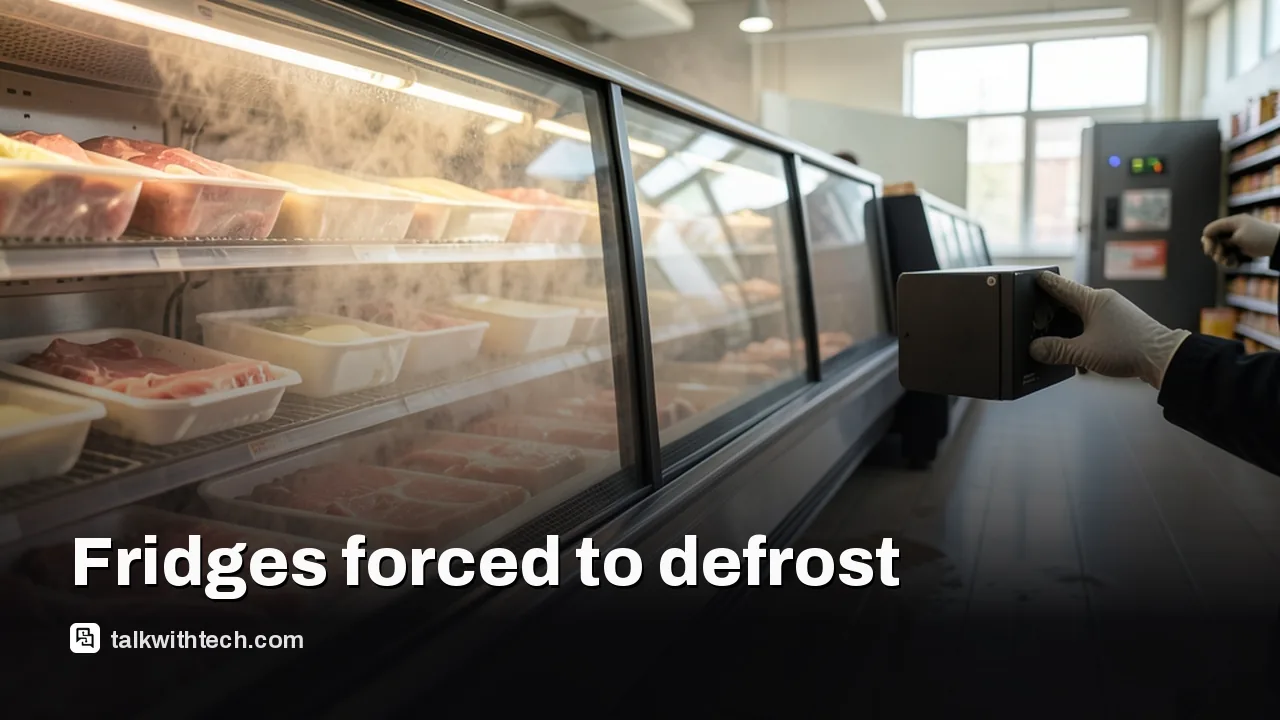
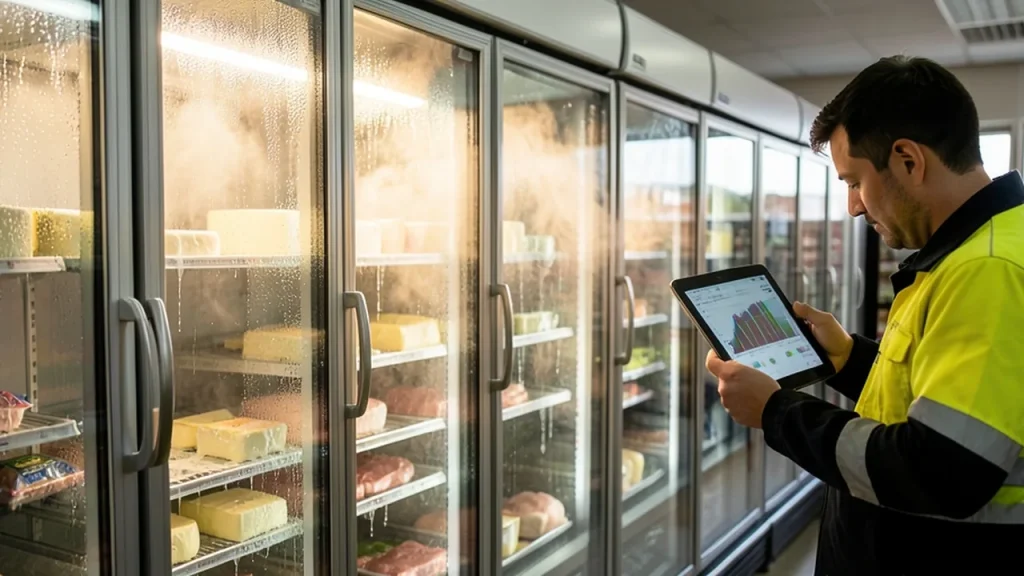
The attackers abused a normal feature. Fridges and freezers build up ice on the part that does the cooling, so they melt it off on a schedule, a function that usually runs for only about two hours a day. The hackers reconfigured it to run continuously and raised the temperature setting to 50 degrees. Staff described heat pouring out of the cabinets.
The first night was Sunday, October 11. The owner of Intermarché said about 150 of its stores were hit and that fridges and freezers stayed hot for around six hours. Coopérative U, the group behind Super U, confirmed the attack publicly through its chief executive, Dominique Schelcher, who called it “extremely serious.” Fewer than 100 of its stores were affected. Leclerc stores were hit as well, and later reports added Carrefour and Monoprix to the list.
Stores threw out meat, vegetables and frozen goods. Early estimates put the losses near 300,000 euros, with warnings that the national bill could reach several million. When French prosecutors later summed up the damage, they counted roughly 700 affected sites across the country and at least 15 fires.
02
The Dutch outage that looked like part of it
That same weekend, shoppers in the Netherlands found Albert Heijn’s website and app down, electronic shelf labels showing wrong prices and the loyalty card not working. Early coverage, including the first version of this article, treated it as part of one Europe-wide strike. At the time nobody could say whether the two were connected.
What is known is that the Dutch trouble had a different shape. Parent company Ahold Delhaize spotted suspicious activity in its IT systems and shut several of them down itself as a precaution. That knocked out online ordering and deliveries at Albert Heijn and sister chains Etos and Gall & Gall, and disrupted the Belgian chain Delhaize too. Shelves emptied because distribution stalled.
Deliveries only restarted nearly two weeks later, after damage estimated at €120 million to €150 million. Customers whose orders never arrived were promised a €10 credit. The company filed a police report and said it had found no evidence that customer or employee data was taken. It has since warned investors that fourth-quarter revenue will come in €200 million to €250 million lower because of the incident.
Je confirme qu’une cyberattaque touche depuis cette nuit les installations de production de froid de plusieurs magasins de notre réseau @CooperativeU. Nos équipes sont pleinement mobilisées, en lien avec les frigoristes, pour rétablir la situation au plus vite. Une enquête devra…
On Monday, November 2, the defrost trick came back. Stores in Sweden, Belgium, Ireland, the Netherlands, Luxembourg and Estonia reported overnight temperature spikes and spoiled stock.
The scale per chain was small but the spread was wide. Colruyt said five shops in Belgium were attacked. Carrefour’s Belgian arm counted 15 of its more than 700 stores. In Sweden, Coop reported six stores and ICA a small number that used an outside supplier. Irish wholesaler Musgrave pulled chilled and frozen products at 13 SuperValu stores. An Ikea store in Mons, Belgium, had its food units hit. About 40 Delhaize supermarkets in Belgium and Luxembourg were affected, this time with cooling systems tampered with directly.
That same night, attackers also reached cold storage controls at three regional blood banks in France. Staff on duty got alerts and moved the blood to refrigerators that were not connected, and the health ministry said supplies were not harmed.
One researcher has estimated that around 940 shops across Europe have been affected in total.
04
Who France says was behind it
France has formally blamed Iran. The Paris prosecutor opened an inquiry into a hacking unit called Shahid Kaveh, which the French foreign ministry ties to Iran’s Islamic Revolutionary Guard Corps, and asked for international arrest warrants for three men it describes as the unit’s leader and two commanders. Investigators cited Farsi-language traces in the attack setup and internet addresses linked to devices in Iran.
France summoned Iran’s ambassador and is pushing for European sanctions. Iran’s foreign ministry answered on 10 November that it “categorically rejects” the accusation.
The picture for the November wave is less settled. Two pro-Russian groups claimed responsibility for those attacks, and Sweden’s national cybersecurity center has declined to speculate on who did it.
The French chains’ cooling systems were managed by Danfoss, a Danish refrigeration company, according to Intermarché’s owner. Back in August, security researchers at Claroty had reported flaws in Danfoss controllers used in supermarkets and cold stores, including a hidden login based on a daily code that could hand an attacker full control. Danfoss released a fix, the researchers said, but they also found thousands of the controllers reachable from the open internet. Whether those specific flaws were used in October has not been confirmed.
Security firm Lupovis set up fake refrigeration controllers as bait and logged 256 attempted attacks from 91 sources over 10 days. Its chief executive said the intruders relied on old vulnerabilities.
06
What this means for your weekly shop
The EU’s food commissioner said there is no risk to the bloc’s food security, while calling the incidents a deliberate attempt to shake confidence in the food supply. For shoppers, the effects were empty freezer aisles, wrong prices on digital labels and canceled deliveries.
It has also reached Britain. A London organic wholesaler found six of its 10 refrigeration controllers altered on the morning of November 2, and only heard from the National Cyber Security Centre fourteen hours later. In the US, Army investigators are trying to work out what caused refrigeration failures at several military commissaries in August.
Simply unplugging fridges from the network is not easy. Supermarkets use those connections to catch faults and send engineers. Sweden’s cybersecurity chief put the job plainly: exposed devices have to be updated or patched.
07
Quick answers
Who was behind the supermarket fridge cyberattack?
France blames a hacking unit it links to Iran’s Revolutionary Guard for the October attack on French stores. Iran denies it. Pro-Russian groups claimed the November wave.
Was customer data stolen?
The fridge attacks were about sabotage, not data. Ahold Delhaize, hit by a separate incident, said it found no evidence that customer data was accessed.
Is food from affected stores safe?
Chains said they removed and discarded products from units that warmed up.
OpenRouter says its own systems were not breached, but prompts it passed to outside AI providers were copied, read and used, even ones marked never stored.