Sunday, 22 November 2026

South Korea AI cheating scandal: 111 caught, buttons covered up

A tiny camera and a chatbot beat one national exam. Days later, half a million students had their glasses, buttons and bags checked, and the minister quit.

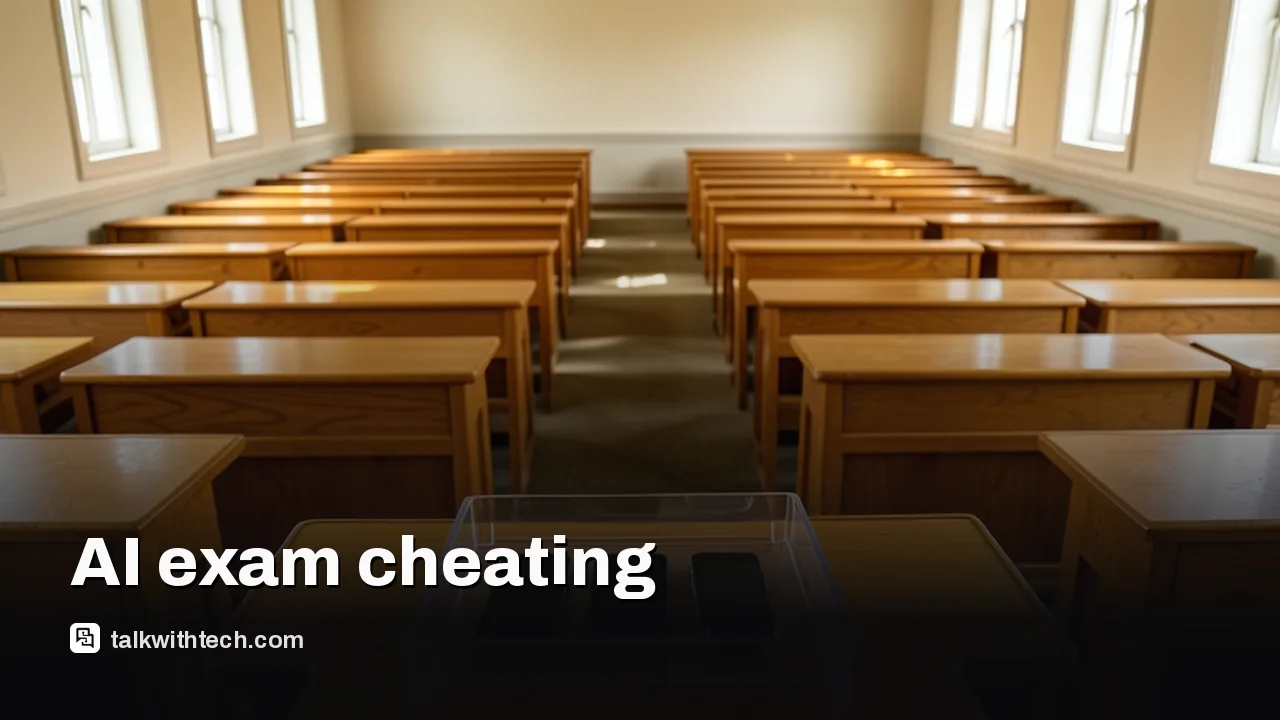
Empty exam hall with a tray of switched-off phones and watches at the front

The short version

  • South Korea's education minister, Choi Kyo-jin, resigned on Sunday after a week of chaos over AI cheating rules.
  • The panic began when the top scorer in a tax accountant exam confessed to using a miniature camera and AI.
  • Officials checked glasses, watches, buttons and bags at the college entrance exam and sent loud alerts to every phone.
  • Authorities logged 111 cases of misconduct involving electronic devices, nearly half found through the phone alerts.
Quick read · 2 min

South Korea's education minister, Choi Kyo-jin, has resigned after a week in which fear of AI cheating upended the country's college entrance exam. President Lee Jae Myung accepted the resignation within an hour.

The panic began when the top scorer in a tax accountant exam confessed to using a miniature camera and generative AI. The ministry's plan had centered on smart glasses, so officials rushed out new rules days before the test.

  • Glasses, watches, collars, sleeves and buttons were inspected, and buttons were covered with stickers.
  • Students lost the right to bring their own erasers and pens one day before the exam.
  • Loud emergency alerts were sent to every phone to expose hidden handsets.

Officials logged 111 cases of misconduct involving electronic devices, nearly half found through the alerts. The government now plans exam bans of up to 10 years for cheats and is weighing radio-frequency detectors for next year.

The South Korea AI cheating scandal has now cost the country’s education minister his job. Choi Kyo-jin resigned on Sunday, three days after a college entrance exam where officials inspected students’ glasses, covered their shirt buttons with stickers and set off alarms on every phone in the country.

It matters well beyond Seoul. The cheating that set all this off did not need exotic spy gear. It took a camera small enough to hide, a smartphone and a generative AI chatbot, the kind of tools almost anyone can get. What followed is the most detailed picture so far of a government trying to keep AI out of an exam room at short notice, and of how messy that gets.

01

How one tax exam set off a national panic

The trouble started with a different test. On Nov. 15, the top scorer in a national tax accountant exam admitted to cheating his way to a near-perfect score. He confessed to photographing the questions with a miniature camera and sending them to generative AI to get the answers.

The timing could hardly have been worse. The confession came four days before the College Scholastic Ability Test, the entrance exam known in Korean as the Suneung. It decides which university a student can attend, and the country takes it very seriously. Flights are rescheduled during the 25-minute English listening section to cut noise, share trading starts an hour later than normal, and traffic is held back 200 meters from each test center.

This year, 551,864 candidates registered to sit the exam at 1,312 centers. All of them were about to feel the consequences of one man’s hidden camera.

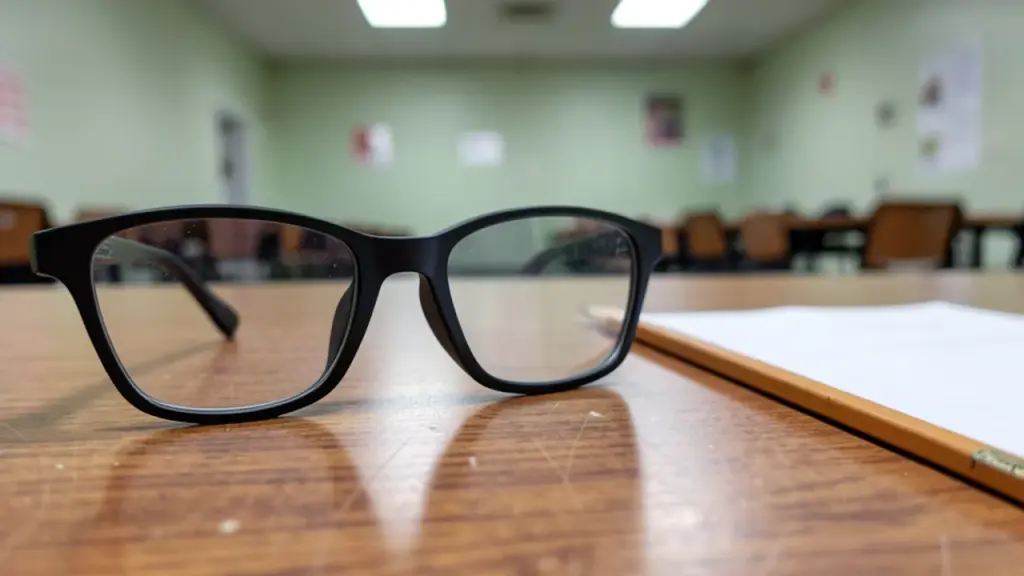
Black-framed glasses on an exam desk beside a pencil and answer sheet
02

Why a plan built for smart glasses fell short

The education ministry had seen AI cheating coming, but it had bet on the wrong gadget. Smart glasses were added to the list of banned items back in July. In the days after the confession, Choi told lawmakers that every test site would get at least one staff member dedicated to smart glasses cases, that real pairs had been handed to regional education offices so proctors could learn to spot them, and that a hotline would connect test sites to the ministry.

There had been speculation that AI glasses were behind the tax exam case. They were not. The cheater had used a tiny camera, and the plan Choi presented on Monday did not deal with methods other than glasses.

Then came the remark that defined the week. At a parliamentary hearing, Choi, who is 72, was asked whether he was confident that cheats would be caught. He answered that, because of his age, he was not. The ministry later said he had been expressing sympathy for how hard the job is for proctors, and had not meant the ministry could not cope. The backlash came anyway.
03

The rules that changed day by day

The anti-cheating rules were rewritten several times in the final days before the exam, and that scramble is what Choi finally apologized for. Here is how the measures piled up:

  • Two days before: the ministry said it would bring in 8,400 extra staff. About 6,600 were hallway proctors and some 1,800 were there to detect smart devices. Students were told to cover the buttons on their clothes with stickers.
  • One day before: students were barred from bringing their own marking pens, erasers, correction tape and mechanical pencil lead, all of which had been allowed before. Newly assigned proctors got online training arranged in a hurry that same day.
  • On exam day: smart devices had to be switched off and handed in. Bags left in corridors were checked for anything still powered on. Officials inspected glasses and watches, along with collars, sleeves and buttons, for hidden cameras. Public Wi-Fi in testing areas was blocked.

Some people called for the exam to be postponed. The ministry refused, warning that a delay would cause even more disruption.

Choi himself faded from view. The prime minister, Han Seong-sook, gave the public address on preventing AI cheating instead of him, and a vice minister fronted the briefings before and on exam day.

School corridor with backpacks lined up outside closed exam rooms
04

The phone alert trick that caught the most cheats

The most effective measure was also the bluntest. The government sent emergency alerts to every phone in the country. They sounded at full volume and could not be silenced, so any handset a student had kept back would give itself away.

It worked. By the official count, Thursday’s exam produced 111 cases of misconduct tied to electronic devices, and the alerts exposed nearly half of them.

The physical checks got worse reviews. Some test takers said practice varied widely from one site to the next, with buttons left without stickers at some and glasses barely looked at. A group of high school seniors and other candidates accused the ministry of pushing responsibility onto proctors without giving them clear manuals or technical support, and called for Choi to go.

05

What this means if you sit or run exams

For students and parents elsewhere, the lesson from Seoul is in the details. The method that caused the panic used a concealed camera, a phone and a chatbot. Rules written around one device, in this case smart glasses, missed it.

The response also shows the cost of acting late. Honest candidates lost familiar items such as their own erasers the day before the biggest test of their lives, and proctors were trained online at the last minute. Choi admitted as much in his statement, saying the late changes had caused inconvenience to the public and to test takers in particular.

South Korea is now reaching for tougher penalties. The current law voids a cheat’s result and bars them from the following year’s exam. The ministry first proposed extending that ban to three years, and the government now plans to shut cheats out for as long as 10 years. People who report cheating could earn a reward too, with a ceiling of 100 million won, about $75,000.

06

What happens next

President Lee Jae Myung accepted Choi’s resignation within an hour, and his office said a successor will be appointed through the usual process. Choi had been in the job for 14 months. In his statement he said he took “full responsibility”.

The prime minister has been told to oversee the follow-up work. The opposition says a resignation is not enough and wants a full investigation into how the government handled the exam.

On the technical side, the ministry has said it will consult specialist bodies about radio-frequency detectors, devices that pick up wireless signals, and consider bringing them into test sites for next year’s exam.

07

Quick answers

Why did South Korea’s education minister resign?

Choi Kyo-jin stepped down on Sunday over the confusion caused by last-minute anti-cheating rules before the college entrance exam, and after he told lawmakers he was not confident cheats would be caught.

How many students were caught cheating in the Suneung?

The official count is 111 cases of misconduct tied to electronic devices on exam day. Nearly half were detected through emergency alerts sent to phones.

Were smart glasses used to cheat?

Not in the case that started the scandal. The tax accountant exam candidate confessed to using a miniature camera and generative AI, though the ministry’s first measures focused on smart glasses.

You're reading the quick version.