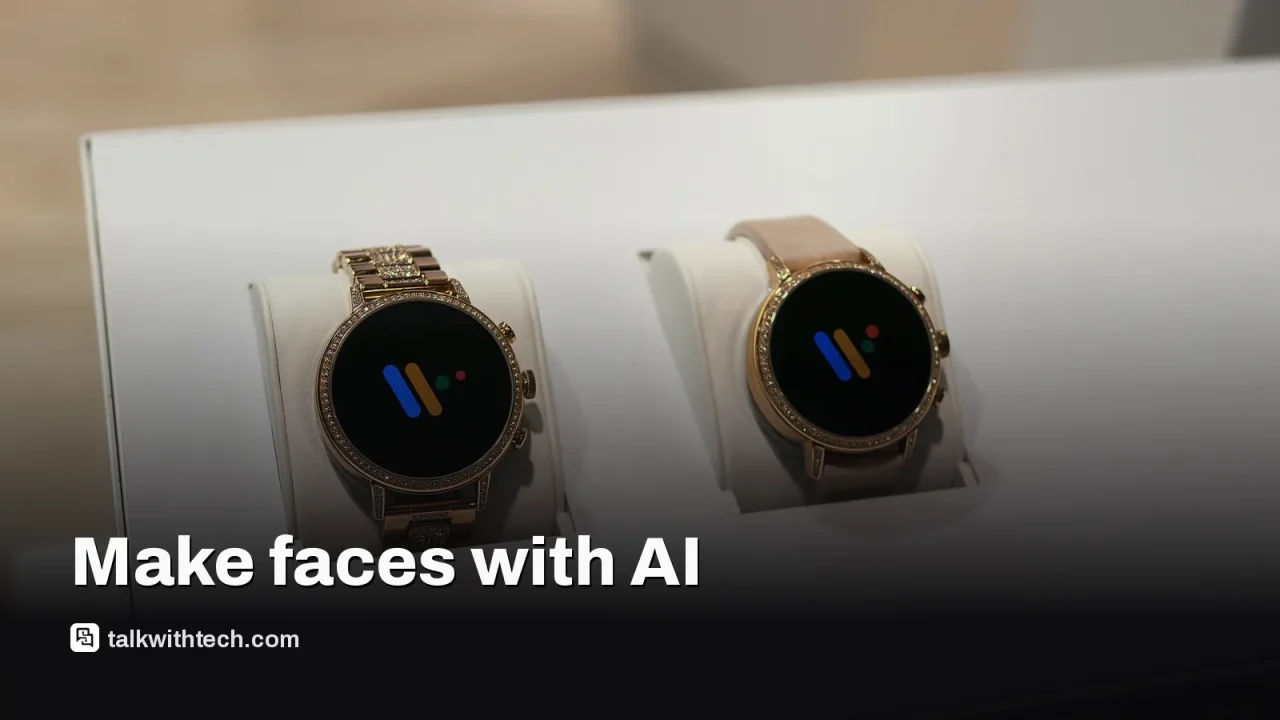
A Pixel Watch 4 software update adds Google's AI watch face designer.
The feature brings the ability to create custom faces using prompts, powered by Gemini Intelligence.
Pixel Watch 4 gains several Pixel Watch 5 faces and the Steph Curry dial through this update.
Rollout is gradual, so not every device will see the feature immediately.
Quick read · 1 min
Google has brought its AI watch face designer to the Pixel Watch 4 through a software update. The feature, which started on the Pixel Watch 5, lets you create custom watch faces by describing what you want in the Pixel Watch app, with Gemini Intelligence handling the generation. The update also adds several Pixel Watch 5 faces, including the Steph Curry dial, to the Pixel Watch 4.
For everyday users, this means more personalized looks with less fiddling. The rollout is gradual, so it may take a bit for everyone to see the feature.
What to do now: check for updates in your Pixel Watch app and try a few prompts to test how well the generator works on your device.
Look for the update in your Pixel Watch 4
Open the Pixel Watch app and try a prompt
Compare with existing faces and pick your favorite
The Pixel Watch 4 is getting an AI upgrade that mirrors a feature first seen on the Pixel Watch 5. A software update adds Google’s AI watch face designer to the older model, expanding how users can personalize their watch face beyond a static gallery.
In practical terms, this means you can describe the look you want in the Pixel Watch app and have the AI generate a matching watch face. The tool uses Google’s Gemini Intelligence to translate prompts into visuals, giving you a quick path to a face that fits your mood, activity, or day of the week. The update also brings several Pixel Watch 5 stock faces, including Weave, Modular, Reveal, and Chronograph, plus the Steph Curry dial, to Pixel Watch 4 owners.
As with many AI features, results can vary. The generated designs depend on the prompt and how the device processes the prompt, and some attempts may be imperfect. Still, for people who enjoy swapping styles, it offers a straightforward way to customize the look without juggling third‑party apps or manual tinkering.
The rollout is ongoing, so if you don’t see the feature yet, keep checking for updates in the Pixel Watch app. It’s common for Google to release new capabilities to older devices in waves rather than all at once.
01
What this means for everyday users
For most users, this is a small, pleasant enhancement. It makes it easier to tailor your watch face to your day’s plans, whether you’re exercising, commuting, or heading to a meeting. The prompt-based design tool sits inside the familiar Pixel Watch app, so there’s no need to install extra software or hunt through dozens of templates.
02
Device coverage and timing
The AI face designer first appeared on the Pixel Watch 5 and is now reaching Pixel Watch 4 via the latest update. Because Google rolls these things out gradually, some users may see it sooner than others.
03
How it works in plain terms
Think of it as a tiny design assistant inside your watch. You tell it what you want, colors, layout, data you want shown, and the Gemini Intelligence engine builds a matching face. If you’d rather stick with familiar looks, you can still choose standard, predefined faces.
04
What happens next
If you’re curious, open the Pixel Watch app and look for the new face designer prompt. Try a few descriptions and compare the results with the built‑in faces. Google may refine the feature over time as more users try it on different models.
Right now, it’s making its way to Pixel Watch 4 after starting on Pixel Watch 5. Google usually extends features to other devices in later updates, so keep an eye out for new prompts or faces in future releases.
Do I need special tech skills?
No. You write a short description in the Pixel Watch app, and the AI does the rest.
AI watch face designer on Pixel Watch 4
Prompts power custom faces via Gemini Intelligence
Starting with upcoming renewals after May 2, 2027, OneDrive storage for many Microsoft 365 plans will be shared among all users on the plan, instead of 1 TB per person.