Friday, 20 November 2026

OpenAI phone release date: late 2027 at the earliest, reports say

A Foxconn unit has reportedly landed the order to assemble OpenAI's first phone. Here's the timeline, the rumored specs and what's still unconfirmed.

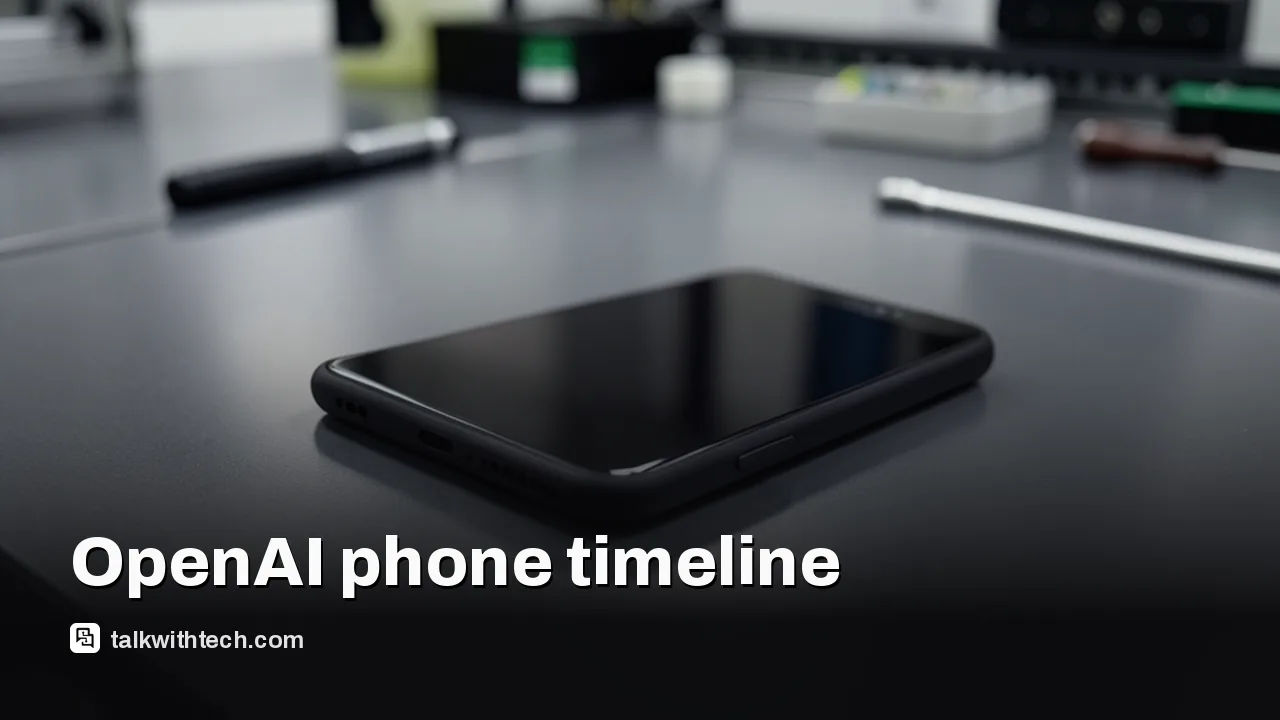
Unbranded smartphone prototype on a factory assembly bench

The short version

  • Chinese supply-chain reports say Foxconn subsidiary FIH Mobile will assemble OpenAI's first smartphone.
  • A second report puts the phone on sale in late 2027 or sometime in 2028.
  • Neither OpenAI nor Foxconn has confirmed the order, and no design, price or specs are official.
  • Analyst Ming-Chi Kuo earlier tipped a custom MediaTek chip and an agent-first design built around AI.
Quick read · 1 min

OpenAI's first smartphone may be assembled by FIH Mobile, a subsidiary of iPhone builder Foxconn, according to two Chinese supply-chain reports. One of them says the phone could go on sale in late 2027 or in 2028.

Neither OpenAI nor Foxconn has confirmed the order, and the reports give no order size, design or price. Analyst Ming-Chi Kuo had earlier named Luxshare as the main partner; it now appears among the parts suppliers instead.

  • Rumored chip: a custom MediaTek Dimensity 9600 with two AI processors.
  • Big idea: an AI agent that does tasks for you instead of you hopping between apps.
  • Complication: Apple and OpenAI are suing each other over alleged stolen trade secrets.

For now, nothing changes for iPhone or Android owners. ChatGPT keeps running on the phone you have, and anyone buying a phone this season shouldn't wait for this one.

The company behind ChatGPT may have picked the same factory partner that builds iPhones. Two supply-chain reports out of China say Foxconn subsidiary FIH Mobile has won the order to assemble OpenAI’s first smartphone, and one of them puts the OpenAI phone release date in late 2027 or 2028.

None of this is official. OpenAI has never said it is making a phone, and Foxconn hasn’t confirmed anything. But if you’ve been wondering whether a ChatGPT phone is a real product or just chatter, this is the most concrete sign yet that hardware is moving through a factory pipeline. It also means anyone hoping to buy one should plan on waiting at least a year, probably more.

01

When is the OpenAI phone release date?

The best current guess for the OpenAI phone release date is late 2027 or sometime in 2028, according to a report from Cailian Press that cites supply-chain sources. That window refers to when the phone could reach shoppers, not when factories start building it.

The other report, from China’s Securities Times, named FIH Mobile as the assembler but said the order size, product plans and mass production schedule are still unknown. So the date comes from one outlet, the factory name from another, and neither company is talking.

Earlier estimates moved around. In April, analyst Ming-Chi Kuo of TF International Securities said production could begin in 2028. A month later he said OpenAI had fast-tracked the project and might pull mass production forward to the first half of 2027. Putting those together, the realistic picture is phones coming off a line in 2027 at the soonest, with a launch toward the end of that year if everything goes to plan.

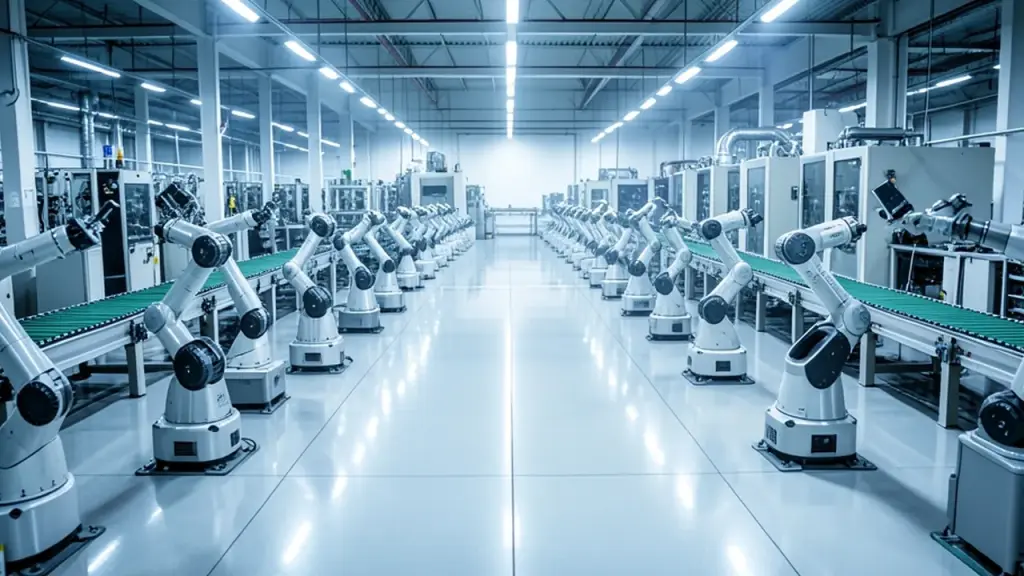
Robotic arms on an electronics factory floor
02

Foxconn or Luxshare: who is really building it?

The surprise in this week’s reports is the name. Kuo had previously described Luxshare as the phone’s exclusive partner for both design and manufacturing. The new reports put FIH Mobile in charge of final assembly instead.

Luxshare hasn’t vanished from the story, though. The Cailian Press report lists it among several Apple suppliers working on parts, alongside AAC Technologies and Lingyi iTech. One likely reading is that the work is being split, with different firms making components and one firm putting the finished phone together. Nobody has confirmed that arrangement.

FIH Mobile designs, makes and assembles phones and other electronics, and its parent Foxconn is one of Apple’s main iPhone builders. Foxconn and OpenAI also already work together. They announced a deal in November 2025 covering the design and manufacturing groundwork for AI data center equipment. In late October, Foxconn chairman Young Liu said the two companies were talking about new joint projects, though he didn’t name any products.

03

What’s inside: the rumored chip and specs

The new reports say nothing about hardware. The spec talk comes from Kuo’s earlier notes, so treat it as an analyst’s forecast rather than a leak of finished parts.

  • Processor: a custom version of MediaTek’s Dimensity 9600, made on TSMC’s 2nm-class N2P process. Kuo had said Qualcomm was also in the running before MediaTek pulled ahead.
  • AI hardware: two dedicated AI processing units (NPUs, chips built to run AI tasks quickly and efficiently).
  • Storage and memory: UFS 5.0 storage paired with LPDDR6 RAM, both next-generation standards.
  • Cameras: a strong imaging focus, so the AI can better understand what’s around you.

Kuo also estimated shipments of around 30 million units across 2027 and 2028 if development stays on schedule. For a brand-new phone maker, that would be an ambitious start.

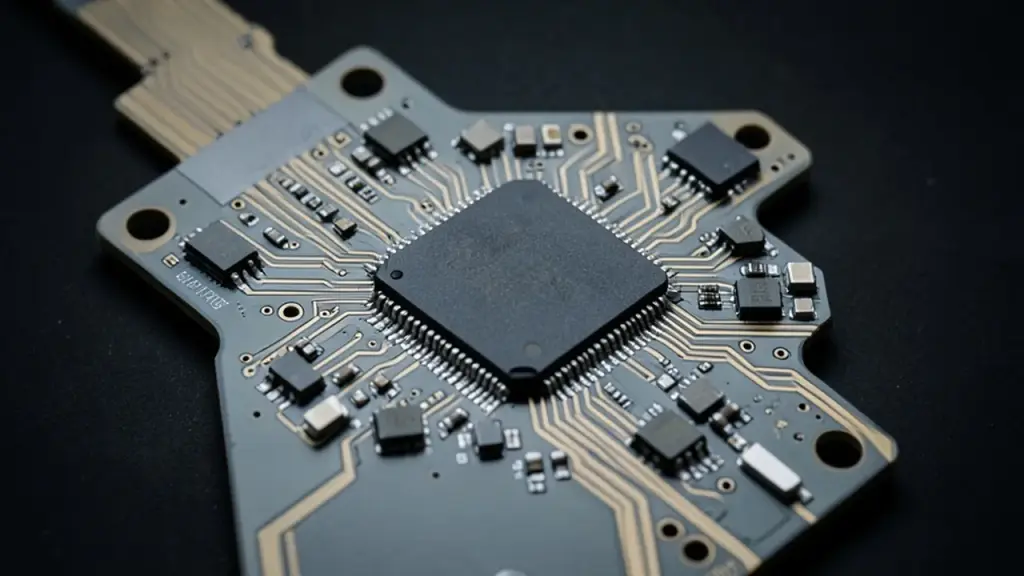
Close-up of a smartphone circuit board and processor
04

Why OpenAI wants its own phone at all

Right now ChatGPT lives inside other companies’ systems. On an iPhone or an Android phone, Apple and Google decide what an app can run in the background, which sensors it can tap and how much access it gets to your messages and calendar. Owning the hardware would let OpenAI set those rules itself.

That matters because the pitch is an agent-first phone. Instead of hopping between apps, you’d tell the phone what you want, say, move a meeting and let everyone know, and an AI agent would do the steps for you, as long as it has access to the right services. No prototype has shown this working in public, and it’s unclear how much would run on the phone versus in OpenAI’s cloud, or what privacy controls you’d get.

Don’t confuse this with the screenless gadget OpenAI is building with former Apple design chief Jony Ive, whose company io joined OpenAI in July 2025. That device has been described as a companion to your phone, not a replacement. OpenAI has also been linked to a doughnut-shaped speaker and a desk keypad called Codex Micro, so the phone may not be its first piece of consumer hardware.

05

What this means for iPhone and Android owners

For now, nothing changes. ChatGPT, OpenAI’s dots agents and its other tools keep working on the phone you already have, and on Apple devices Siri has been able to pass harder requests to ChatGPT since Apple Intelligence arrived.

The bigger effect could be pressure on Apple and Google. Google has pushed hard into AI on Android with features like Gemini tasks, Anthropic now offers Claude Duet for automating jobs, and Apple has rolled out its AI version of Siri across its lineup. A credible OpenAI handset would give all of them a reason to open up more agent-style features on their own phones. If you’re shopping for a phone this holiday season, there is no reason to wait for this one.

The Apple lawsuit hanging over the plan

There’s a complication. Apple sued OpenAI in July, claiming people who had left Apple for OpenAI brought secret details about how Apple develops products, works with suppliers and runs manufacturing. OpenAI rejects that claim and filed its own suit against Apple in October. A federal judge granted Apple limited expedited discovery that same month.

A phone built by Apple’s own suppliers lands right in the middle of that fight. If the case goes badly for OpenAI, it could slow the hardware plans.
06

Quick answers

Is OpenAI making a phone?

OpenAI hasn’t confirmed it. Supply-chain reports say a Foxconn unit has an assembly order, which is the strongest sign so far.

How much will the OpenAI phone cost?

No price has been reported. OpenAI hasn’t shown a design or named a price.

Will it launch in the US, UK and Canada?

No markets have been named yet. Watch for an official OpenAI announcement, which would likely come well before the reported late 2027 to 2028 window.

You're reading the quick version.