Thursday, 19 November 2026

Android foldable apps must fill the screen by April 2027 or stall

Google Play will block new apps and updates that letterbox or lose your place on foldables, and store listings will soon show the unfolded screen first.

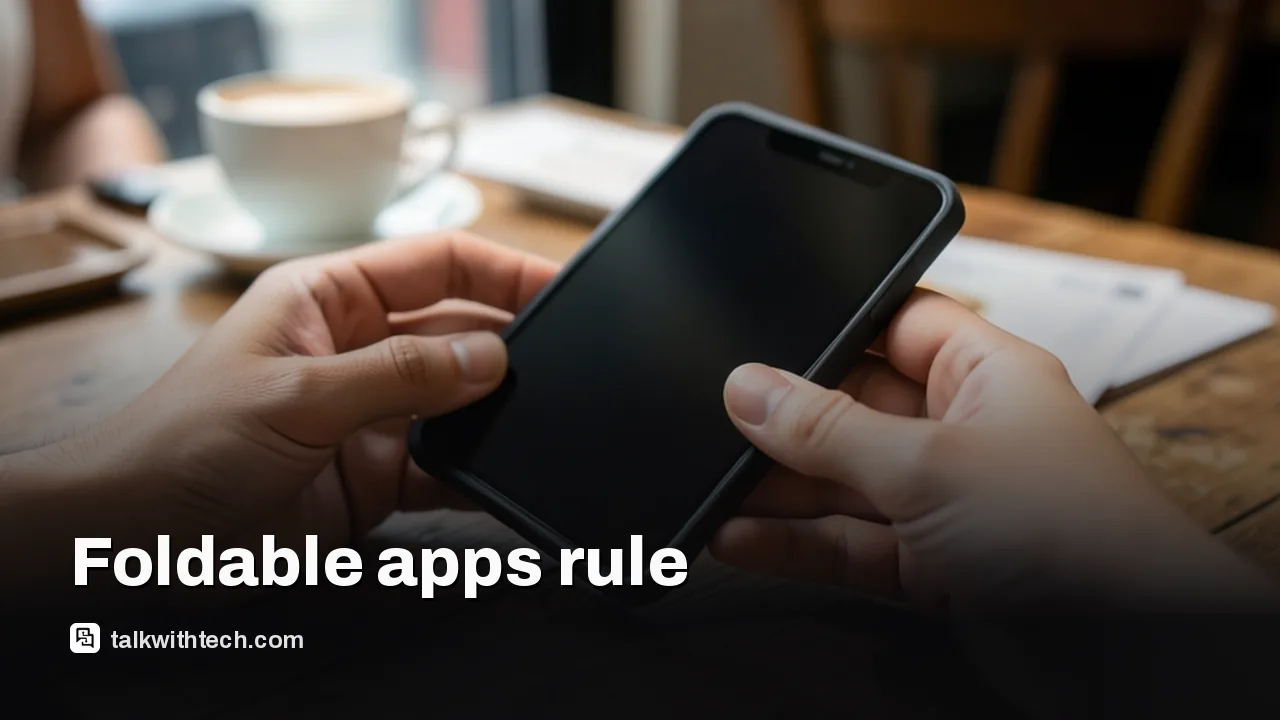
Hands holding an unfolded foldable phone on a cafe table

The short version

  • From April 2027, Google Play will only accept new apps and updates that meet its baseline Tier 3 standard for foldables.
  • Tier 3 means no letterboxing, keeping your scroll, typing and playback through folds and rotation, and working in split screen.
  • Store listings must add three foldable screenshots, and these shots will start appearing on the Play Store within weeks.
  • Games get until August 2027 for the quality bar, while apps that are never updated stay available to download.
Quick read · 1 min

Google Play is drawing a line for apps on folding phones. Starting in April 2027, new apps and updates must meet a baseline Google calls Tier 3: fill the whole inner screen with no black bars, keep your scroll position, typing and playback when you fold or rotate the phone, and work in split screen. Apps that fall short can't publish updates and may be harder to find.

Store listings change too. Developers must add three foldable screenshots, and these images will begin showing up on the Play Store in the coming weeks, so you can see the unfolded view before you install.

  • Apps you already have won't disappear, even if they never update.
  • Games get until August 2027 to meet their own version of the bar.
  • Tablets, Googlebooks and Android XR will be added later.

Unfold a Galaxy Z Fold8 today and some apps still sit in a narrow strip in the middle of the big screen, with black bars on each side. Google has now put a date on ending that. From April 2027, Google Play will refuse new Android foldable apps and app updates that don’t meet a basic standard for folding phones.

Google announced the rule on November 18 on its Android Developers Blog, in a post from Mekka Okereke, who runs Google Play Apps. If you own a Pixel 11 Pro Fold, a Fold8 or a tablet, this matters because it’s the first time Google has attached a real penalty to its foldable advice. Until now, fixing a stretched or letterboxed app was a nice-to-have. Next spring it becomes the price of shipping an update.

01

What Android foldable apps will have to do

Android foldable apps must reach what Google calls Tier 3, or “Adaptive ready,” the lowest of three levels in its adaptive app quality guidelines. In plain terms, that baseline comes down to three things:

  • Use the whole screen. No black bars and no compatibility mode, which is the shrunken phone-sized view you see in some apps on the inner display.
  • Remember where you were. When you fold, unfold, rotate or resize the window, the app has to keep your scroll position, anything you’ve typed and any video or music that’s playing.
  • Work in split screen. The app has to keep running properly when it shares the display with another app.

That second point is the one most owners will notice. Today, opening a folded phone can reload an app, wipe a half-written message or restart a video. Under the new rule, a developer who ships an update with that behavior gets blocked.

Google says the penalty is twofold. Apps that miss the bar can’t publish or update on Google Play, and they may also show up less in the store.

Foldable phone propped half open in tabletop mode on a desk
02

The catch for apps you already have

Nothing vanishes from your phone in April. Existing apps that never get another update will stay available to download. The rule only kicks in when a developer submits a new app or pushes an update.

That creates an odd split. Actively maintained apps should get better, because their developers can’t ship bug fixes or features without clearing the bar. Abandoned apps that letterbox today will keep doing it, and they simply won’t change. Google’s announcement doesn’t name any popular apps that fall short, so there’s no list yet of who has work to do.

It’s also worth being clear about scope. For now, Tier 3 is required for foldables specifically. Google says the same quality framework will later expand to tablets, Googlebook laptops and Android XR headsets, but it hasn’t given dates for those.
03

Why your Play Store listings are about to look different

The second change shows up before you even install anything. Developers can already upload foldable screenshots in the Play Console, under the store listing settings, and Google expects those images to reach the store within weeks.

Once April 2027 arrives, each new app and each listing change needs two regular phone screenshots plus three taken on a foldable. Google wants the foldable ones to match the two common book-style shapes:

  • Square inner screens (1:1): at least one shot of the unfolded display, matching phones like the Pixel 11 Pro Fold and the Galaxy Z Fold8 Ultra.
  • Wider inner screens (4:3): one unfolded shot plus one portrait shot of the folded 10:16 cover screen, matching the regular Galaxy Z Fold8.
  • Regular phones: an optional sideways 16:9 shot can now sit next to the required upright images, for phones like the Galaxy S26 and Pixel 11 Pro.

For buyers, this is quietly useful. You’ll be able to see how an app looks on the big screen before you download it, instead of finding out after. Developers without a folding phone can still comply, because screenshots taken in Google’s 1:1 and 4:3 foldable emulators count.

Developer desk with phones, a tablet and laptops set out for testing
04

Games get extra time, with a different checklist

Games run on their own schedule. They need foldable screenshots by April 2027 like everything else, but the quality bar doesn’t apply to them until August 2027, according to Google’s Mishaal Rahman, who leads Android community engagement.

The game version of Tier 3, called “Ready,” is built around how games actually work. A game has to:

  • keep progress and touch accuracy intact when you fold, unfold, rotate or resize it;
  • run full screen in the orientations it supports;
  • add its own clean black bars, rather than breaking, when you turn the phone to an orientation it doesn’t support;
  • keep on-screen controls and status displays clear of anything that blocks them.

At the top tier, Google is asking for steady performance at 60 FPS, or 120 FPS on displays that support it, plus stable heat and battery use during long unfolded sessions and smooth resolution changes between the inner and cover screens.

05

Who wins, and why Google is pushing now

Google counts more than 580 million large-screen Android devices in use, a pool that runs from tablets to Googlebook laptops and Android XR hardware such as the XREAL Aura. That’s a lot of screens where a phone-shaped app looks out of place.

The timing also stands out. The rule arrives only weeks after Apple launched the iPhone Duo, its first foldable, which raises the stakes for Android apps on folding screens. Owners have lived with stretched, letterboxed and reloading apps since the first folding phones went on sale, and that’s a harder sell once a big rival is in the category.

There’s a carrot as well as a stick. Apps that reach the higher levels can apply now for premium store badges, editorial picks and extra promotion on Google Play:

  • Tier 2, “Adaptive optimized”: multi-pane layouts that use the space well instead of stretching buttons, plus basic support for keyboards, mice, trackpads and styluses.
  • Tier 1, “Adaptive differentiated”: camera continuity, apps that adapt when the phone is half folded like a laptop or held open like a book, picture-in-picture you can interact with, and running more than one copy of media, reading or multitasking apps.
06

What happens next for developers and owners

There are two dates to remember. April 2027 brings the foldable quality bar for apps and the screenshot rule for everyone. August 2027 brings the game quality bar, plus a separate requirement that new and updated apps target Android 17 (API level 37). Google says that Android 17 change removes the opt-outs developers have used to lock orientation or block resizing on large screens, so even holdouts lose their escape hatch.

Google is steering developers toward Jetpack Compose, its modern toolkit for building Android screens, along with its design templates and emulators for testing both foldable shapes. If you own a foldable, there’s nothing to change in your settings. Keep auto-updates on, and expect the apps you use most to start behaving better on the inner screen through 2027.

07

Quick answers

Will apps that don’t support foldables be removed from Google Play?

No. Existing apps that are never updated stay available to download. Apps that miss the bar just can’t publish new versions or updates, and may be shown less in the store.

When do the Google Play foldable rules start?

The app quality bar and the foldable screenshot rule start in April 2027. Games must meet their quality bar by August 2027, the same month new apps must target Android 17.

Do the rules cover tablets too?

Not yet. The April requirement covers foldables, and Google says it plans to extend the framework to tablets, Googlebooks and Android XR later.

You're reading the quick version.