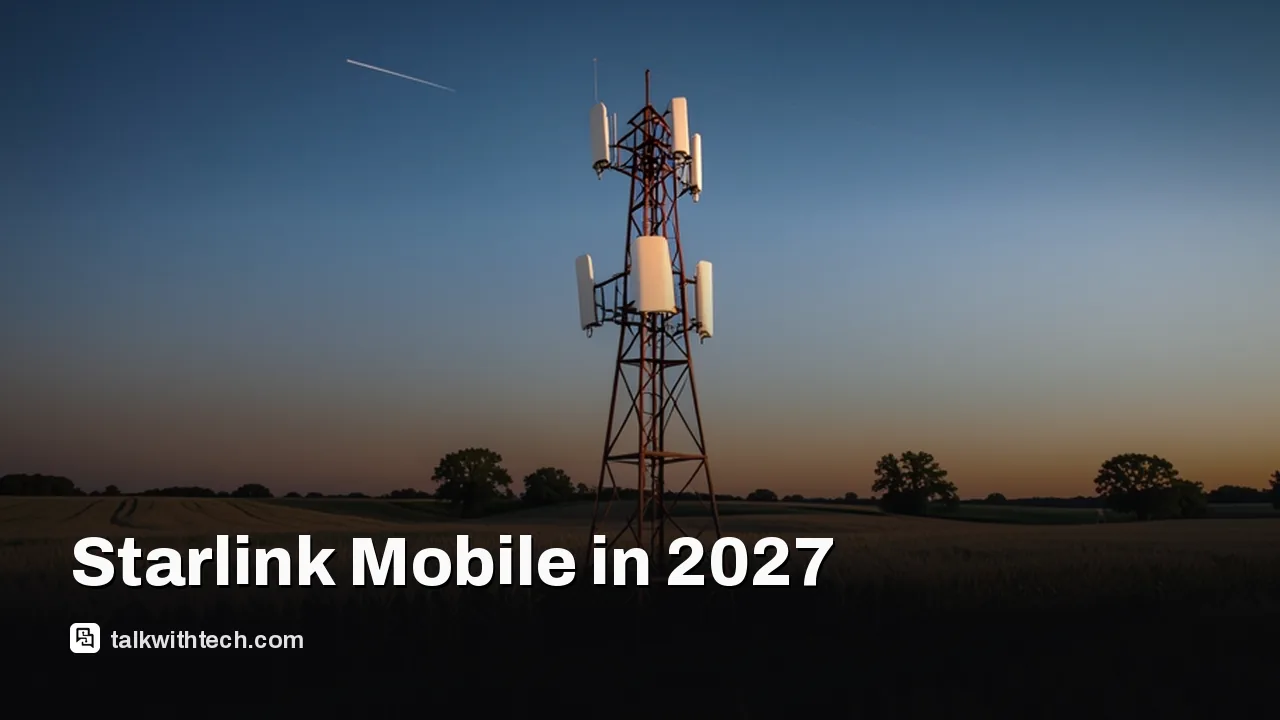
SpaceX and Qualcomm say construction of Starlink Mobile's own US 5G ground network will begin in 2027.
The plan covers tens of thousands of cell sites working alongside Starlink's direct-to-cell satellites.
No price, plan details or sign-up date for customers have been announced yet.
Analysts say SpaceX still needs more spectrum and tower access, and expect a full network to take years.
Quick read · 1 min
SpaceX has put a year on its plan to become a full US phone carrier. Qualcomm signed a multiyear deal this week to power a Starlink Mobile tower network planned to reach tens of thousands of locations, and building the network starts in 2027.
That isn't a launch date for customers. SpaceX hasn't shared prices, plans or when you could switch. Most current phones already support the 800 MHz band it is buying, so a new handset may not be needed, but no device list exists yet.
Towers start going up in 2027, paired with Starlink satellites.
No price has been announced.
Analysts expect a real fourth carrier to take years.
For now, Starlink on a phone means satellite texting through partners like T-Mobile in the US and Rogers in Canada. The announcements so far cover the US only.
The Starlink Mobile release date finally has a year attached to it: SpaceX will start building its own US 5G cell network in 2027. Qualcomm confirmed on Wednesday that it signed a multiyear deal to equip a Starlink Mobile ground network that will run to tens of thousands of towers, and both companies put the start of the nationwide rollout in 2027.
That is a start date for construction, not a day you can sign up. SpaceX hasn’t announced a price, a plan, or when paying customers can switch. What it has done is line up the airwaves, the satellites and now the tower equipment needed to become a fourth national carrier next to Verizon, AT&T and T-Mobile. If you’re tired of dead zones or your phone bill, here is what is real, what is still a promise, and what you can use today.
01
When does Starlink Mobile launch? What 2027 actually means
Starlink Mobile’s ground network is due to start rolling out in 2027, but no consumer launch date exists yet. The 2027 date covers deployment of base stations, the boxes on towers that talk to your phone. Qualcomm executives said the company could start earning revenue from the deal by the end of 2027, which tells you equipment should be going up through that year.
Some pieces arrive on a slower clock. SpaceX agreed to buy EchoStar’s AWS-4 and H-block airwaves for about $17 billion in September 2025. The FCC approved that deal in May, but the licenses aren’t expected to move fully to SpaceX until November 2027. Its newer purchase of 800 MHz airwaves from Grain Management still needs sign-off from the FCC and the Justice Department.
So the honest answer for anyone searching for a launch day is this: building starts in 2027, and SpaceX hasn’t said when service for ordinary customers will follow.
What Qualcomm is building for Starlink Mobile
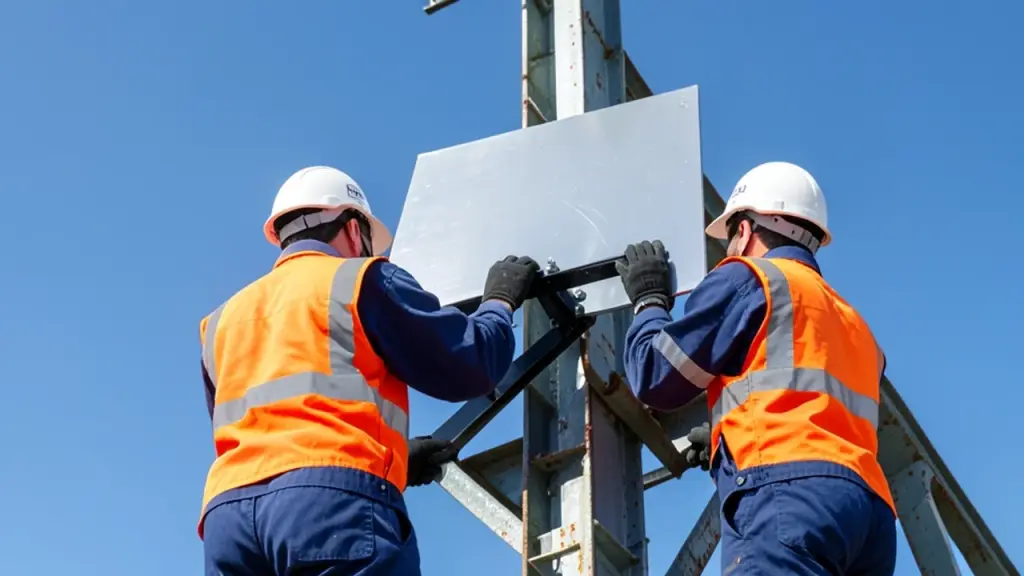
Qualcomm will supply the brains of each cell site. Its Dragonwing QRU100 runs the radio units that send and receive signals, and the QDU100 handles the processing behind them. Qualcomm also provides the low-level radio software, while SpaceX writes the higher layers of code itself.
Each site uses Massive MIMO, a design with 64 antennas transmitting and 64 receiving. In plain terms, more antennas let one tower serve more phones at once and aim signals more precisely, so the same airwaves carry more traffic. Qualcomm called this its biggest 5G network deal so far and its first US deployment of the Dragonwing brand. Neither company disclosed what SpaceX is paying.
The towers will lean on Starlink satellites for backhaul, the link that connects a cell site to the wider internet. Reports last month said SpaceX wanted as many as 80,000 towers, close to what the big three carriers use. Qualcomm’s deal covers only traditional towers, not the small cells carriers use to fill gaps in cities.
02
Will my phone work with Starlink Mobile?
Probably, though SpaceX hasn’t published a device list. The 800 MHz band it is buying is one that most smartphones on sale today already support. SpaceX bought up to 14 MHz of that low-band spectrum, which travels a long way and gets through walls and roofs better than higher frequencies.
SpaceX plans to pair it with its 2 GHz mid-band spectrum, which carries more data but struggles indoors. The idea is one network where your phone moves between a nearby tower and a satellite overhead instead of dropping the call. Starlink senior vice president Michael Nicolls framed the goal around ending dropped calls at home and on the road.
Elon Musk went further on X, promising good signal everywhere. Treat that as a goal. SpaceX hasn’t shown the combined network working yet.
03
How much will Starlink Mobile cost?
Nobody knows, because SpaceX hasn’t announced any pricing or plans. Anyone quoting a monthly Starlink Mobile price right now is guessing.
What we do know is what SpaceX is spending to get here. Beyond the roughly $17 billion EchoStar deal, financial media put the Grain spectrum purchase at about $8 billion in cash, although official filings didn’t confirm a figure. The FCC has also cleared SpaceX to launch around 15,000 next-generation satellites, which the company says will offer far more bandwidth than today’s.
When SpaceX first confirmed its carrier plans in October, shares of AT&T, Verizon and T-Mobile each fell about 7% in after-hours trading. Investors clearly expect a price fight eventually. Whether that turns into cheaper bills depends on details SpaceX hasn’t shared.
04
The catch: spectrum, towers and failed texts
The biggest hurdle isn’t the satellites. SpaceX holds less than 80MHz of land-based spectrum, while each of the three national carriers holds several times that. More spectrum means more capacity, so a thin holding limits how many people a network can serve well.
Towers are the other problem. AT&T, Verizon and T-Mobile all turned down SpaceX’s requests to resell their networks. Reports say SpaceX looked at buying what’s left of Boost Mobile, but analysts doubt Boost’s wholesale deals with AT&T and T-Mobile would carry over. Telecom analyst Tim Farrar said securing spectrum and tower leases matters even more than the Qualcomm gear.
Performance is a gap too. In Ookla tests of Starlink’s current direct-to-device service, about one in seven texts failed, against roughly one in fifty on regular land networks. Ookla analyst Mike Dano said it will take several years, at minimum, for Starlink Mobile to build enough to become a serious fourth carrier.
For now, nothing changes on your phone. Every Starlink Mobile ground network plan announced so far is for the United States, and there is no sign-up page to join.
In the US: Starlink’s phone service today reaches people through carrier partners, mainly T-Mobile, for satellite texting where there’s no tower signal. That is the only way to use Starlink on a phone right now.
In Canada: Rogers Satellite uses Starlink’s direct-to-cell satellites for texting and some apps on compatible iPhone and Android phones, and recently added roaming in Japan, Australia and New Zealand. SpaceX hasn’t announced plans to bring its own ground network to Canada.
In the UK: The Starlink Mobile plans announced so far cover the US only.
Even on SpaceX’s own timeline, towers are only starting to go up in 2027.
06
Quick answers
Is Starlink Mobile available now?
Not as its own carrier. In the US, Starlink satellite texting works through partners such as T-Mobile, and the standalone 5G network starts rolling out in 2027.
Who is building the Starlink Mobile network?
SpaceX is designing its base stations itself, using Qualcomm’s Dragonwing chips and radio software under a multiyear deal announced this week.
Will Starlink Mobile come to Canada?
There’s no announcement. Canadians can use Starlink texting today through Rogers Satellite, but SpaceX’s ground network plan covers only the US so far.