T-Mobile Starlink partnership: what the SpaceX snub means for you
T-Mobile's boss says there is no room for SpaceX to rent its network. Your satellite texting stays, but the fight for your phone bill just got sharper.
T-Mobile CEO Srini Gopalan said there is no room for SpaceX to rent T-Mobile's network as a virtual carrier.
The existing T-Satellite service, which T-Mobile resells, is not affected, and Gopalan said he is open to similar resale deals.
Verizon's CEO has also ruled out giving any satellite company wholesale access to its network.
SpaceX must now build Starlink Mobile the slow way, starting with an 800 MHz spectrum deal that still needs FCC approval.
Quick read · 1 min
T-Mobile CEO Srini Gopalan says there is no room for SpaceX to rent T-Mobile's network and sell its own Starlink Mobile phone plans. Verizon's CEO has taken the same line, so SpaceX will likely have to build its own US network the slow way.
The good news for T-Mobile customers: T-Satellite, the service that connects phones to Starlink satellites in dead zones, is not affected. T-Mobile resells it, and Gopalan said he is happy to do more deals like that.
SpaceX agreed to buy 800 MHz spectrum, a deal that needs FCC approval.
Completion is targeted for the first half of 2027.
T-Mobile says it will be first with 6G in the US, around 2030.
For now your plan and bill stay the same. A full Starlink carrier could add price pressure later, especially in rural areas.
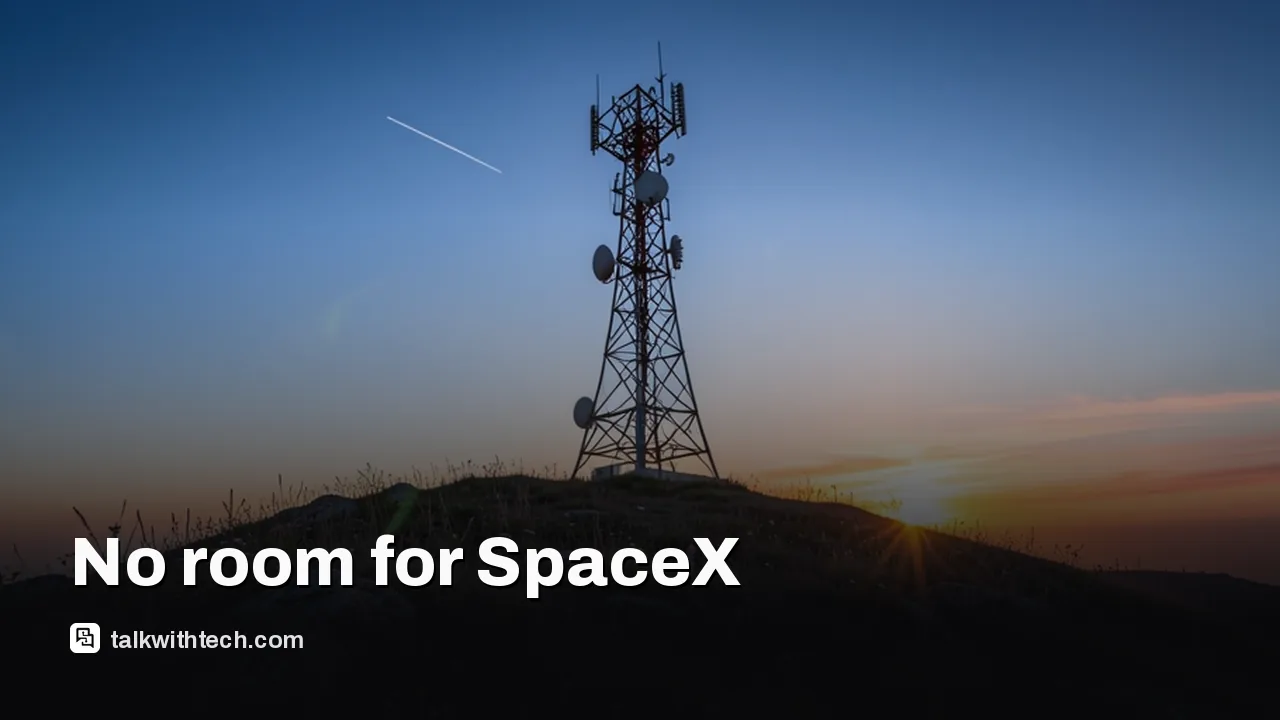
T-Mobile just told SpaceX it can’t move in. On the carrier’s third-quarter earnings call, CEO Srini Gopalan said he sees no room for SpaceX to rent T-Mobile’s network, for consumers or for business uses like robots and connected machines. That closes the fastest route for Starlink Mobile to become a full phone carrier in the US.
If you are one of the people searching for the T-Mobile Starlink partnership, here is the short version. The satellite texting feature T-Mobile customers already use, T-Satellite, is not going anywhere. What T-Mobile rejected is something much bigger: letting SpaceX sell its own phone plans on T-Mobile towers. That fight will shape what you pay for wireless service over the next few years.
01
What T-Mobile actually rejected
T-Mobile rejected an MVNO deal with SpaceX. MVNO stands for mobile virtual network operator, a company that rents capacity on someone else’s towers and sells service under its own brand. Many budget phone brands are built this way. For SpaceX, it would have been a shortcut: sign up customers now, build its own network later.
Gopalan said T-Mobile’s test for any MVNO is simple. It has to bring in customers the carrier can’t reach alone, open new sales channels or add new abilities. A SpaceX deal fails all three, in his view, because T-Mobile already treats satellite as an add-on to its own network.
He also took a swipe at how fast SpaceX keeps changing its plans. Responding to a Barclays analyst, he said it is now hard to call SpaceX a satellite company at all, since it also wants to build towers on the ground. That is the real reason for the cold shoulder: SpaceX is no longer a partner with a complementary product. It is a would-be rival.
02
Does T-Mobile still work with Starlink?
Yes. T-Mobile still works with Starlink through T-Satellite, and nothing announced this week changes that. T-Satellite lets T-Mobile phones connect to Starlink satellites in places with no cell signal. It works as a resale arrangement: T-Mobile buys the satellite service and sells it to you, so you stay a T-Mobile customer.
Gopalan drew that line clearly. He said he is very happy to look at resale deals for complementary products, the way T-Satellite works today, and that SpaceX could be a T-Mobile customer, or the other way around, under a normal commercial agreement. Renting out the network to a competitor is, in his words, a wholly different thing.
Still on: T-Satellite texting and data in dead zones, sold by T-Mobile.
Ruled out: SpaceX selling Starlink Mobile phone plans over T-Mobile towers.
Possible: other resale or commercial deals between the two companies.
03
Why SpaceX wanted in, and what it does now
SpaceX has made its goal plain. In early October it agreed to buy nationwide 800 MHz spectrum licenses, radio frequencies that travel far and reach indoors well, and said the deal would pave the way for Starlink Mobile to become a major US carrier. It was also reported to be in talks to use about 80,000 US cell sites. Back in August, SpaceX chief operating officer Gwynne Shotwell said she expected to win quite a few customers from T-Mobile, Verizon and AT&T, promising to wipe out dead zones with satellites.
Now the shortcut looks shut at the two biggest carriers. Verizon CEO Dan Schulman said on his own earnings call that he sees no benefit at all in giving any satellite provider an MVNO deal. That leaves SpaceX with the slower, costlier path: own spectrum, rent tower space and build out coverage itself. The spectrum purchase still has to be cleared by the Federal Communications Commission, with completion pencilled in for the first half of 2027.
T-Mobile’s tech chief, John Saw, has argued the gap is huge. He wrote earlier this month that US carriers have invested more than $250 billion in network infrastructure since 2018, on top of over $200 billion in spectrum auctions over the past decade. Even after its new deal, he said, Starlink Mobile would hold roughly 80 MHz of spectrum, against T-Mobile’s nearly 400 MHz of mid-band and low-band holdings.
04
What the T-Mobile Starlink split means for your bill
For most people, nothing changes this month. Your plan, your phone and T-Satellite keep working. The longer-term picture is more interesting.
A new national carrier usually means price pressure. SpaceX has money to spend: it is valued at about $1.914 trillion, against T-Mobile’s roughly $158.84 billion. If it builds its own network, it could undercut the big three in rural areas, where satellites help most. On the other hand, without wholesale access, any Starlink phone plan will take longer to arrive and may cover less at first.
Don’t expect satellite to replace home broadband in cities, either. Gopalan called satellite an inferior version of fixed wireless home internet outside deep rural areas, because everyone under one satellite beam shares its capacity. About two-thirds of T-Mobile’s home internet customers live in dense urban areas, where that limit bites hardest.
Meanwhile, T-Mobile is betting its customers will keep paying more. Average revenue per account rose 4% to $155.73 in the quarter, and the company raised its growth target for that figure. Postpaid account churn, the share of customers leaving each month, edged up to 1.09%, a small sign that rate-plan changes are pushing some people to look around.
T-Mobile used the same call to stake a claim on the next network generation. Chief technology officer John Saw said T-Mobile will be the first US carrier with 6G, pointing to an industry timeline around 2030. He described 6G radios that can also act like radar, sensing the world around them, and said traffic from AI wearables, robots and delivery drones will grow fast by then.
That is the deeper reason T-Mobile wants to keep its towers to itself. Both companies see the same future of connected machines, and neither wants to hand the other the keys.
06
Quick answers
Is T-Mobile partnering with Starlink?
Yes, for T-Satellite, which T-Mobile resells to its customers. It has ruled out letting SpaceX run its own Starlink Mobile service on T-Mobile’s network.
Will T-Satellite stop working?
No. Nothing announced changes T-Satellite, and T-Mobile’s CEO said resale deals like it remain welcome.
When could Starlink Mobile become a carrier?
No launch date is set. The FCC still has to clear its 800 MHz spectrum purchase, which SpaceX hopes to finish in the first half of 2027.
Apple's latest iPhone update closes security holes that could let attackers run code on your phone, and adds Siri memory. A few changes may still annoy you.
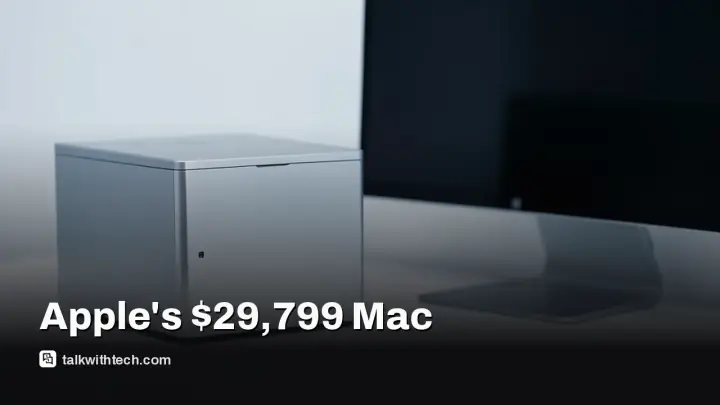
Apple finally sells its long-promised memory upgrade, and the memory alone now costs more than a fully loaded Mac Studio used to. Every price step, and a cheaper route.
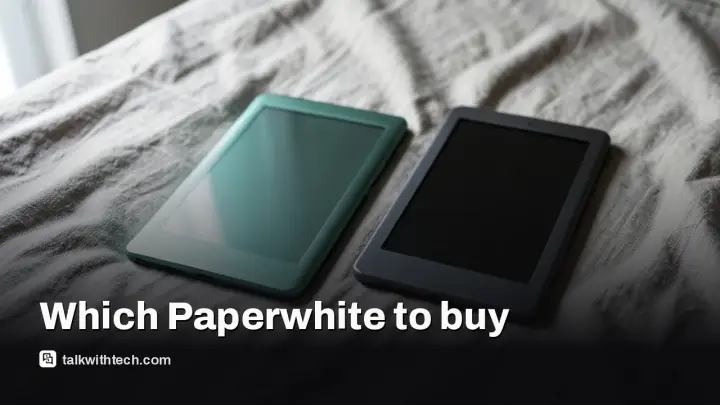
Both 2026 Kindles share the same 7-inch screen and 12-week battery. The $249.99 model wins on looks, storage and one accessory that matters to button lovers.
6 min read
We use cookies to understand how readers use Talk With Tech, so we can make it better. Is that OK? Privacy policy
The Daily Brief
Today's biggest tech stories, in 5 minutes
Every morning, the news that matters from AI, phones, apps and the people shaping tech. Explained in plain English. Free.
One email a day. No spam, unsubscribe anytime. Privacy policy