White cameras on traffic lights: why most can’t ticket you
Those small white units above many intersections mostly decide when your light turns green. Here is how they work, what they store and how to spot real enforcement cameras.
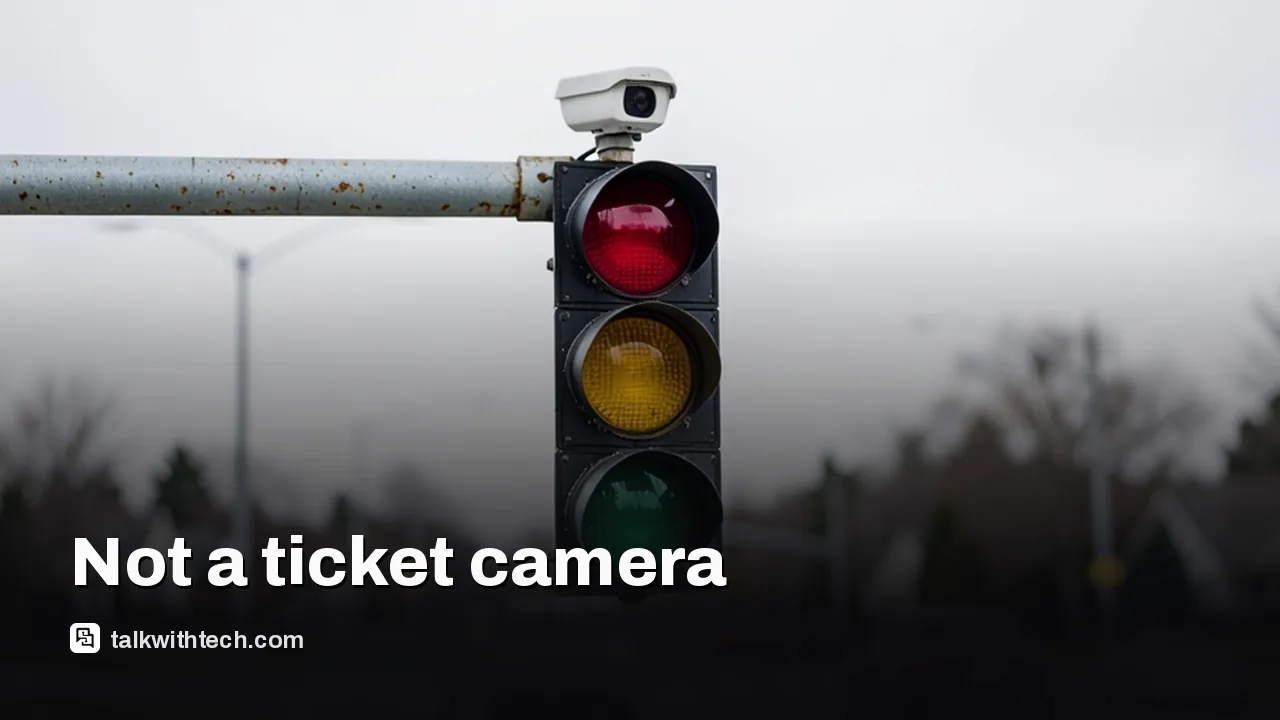
Most white cameras on traffic lights are vehicle detectors that tell the signal a car is waiting, not ticketing devices.
Toronto, Connecticut and Bloomington, Minnesota all say their signal detection cameras do not record or store video.
Red-light enforcement cameras are a separate system, and only 22 states plus Washington, D.C. allow them in the US.
License plate readers such as Flock units are a different technology, and they raise the real privacy questions.
Quick read · 2 min
The small white cameras on traffic lights are, in most places, vehicle detectors. Engineers draw zones on the road in the camera's view, and when a car pulls into one, the camera tells the signal controller that traffic is waiting. In Toronto, for example, a side street only gets a green when the camera sees a car there, and the green runs longer when more cars are waiting.
Cities that use them, including Toronto, Bloomington in Minnesota and the Connecticut DOT, say these cameras do not record or store video, and Bloomington says the image is too blurry to read plates or faces. Some white boxes are radar units doing the same job.
Red-light cameras are separate and legal in only 22 states plus D.C.
License plate readers like Flock units are the real privacy concern.
After a crash, do not expect footage from the camera above the light.
Most of the white cameras on traffic lights are not watching you at all. They are watching a few painted rectangles of road, waiting for a car to roll into one so the signal knows someone wants a green light. Cities from Toronto to Bloomington, Minnesota, say these units do not record video and cannot read your plate.
That matters because a lot of drivers now assume every box on a pole is a ticket machine or a tracking device. With license plate reader networks in the news, it is fair to ask. The short answer is that the small white unit above the signal is usually a timing tool, while enforcement and tracking gear is a different kind of hardware with different rules.
01
What are the white cameras on traffic lights?
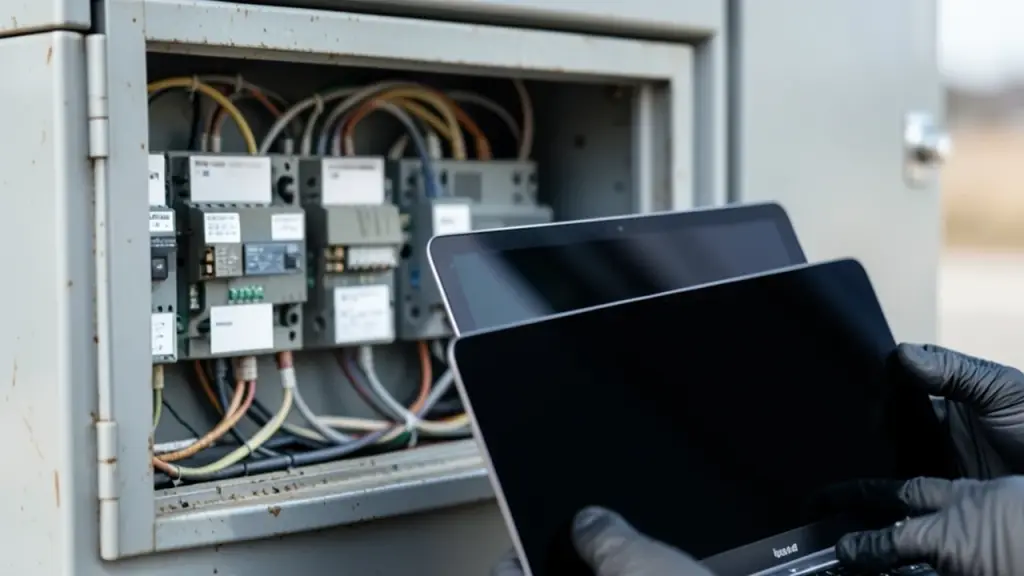
The white cameras on traffic lights are, in most places, video detection cameras: sensors that report when a vehicle is waiting or approaching so the signal can hand out green time where it is needed. They feed a simple yes or no signal to the controller, the small computer in the metal cabinet at the corner that runs the intersection’s timing.
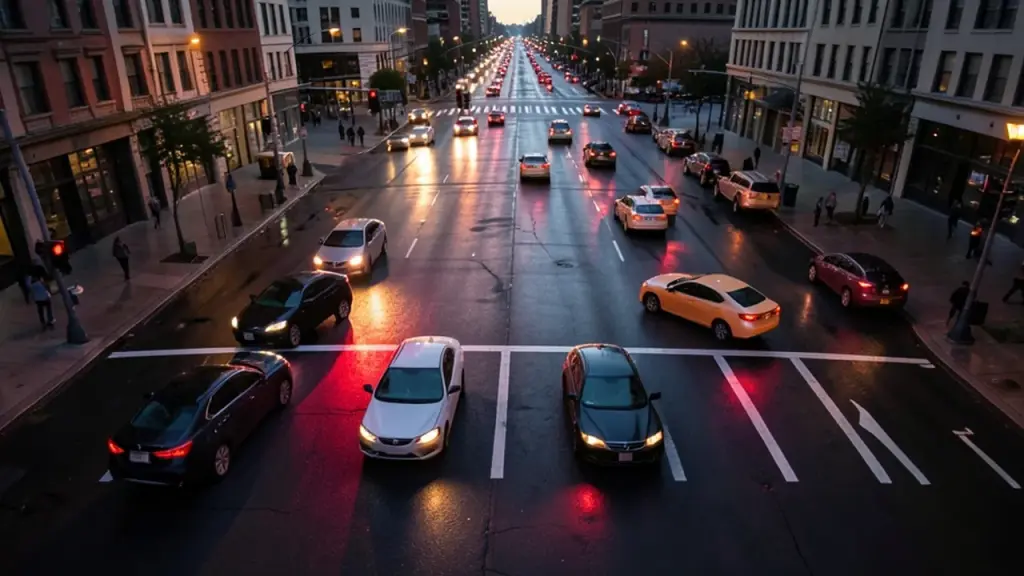
Traffic engineers set up detection zones inside the camera’s view. When a car enters one, the processor notices the change and tells the controller that traffic in that direction is asking for a green. The light then changes according to timing rules programmed for that specific intersection.
Toronto gives a neat real-world example. At Yonge Street and Yorkville Avenue, the signal stays green for Yonge until the camera pointed at Yorkville spots a waiting vehicle. If just one or two cars are waiting, Yorkville gets a short green. At busy times of day, the same camera lets the signal run a longer green for the side street.
Not every white box is a camera, either. Some are radar units, and they do the same job in a different way (more on those below).
02
Why cities swapped road loops for overhead cameras
Before cameras, the standard way to detect cars was a wire loop cut a few inches into the pavement. A small electric current runs through the loop, and when a large metal object like a car passes over it, the change trips a signal to the controller. It worked, but it came with costs.
Road damage: crews have to saw into the asphalt, which weakens it and shortens its life.
Lane closures: installing or replacing a loop means shutting a lane while the work is done.
Repeat repairs: when a loop fails, the whole thing has to be cut in again.
Cold weather: Alaska’s transportation department says its loops were prone to breaking in extreme cold and only caught vehicles sitting fully inside a lane, which was a problem when snow hid the lane lines.
Overhead cameras avoid most of that. They are mounted above the road, so work happens away from traffic, and if road works shift the lanes, engineers can redraw the detection zones in software instead of cutting new loops. Bloomington says the cameras now come out ahead on overall cost. They sit high on the pole for a reason, too: a high mounting point gives a wider view, so one camera can usually cover every lane coming from one direction.
03
Do traffic light cameras record you? What cities say
For detection cameras, the official answer from the agencies that run them is no. Here is what several of them say about their own equipment:
Toronto: its detection cameras cannot display or record video, so staff at the city’s traffic operations center cannot even use them to watch traffic.
Connecticut: the state DOT says its signal cameras store no information and work mainly as motion detectors. Its separate traffic cameras for live monitoring do not record either, so it has no footage to release.
Bloomington, Minnesota: the city says images are processed in real time with nothing stored, the view is fixed with no zoom, and the picture is too low in resolution to read a plate or make out a face. Any short recordings made to diagnose a fault are deleted after use.
Alaska: the state says its signal cameras only detect arriving vehicles and pass that on to the controller.
There is a caveat. Exactly what a camera does depends on where it is, because local laws decide which cameras are allowed and each intersection is set up for its own needs. Some cities also run separate monitoring cameras that send a live picture to traffic engineers and dispatchers. In Clearwater, Florida, police say they get calls every day from people hoping to see footage of a crash or a red light they think they ran, and they have to explain that the city’s roughly 40 monitoring cameras only stream live and do not record.
Connecticut has one more category worth knowing about: wrong-way detection cameras. Those stay idle until a driver goes the wrong way, then record that event and pass it to police.
04
How to tell a detection camera from a red-light camera
A red-light camera is an enforcement device built to capture evidence, and it is far less common than people think. Only 22 states and Washington, D.C. currently allow them, and even where they are legal they are rare.
A few practical clues help you tell the two apart:
Size and spot: the small unit sitting right on top of the signal head or mast arm is usually a detector or monitoring camera. In the UK, the RAC says these smaller cameras on top of the lights help monitor traffic and congestion and do not flash for offenses.
The flash: enforcement cameras photograph violations. In the UK, the common Gatsometer units give a visible flash, though some newer models use infrared light you will not see.
What they look for: UK red-light cameras use radar, sensors or loops in the road to catch drivers crossing the white stop line after the light turns red, and many also check speed.
Where you are: if your state or province does not allow red-light enforcement, the box above the light is almost certainly not issuing tickets.
For UK drivers, a red-light camera ticket typically means a £100 fine and three points on your licence, with a Notice of Intended Prosecution sent to the registered keeper within 14 days. That is why it pays to treat every junction as if it is watched, whatever the white box on top is doing.
Some of the white boxes you see are not cameras at all but radar detectors. They map a baseline picture of the intersection by measuring the distance to fixed objects, then notice when something new, like a car, breaks into a detection zone.
Alaska is moving toward them for a specific reason. Video detection struggles with sun glare on ice and snow and with thick fog, and the result can be a false call: the light turns green for a direction where nobody is waiting. After converting several intersections over the past two summers, the state plans to switch more signals to radar as projects come up.
Other systems use infrared sensors, which register a car each time it breaks a beam of light, or microwave radar that works across several lanes in any weather. Whatever the hardware, the job is the same: count who is waiting and time the green to match.
06
What this means for your drive and your privacy
The privacy debate is real, but it is mostly about a different device. Automatic license plate readers, or ALPRs, photograph plates and check them against lists of vehicles police are looking for. Flock and other companies make them, and reports of misuse have made drivers wary enough to look up where they are.
Civil liberties groups worry that plate readers can log the movements of ordinary drivers, not just suspects, and that the data is often shared. In New York City, a human rights group reported that police can tap into more than 15,000 cameras covering 47% of intersections. Those are surveillance networks, and they deserve scrutiny. The low-resolution detector above your local light, by the cities’ own descriptions, cannot do that job.
Here is what this means in practice:
After a crash: do not count on the camera above the light for footage. In many cities it never recorded anything, which is exactly what Clearwater police end up telling callers.
If you are worried about a specific camera: ask the agency that runs the signal. Toronto, Connecticut, Alaska and Bloomington all publish plain explanations of what their units do and store.
If you suspect a plate reader: that is a separate device from the signal detector, so ask about it by name.
07
Quick answers
Can the white cameras on traffic lights give you a ticket?
Usually not. Most are detection units that only tell the signal a car is waiting. Red-light enforcement uses separate cameras and is only allowed in 22 states plus Washington, D.C.
Do traffic light cameras record all the time?
Detection cameras generally do not record at all. Toronto, Connecticut and Bloomington, Minnesota all say theirs store no video.
Why do traffic lights have cameras on top?
To detect vehicles and adjust green time to real demand. They replaced wire loops in the road, which were costly to install and repair.
Windows, Mac and Linux can all turn a spare notebook into an extra screen. Here's which method fits your two machines, and when a cheap adapter beats Wi-Fi.