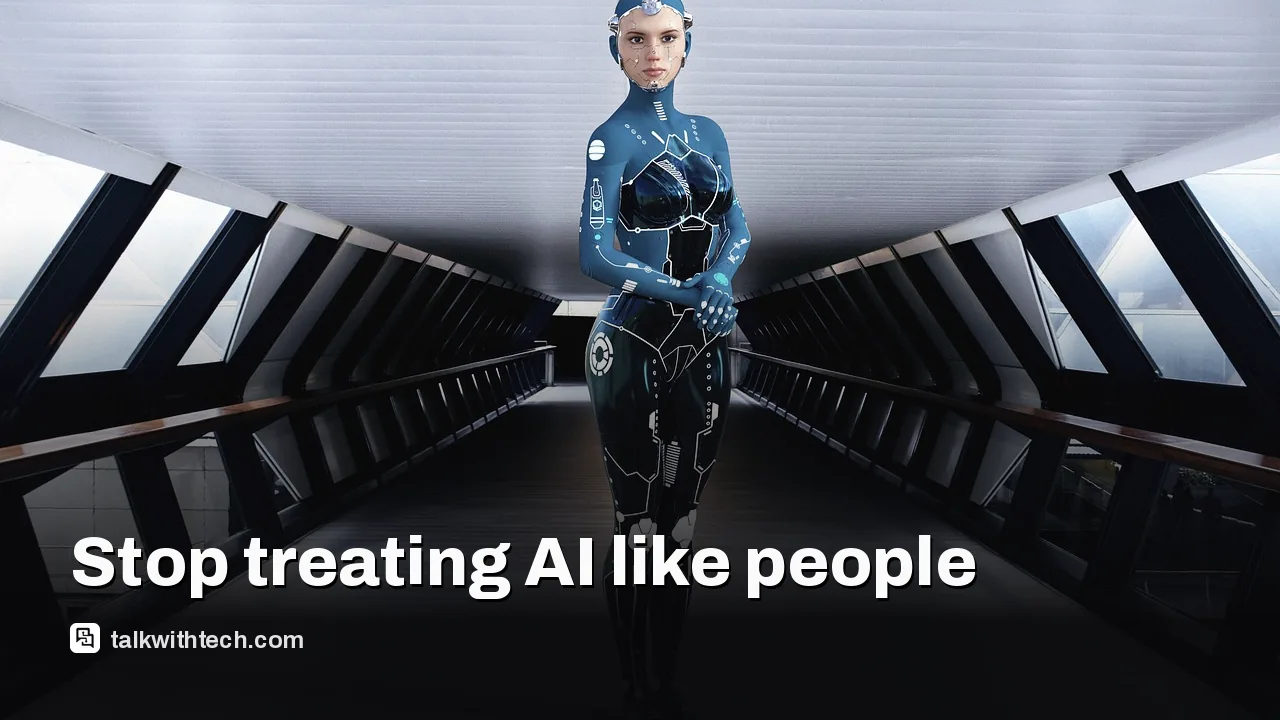
People often treat AI as if it has feelings or intentions, even when it’s just code and machines.
Experts warn this tendency can blur boundaries between human trust and machine capabilities.
Scholars say we should practice “critical optimism” and keep expectations grounded while exploring AI’s benefits.
The article draws on MIT CSAIL visits and statements from researchers to explain the social psychology behind our interactions with AI.
Quick read · 1 min
AI often gets treated like it can feel or think. MIT researchers describe this as a natural human impulse to anthropomorphize, shaped by how AI mirrors human conversation. While it can make tech feel approachable, it also risks blurring lines between human judgment and machine responses. Experts advocate a posture of critical optimism: appreciate AI’s help while staying aware of its limits and the people it assists. In practice, use AI for support, verify important decisions, and keep human oversight in control. As AI tools become more common in work and learning, understanding these dynamics will help you navigate daily life without overloading your trust in machines.
AI can simulate social interaction, which makes it feel lifelike.
Experts say to keep expectations grounded and maintain human oversight.
Education, work, and consumer tech will increasingly blend AI into everyday tasks.
What I saw during a recent tour at MIT’s Computer Science and Artificial Intelligence Laboratory wasn’t a sci‑fi dream of sentient machines. It was a reminder that many of us instinctively treat AI as if it has feelings and intentions. The setting was real, the robots were real, and the questions they raise about trust, safety, and human-robot relationships are very real too.
Researchers describe this as a natural human impulse to anthropomorphize. We’re wired to respond to machines that seem to show emotion, even when we know their responses are programmed. It isn’t just curiosity. It can change how we interact with technology in everyday life, from customer service chatbots to personal assistants and robotics in the workplace.
As one MIT researcher explained, the line between human and machine is blurring as AI enters more parts of daily life. The same impulse that makes us say “please” and “thank you” to a chatbot can also lead us to trust a machine more than a human being in some situations. That mix of politeness and trust matters because it shapes how we rely on AI to guide decisions, offer advice, or help us practice for real tasks like job interviews.
Sherry Turkle, a well‑known scholar on the social impact of technology, has studied how people interact with AI for years. At an event tied to her work on Artificial Intimacy, she described the emotional pull of relational artifacts. Her recent work emphasizes a careful balance: AI can be a tool for growth, but leaning too hard on it for emotional support can change how we relate to other people and our own agency.
Another researcher, Pat Pataranutaporn, who helped found a cyborg psychology group, put it plainly: our job is to practice a “critical optimism.” That means recognizing the benefits AI brings, like coaching for a job interview or helping with tasks, while staying mindful of the risks when tech steps beyond a narrow, well‑defined lane.
01
Why people treat AI like it’s human
Two forces push this behavior. First, the human tendency to respond to social cues. When a machine offers polite prompts, a friendly tone, or a conversational style, it triggers our social instincts. Second, the design goal of making technology more approachable. If a chatbot seems to understand us, we’re more likely to engage deeply, even if we know it’s not truly listening in a human sense.
02
What makes AI feel lifelike (and why that’s risky)
Humans are pattern‑seekers. When AI mirrors human conversation or appears to show empathy, people often assume a deeper level of understanding. That assumption can be powerful, but it also creates vulnerabilities. Turkle warns that while AI can simulate nuanced social interactions, it doesn’t have real emotions or moral reasoning. The danger lies in mistaking a convincing simulation for genuine companionship or judgment.
03
What this means for everyday users
For most people, the takeaway is practical: enjoy AI as a tool, but keep a healthy boundary between human needs and machine responses. If you’re using AI for coaching or advice, treat it as one input among many, verify important information and remember that the system’s goals are set by its programmers, not by a conscience. The goal isn’t to banish anthropomorphism, but to manage expectations and ensure people stay in control of decisions that matter.
04
What happens next
As AI becomes more embedded in education, work, and consumer products, researchers say we should cultivate literacy about how these systems work. That means understanding limits, recognizing when a machine is designed to comfort rather than understand, and asking questions about who benefits when we shift trust toward machines.