Thursday, 26 November 2026

Bank of America Mythos patches cost hundreds of millions

One of America’s biggest banks needed 1,000 extra contractors to fix flaws that Anthropic’s Mythos AI found. Here is what it cost and what it means for customers.

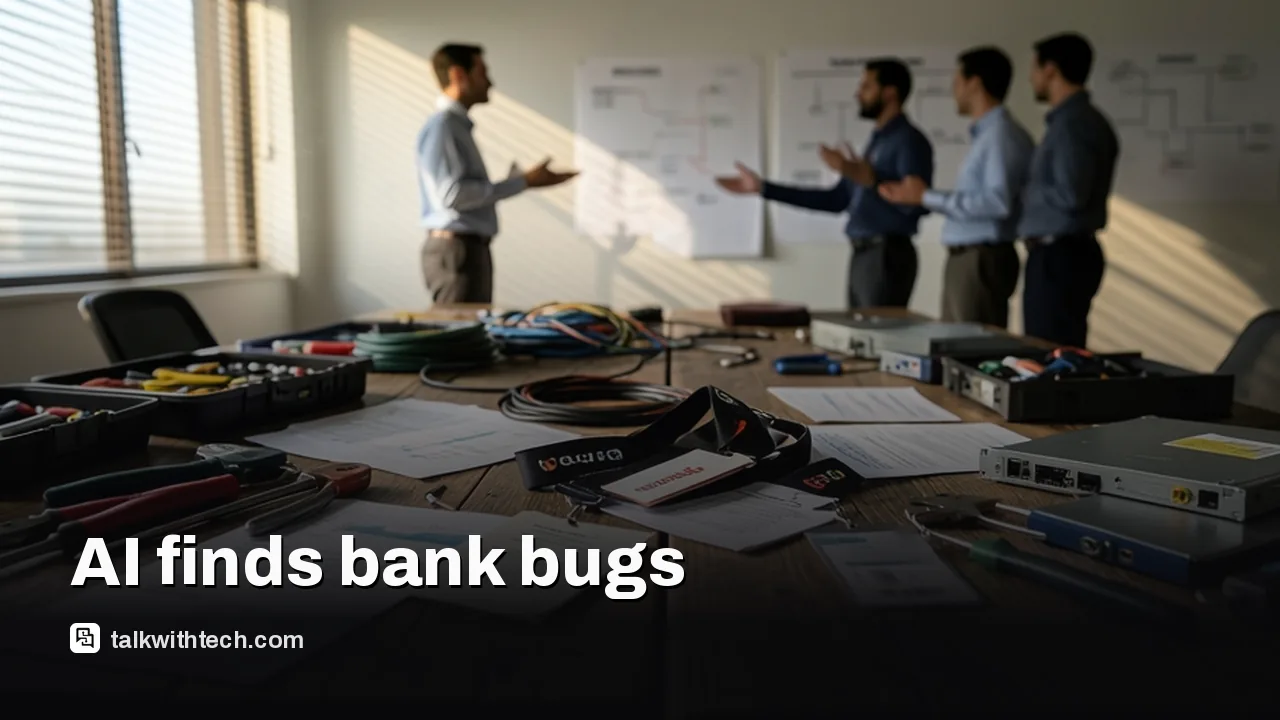
Toolbox, hard drives and contractor lanyards on a table in a bank IT war room

The short version

  • Bank of America brought in about 1,000 contractors in the second quarter to fix software flaws found by AI models, including Anthropic’s Mythos.
  • They joined roughly 3,000 bank employees already working on the same patching job across the bank’s own and vendors’ code.
  • CEO Brian Moynihan put the quarter’s combined patching and anti-money-laundering cleanup bill at a couple hundred million dollars or more.
  • He expects the AI patching costs to fall once the backlog of known flaws has been fixed.
Quick read · 2 min

Bank of America brought in about 1,000 contractors in the second quarter of 2026 to fix software flaws that AI models, including Anthropic’s Mythos, had found. They joined around 3,000 bank staff already doing the work, and the flaws were in both the bank’s own code and its vendors’.

Chief executive Brian Moynihan said the quarter carried a couple hundred million dollars or more in cleanup costs, but that sum mixes the AI patching with repairs to anti-money-laundering controls, which followed more than $1.21 billion in Treasury penalties. There is no separate Mythos figure.

  • Mythos is available only to vetted groups through Project Glasswing.
  • No report says customer data was exposed.
  • Moynihan expects patching costs to fall as the backlog clears.

Other big banks, including JPMorgan Chase, have hundreds of people on the same task, and regulators in the US and Europe are pressing for AI threat plans.

Bank of America needed a small army to keep up with one AI model. The bank brought in about 1,000 outside contractors in the second quarter of 2026 to fix weaknesses in its software that Anthropic’s Mythos and other AI models had uncovered, chief executive Brian Moynihan said in mid-October.

If you bank with Bank of America, or any big bank, this is your money and your data. Mythos can find security holes faster than people can close them, and every unpatched hole is a possible way in for criminals. The Bank of America Mythos patches show what it takes, in people and dollars, to stay ahead of that.

01

What Mythos is and why banks got it first

Mythos is an AI model from Anthropic that finds previously unknown software vulnerabilities, the kind of bugs attackers prize because nobody has fixed them yet, and can also work out how to exploit them. When Anthropic revealed it in April, it said its models could now beat all but the most skilled humans at this work.

Because that cuts both ways, Anthropic did not release Mythos to the public. It gave access to a small group of vetted organizations through a program called Project Glasswing, including government agencies, critical infrastructure operators, cybersecurity firms and banks. The idea was to let defenders find and fix flaws before attackers could.

Early testers were impressed. Mozilla found 22 security-sensitive bugs in a single round of testing, and Palo Alto Networks found more than two dozen critical vulnerabilities in about three weeks. About a month after the launch, US regulators put some cyber exams on hold so the biggest banks could concentrate on repairing the model’s findings.

Hands sorting vulnerability reports and contractor time sheets at office desk
02

How many people Bank of America put on the job

The short answer: a thousand more than it already had. The bank already had around 3,000 employees on patching duty when Moynihan decided it wasn’t enough. He described the findings as a real risk and said the bank had to move fast, so it added roughly 1,000 contractors in the second quarter. They were still there when he spoke in October.

The flaws weren’t only in software the bank writes. Moynihan said the weaknesses sat in code used by both Bank of America and its outside vendors, which means fixing them also meant chasing suppliers.

One detail explains why the number surprised people: the contractors don’t show up in the bank’s headcount, because they were hired as consultants. On paper, the bank’s workforce actually shrank over the past year by several thousand jobs, though it is unclear how much of that was down to AI.

03

The catch in the hundreds of millions

The headline cost needs a footnote. On the third-quarter earnings call, Moynihan told analysts that cleanup work added “a couple hundred million dollars plus” to the quarter’s bill. He lumped two very different jobs into that number: fixing the AI-found bugs, and fixing the controls meant to catch money laundering.

He did not say how much went to each, so there is no standalone Mythos bill. The compliance side is large on its own. In mid-October the Treasury announced penalties of more than $1.21 billion against the bank, after federal regulators said it had failed to report suspicious transactions worth $5 billion and hadn’t finished steps it was ordered to take in 2024. The Office of the Comptroller of the Currency added a penalty of three quarters of a billion dollars at the same time.

The quarter itself was mixed. Revenue rose about 3% to nearly $30 billion, but adjusted earnings of $1.08 a share missed forecasts and the stock closed almost 5% lower on results day.

Customer silhouette at bank counter conveying impact of security costs and tighter controls
04

What this means for your bank account

For customers, the news is mostly reassuring, with a warning attached. The reassuring part: the bank found these flaws with a defensive tool and paid to fix them, rather than learning about them from an attacker. Nothing in the reports points to customer data being exposed.

The warning: AI is making old software look leakier. If a model can find dozens of serious bugs in weeks, attackers with similar tools can too, and every company running the same vendor code shares the risk. JPMorgan Chase chief executive Jamie Dimon said in May that his bank had hundreds of people working on this full time. Goldman Sachs boss David Solomon said in April that his firm was working closely with the model makers and the US government.

Regulators are leaning in. Supervisors in the US and Europe have been questioning banks about AI agents and cyber risk, and the European Central Bank asked lenders to present plans against AI-enabled threats by the end of October.

05

Will the costs keep climbing?

Moynihan says no. He called the spending a temporary spike: once the existing flaws are fixed, there is less to patch, and the need for outside help should fall. “The pipeline moves through,” he said.

Security experts say the bigger shift is in how companies work, not just how many people they hire. Six months after Mythos arrived, consultants say clients have moved from simply trying to patch faster toward continuous threat exposure management, an ongoing process of mapping which weaknesses matter most, because AI is also good at chaining small bugs into serious attacks.

Accenture’s cyber resilience lead, Jason Lewkowicz, put numbers on that change. Early on, he said, about 80 percent of worried clients just wanted to patch faster, which he likened to whack-a-mole. Now about 80 percent want to rethink their whole approach, including more penetration testing, where hired experts attack a system to find weak spots before criminals do.

For banks, the logic is simple. Patching one flaw at a time can’t keep pace with a model that finds them by the dozen, so the work shifts to deciding which holes would actually let an attacker reach money or customer records, and closing those first.

The bank is also betting AI will pay for itself. Moynihan said it is running about 130 internal AI projects, with savings expected to reach $700 million in 2027.

06

Quick answers

Did Mythos alone cost Bank of America hundreds of millions?

No breakdown was given. The couple hundred million dollars or more covered both AI-found software fixes and anti-money-laundering repairs.

Was customer data put at risk?

The bank described the flaws as a real risk it moved quickly to fix. None of the reports say customer data was stolen or exposed.

Can anyone use Mythos?

No. Anthropic limits it to vetted organizations such as banks, government agencies and security firms through Project Glasswing.

You're reading the quick version.