Monday, 23 November 2026

Cleverbridge data breach: who they are, and why they had your card

A checkout company most shoppers have never heard of says card numbers and security codes were copied. Here is what its notice says, and what it leaves out.

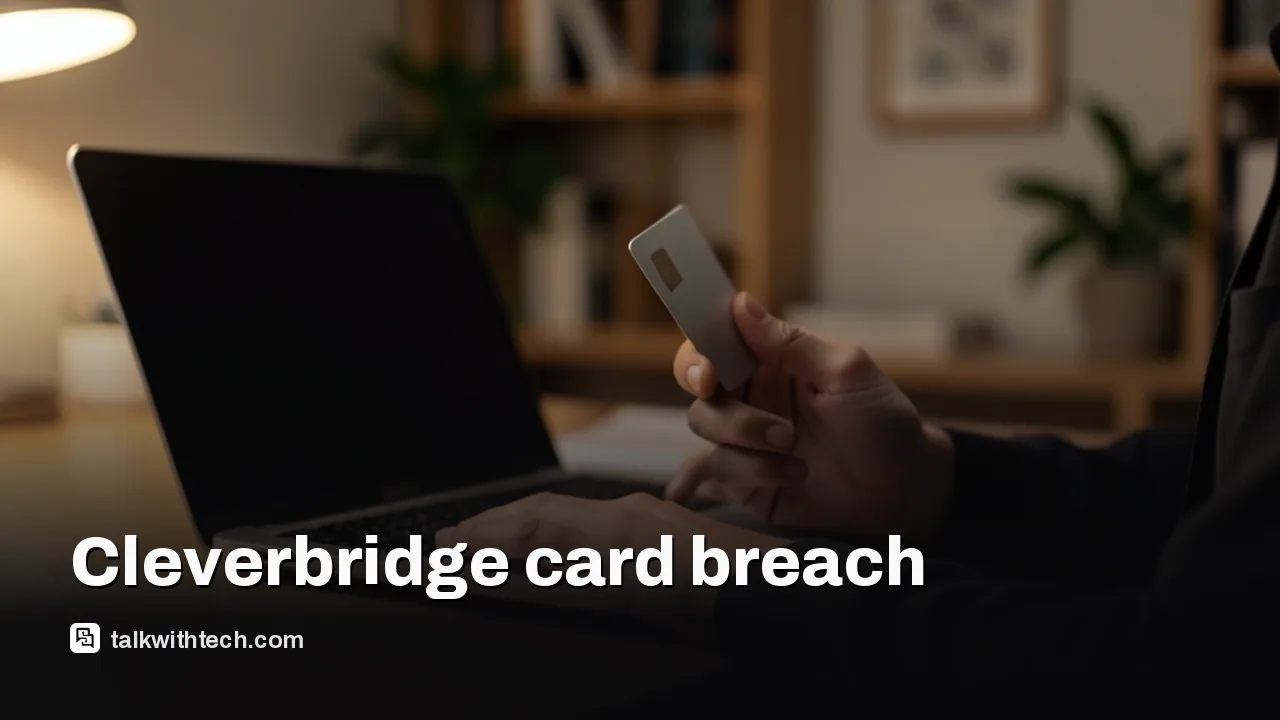
A person holds a payment card next to a laptop at a home desk

The short version

  • Cleverbridge says a third party copied payment card data stored on its platform after unauthorized activity on November 4.
  • A notification letter lists the card number, expiry date and CVV or CVC security code as the details taken.
  • The same letter says names, contact details and billing details were not copied.
  • Affected shoppers are told to check card statements and contact their card issuer, which may replace the card.
Quick read · 1 min

Cleverbridge, a company that runs online checkouts for software makers, says hackers copied payment card data stored on its platform. It detected unauthorized activity on November 4 and began sending notices on November 20.

A notification letter says the details taken were the card number, the expiry date and the CVV or CVC security code. It also says names, contact details and billing details were not copied. Cleverbridge has not said how many people are affected, how the attackers got in, or which of its client businesses are involved.

  • Check the last four digits in your letter to see which card is affected.
  • Review your statements for charges you did not authorize.
  • Tell your card issuer, which may replace the card.

Cleverbridge is offering affected customers free credit monitoring and fraud help through Cyberscout, a TransUnion service.

The Cleverbridge data breach reached the one number that is supposed to stay on your card, according to a notice the company sent to customers. Cleverbridge, a company that runs online checkouts for software makers, is telling customers that hackers got into its systems and copied payment card details, including card numbers and CVV security codes.

If the name means nothing to you, that is normal. Cleverbridge sits behind the buy button for other companies’ software, so plenty of people have paid through it without ever choosing it. Letters started going out on November 20, and what they say, and don’t say, matters if you have bought or renewed software online.

01

What was taken in the Cleverbridge data breach

The breach took payment card details, and by the company’s account nothing else. Cleverbridge has posted a page about the incident that confirms payment card data was copied, but that page doesn’t spell out which card details. It points affected people to their own notification for the specifics.

One of those notifications has been seen by security reporters, and it is more direct. It says the information involved is the card used for a purchase through Cleverbridge:

  • the card security code (CVV or CVC)
  • the expiry date
  • the full card number

The letter also tells each person which card is involved by giving its last four digits.

There is one piece of better news in the same letter. Cleverbridge says no other personal data was copied, and it gives your name, your contact details and your billing details as examples of what was left alone.

The security code stands out on that list. It is the short code used to verify a card payment, the extra check a website asks for on top of the long number.

Hands open a paper letter on a table beside a wallet and a card
02

What is Cleverbridge, and why did it have your card?

Cleverbridge is a middleman that sells software on behalf of the companies that make it. It provides e-commerce services to software and subscription businesses, letting them sell products, take payments and manage subscriptions.

The company describes itself as a Merchant of Record. In its own words, that means it acts as a digital reseller for its clients, taking on jobs such as regional taxes, local payment methods and regulations so the software maker doesn’t have to. In practice, when you buy from one of its clients, the payment can run through Cleverbridge.

Its support team also deals with shoppers directly. Cleverbridge says it handles refunds, subscription changes, billing detail updates, and re-sent invoices and purchase confirmations for its clients. That is why its name can turn up in the paperwork for a purchase you remember making with another brand.

It is not a small operation. Cleverbridge started in Cologne, Germany, and says it has spent 20 years in this business. It reports more than $10 billion in revenue processed and more than 1.5 million transactions a month, and it says it serves more than 240 countries and territories.

Among the technology brands it lists as customers are Parallels, Sony, Veeam, Red Hat, Jamf, SUSE and Tenable. That list is not a list of victims. Cleverbridge has not said which businesses’ customers were caught up in the breach.

03

The timeline: back online in a day, bad news later

Cleverbridge says it spotted unauthorized activity on November 4, 2026, and took systems offline for a time to contain it. Everything was back online that same day.

The worse finding came afterward. The company says its investigation later determined that a third party had “copied payment card data” stored on its platform. Notifications to affected customers began on November 20.

Cleverbridge has also said what the incident was not. It says this was not a ransomware attack, and that none of its systems were locked up with encryption by the intruders. Cleverbridge adds that it has told police, privacy regulators, the card networks and its payment partners.

Server racks with status lights in a dim data center aisle
04

What Cleverbridge says about its own security

Cleverbridge makes specific security claims on its website. Its platform page says it is compliant with PCI DSS, the card industry’s security standard, along with GDPR and CCPA, the European and California privacy laws. The same page advertises end-to-end data encryption and tokenization, plus continuous vulnerability scanning.

Tokenization means swapping a real card number for a stand-in value, so the real one is not sitting around to be taken.

Reporters have put two pointed questions to the company: was the stolen card data encrypted, and why were CVV and CVC codes accessible at all? Cleverbridge has not responded to those questions.

05

What Cleverbridge still hasn’t said

Three basic facts are missing from the company’s account so far:

  • How many people are affected. No number of customers has been disclosed.
  • How the attackers got in. The route into the platform has not been explained.
  • How long they were inside. The company has not said how long the intruders remained in its systems.

Add the unnamed client businesses and the vague public page, and the notification letter becomes the only document that tells a shopper anything concrete.

06

What to do if you got a Cleverbridge notice

The company’s own advice is short, and it starts with your statements. Here is what the notice asks affected customers to do, and what it offers:

  1. Check which card it is. The letter gives the last four digits of the affected card, so you know which account to watch.
  2. Go through your card statements. Cleverbridge tells affected customers to look for charges they did not authorize.
  3. Contact your card issuer. The company recommends telling your bank or card company about the incident. Banks may decide to replace a compromised card.
  4. Use the free help on offer. Cleverbridge is working with Cyberscout, a TransUnion service, to send the notifications and to give affected customers free credit monitoring and help with fraud.
07

Quick answers

Is Cleverbridge a legitimate company?

Yes. Cleverbridge is an e-commerce company founded in Cologne, Germany, that sells software and handles payments and subscriptions for software businesses. It says it has more than 200 employees.

Were names and addresses stolen in the Cleverbridge breach?

Cleverbridge says no. Its notification states that personal data such as your name, contact details and billing details were not copied, only the card details used for a purchase.

When did the Cleverbridge breach happen?

Cleverbridge says it detected unauthorized activity on November 4, 2026. It began notifying affected customers on November 20.

You're reading the quick version.