TFG cyber attack disrupts some online services, stores open
The owner of Phase Eight, Hobbs and Whistles found the breach on October 11. Shops stayed open, web orders slowed, and the data question is still open.
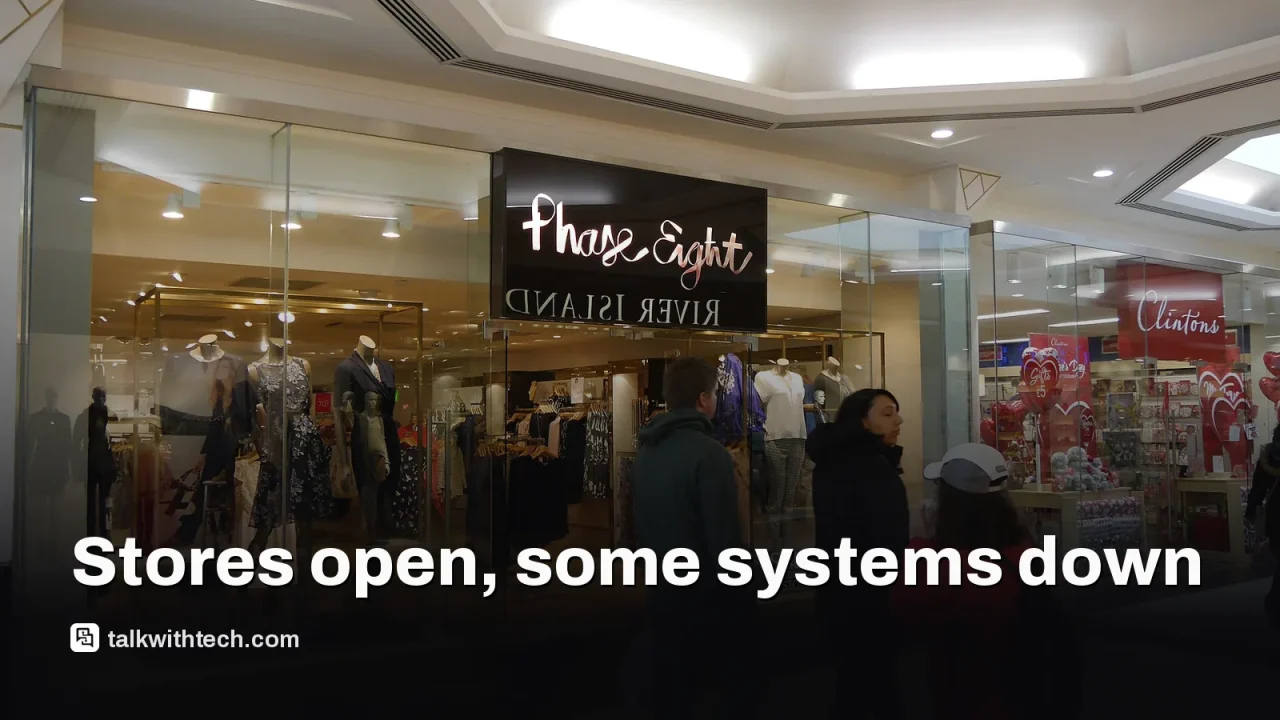
TFG London found a cyber incident on Sunday, October 11 that hit IT systems used by Phase Eight, Hobbs and Whistles.
Stores stayed open and trading, but several systems went down and online orders placed from October 11 could be delayed.
The company said it had no reason to think payment details were at risk and was still checking whether personal data was taken.
White Stuff, Inside Story and the group's Africa and Australia businesses run on separate systems and were not affected.
Quick read · 2 min
The company behind Phase Eight, Hobbs and Whistles was hit by a cyber attack that it discovered on Sunday, October 11. TFG London, the UK arm of South Africa's Foschini Group, said some IT systems used by the three brands went down. Shops stayed open, but website features were limited and online orders placed from that date could be delayed.
The firm said it had no reason to think payment details were at risk. It was still checking whether personal information had been taken, and promised to contact anyone affected directly. Its email to customers said changing login details was not needed for now.
White Stuff and Inside Story were not affected.
Outside security specialists were brought in and UK authorities were told.
Experts urged shoppers to be wary of suspicious messages.
The incident came days after Asos was hacked, and while H&M was checking a separate breach claim.
Three of Britain’s best-known high street fashion names were knocked partly offline in one go. The TFG cyber attack, found on Sunday, October 11, hit the IT systems behind Phase Eight, Hobbs and Whistles, and their owner still could not say whether customer details had been taken when it went public two days later.
If you have ever bought a dress from Phase Eight or a coat from Hobbs, that open question is the part that matters. The shops kept trading and the company said card details looked safe, but names, addresses and order histories are exactly what scammers like to work with. Here is what TFG has confirmed, what it has not, and what it told customers to do.
01
What happened in the TFG cyber attack
TFG London is the British arm of The Foschini Group, a big retailer headquartered in South Africa. It spotted the incident on October 11. In a statement on the Tuesday that followed, the group said the attack affected some of its IT systems, and named Phase Eight, Hobbs and Whistles as the brands involved.
The company said it switched on its incident response and business continuity plans straight away. That is corporate language for a rehearsed emergency routine: isolate the problem, keep the tills running, and bring in help. Outside cybersecurity specialists were hired to contain the attack, and TFG London reported the incident to the relevant UK authorities.
What the statement left out is just as telling. It did not say what kind of attack this was, how the intruders got in, or who was behind it. One retail security specialist said it was too early to tell how it happened or whether it was linked to any other recent hack.
02
Stores stayed open, but the websites took a hit
Shopping in person carried on as normal. TFG London said its stores remained open and trading. The three affected brands account for about 550 stores, out of 699 that TFG London runs across the United Kingdom and Ireland.
Online was a different story. The company said several IT systems were unavailable and warned that some website features might not work. Online orders placed from October 11 could be delayed, it said, and it apologized to customers for the disruption.
The damage was fenced in on two sides. White Stuff and Inside Story, two other brands in the same UK business, were not affected. And the group’s operations in Africa and Australia run on separate systems, so they were untouched as well.
03
Is your payment or personal data at risk?
Payment details look safe, according to the company, but personal data is the unknown. TFG London said it had no reason to think payment information was at risk. An email sent to customers, reported by a UK news agency, made the same point about card details.
On everything else, the answer was a careful “we don’t know yet.” The investigation was still working out whether personal or other sensitive information had been compromised, and that covered staff as well as shoppers. If it finds that data was taken, TFG London has promised to tell the people and organizations affected directly.
One line in the customer email stands out, because it runs against the usual breach advice. The company told shoppers it did not think they needed to change their account login details at that point.
04
Why fashion retailers keep getting hit
TFG London was the second UK retailer to disclose an attack in about a week. Days earlier, Asos customers learned that the online fashion store had been hacked when the attackers themselves sent a push notification to phones through the retailer’s app. Asos said an unauthorized party had reached some personal data, including names and contact details, on October 6.
At the same moment, H&M was looking into a claim from the hacking group ShinyHunters that it had been breached too. H&M said it had found no sign that its data environment had been compromised. No link has been established between the H&M claim and the TFG London incident.
The pattern is not new. Brands from Adidas to Alexander McQueen have been targeted by criminals who steal customer data and then demand a ransom to keep it private. Marks & Spencer was badly affected by an attack in 2025.
Timing makes it worse. One cyber insurance executive pointed out that with Black Friday and Christmas approaching, retailers are under huge pressure to keep trading, and attackers can turn that pressure into leverage when they try to extort a business. A security adviser added that outside suppliers and connected systems can give criminals a way into a much bigger company.
What this means if you shop at Phase Eight, Hobbs or Whistles
For shoppers, the practical effects were slower online orders and a wait for answers about personal data. If you ordered from one of the three brands’ websites on or after October 11, the company’s own warning is that delivery may have taken longer than usual.
The bigger risk comes later, and it arrives in your inbox. Even when card numbers are safe, leaked personal details can lead to scam messages and fake account alerts that look convincing because they mention a shop you really use. Beverley Griffiths, a security and resilience lecturer at Bucks New University, said customers should stay “vigilant” and be wary of suspicious messages. She also said no organization is immune, and that the real test is how fast a business can detect an incident, recover and keep customers informed.
Shoppers outside the UK and Ireland have less to think about. The affected systems belong to the UK business, and the group’s other regions were not touched.
06
What TFG has promised next
TFG London has made two commitments. It said it would give customers more updates as appropriate, and it said anyone whose personal information turns out to have been compromised will hear from the company directly.
That second promise is the one to hold on to. In the meantime, the company’s position in its customer email was that shoppers did not need to change their account logins.
07
Quick answers
Which brands were affected by the TFG cyber attack?
Phase Eight, Hobbs and Whistles. White Stuff and Inside Story, which belong to the same UK business, were not affected, and neither were the group’s Africa and Australia operations.
Were card details stolen?
TFG London said it had no reason to believe payment information was at risk. It was still investigating whether personal or other sensitive information had been compromised.
Do I need to change my password?
The company’s email to customers said it did not believe changing account login details was necessary at that time. It said it would contact affected customers directly.
pCloud says the attack on pCloud Pass exposed some email addresses and triggered login attempts, but one big question about encrypted vaults is still open.
Swiss officials confirmed five attacks run with AI agents, four of them successful, as Italy and Britain report the same fast, automated pattern on their networks.
7 min read
We use cookies to understand how readers use Talk With Tech, so we can make it better. Is that OK? Privacy policy
The Daily Brief
Today's biggest tech stories, in 5 minutes
Every morning, the news that matters from AI, phones, apps and the people shaping tech. Explained in plain English. Free.
One email a day. No spam, unsubscribe anytime. Privacy policy