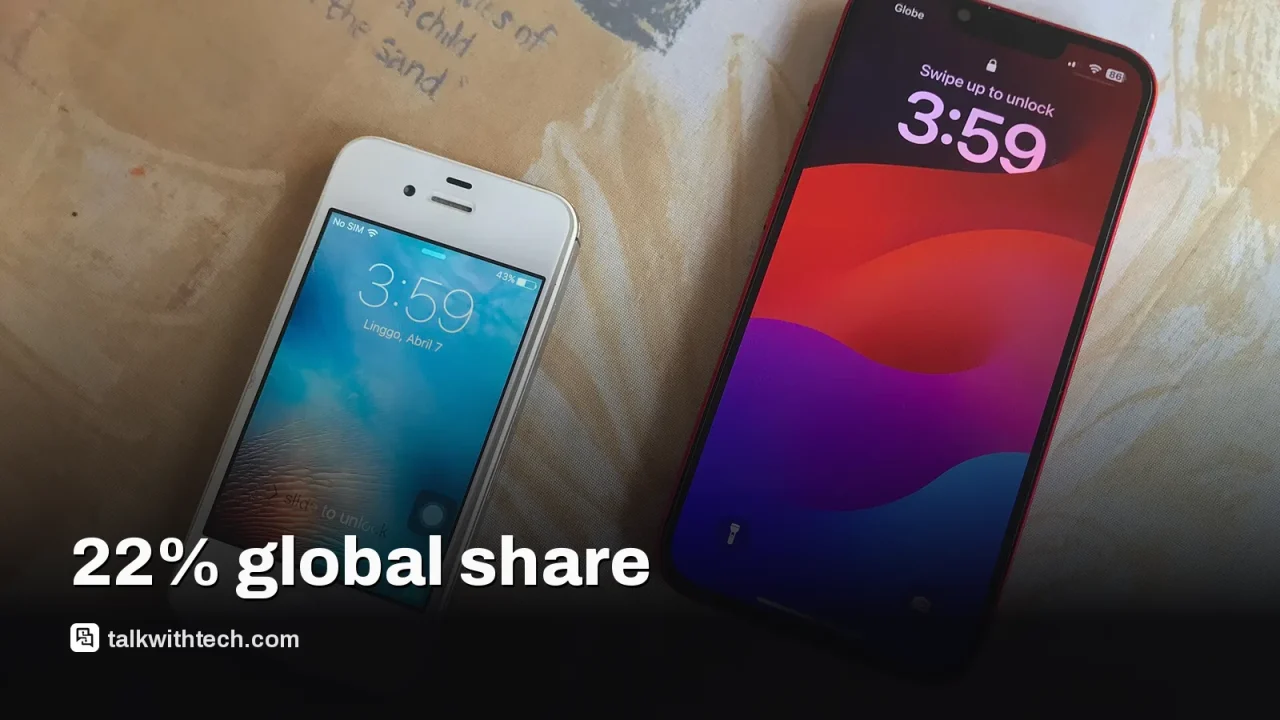
Apple captures a 22% share of global smartphone shipments in Q3 2026, the first time it tops 20% in a Q3.
Industry-wide shipments fall 20% year over year, pressured by memory constraints and higher prices.
Samsung remains the top vendor with about 23% share, while Apple narrows the gap from the year-ago period.
Analysts warn profits may trump volumes as component costs stay high and affordability remains a hurdle.
Quick read · 1 min
Apple just crossed a big line in Q3 2026, grabbing 22% of global smartphone shipments. The overall market fell 20% year over year because memory shortages and higher prices bit across the industry. Samsung still leads at about 23%, but the gap to Apple narrowed as both fought to keep customers in a tough economy.
What this means for you: expect more promotions on current models rather than flashy new launches, and be ready for prices to stay higher until component costs ease. If you’re shopping, compare offers carefully and consider older but solid models that still perform well.
Watch for regional promos in the US, UK and Canada.
Consider value-focused midrange phones to maximize features per dollar.
Keep an eye on memory costs and how that affects future pricing.
Apple hasn’t just kept up with a tough market in the third quarter of 2026. It crossed an important line: Counterpoint Research says Apple shipped enough iPhones to own 22% of global smartphone shipments in Q3, the first time a company has hit 20% in any third quarter. Samsung still leads the market with about 23% share, while the rest of the top players, Xiaomi, OPPO and vivo, slid as demand cooled and prices rose.
The broader story, though, is what happened to the whole market. Total smartphone shipments fell about 20% year over year, bringing the third quarter to the weakest level in 14 years. The report pins the drop on a memory shortage that pushed prices higher and made phones less affordable for many buyers. It also notes that a missing launch month for a key model base contributed to the decline in shipments compared with a year ago.
Apple’s Q3 performance comes as the company benefited from momentum in the iPhone 17 lineup and a stronger start for the iPhone 18 Pro in certain regions, even as it faced a softer period overall due to the absence of a larger new device lineup in the quarter.
Looking forward, analysts say the market’s path remains uncertain. The report highlights that price pressure and higher component costs will likely temper growth, with profitability taking priority over pushing volumes in the near term. That means even a leader like Apple could see pressure if costs don’t come down and supply improves.
01
What this means for everyday shoppers
For US, UK, and Canada buyers, the headline matters because it frames how aggressively brands price phones and how quickly carriers stock models. With the industry as a whole pulling back on shipments, expect more emphasis on promotions around existing models rather than splashy launches. If you’re shopping, you may see deals tied to older generations or more bundled offers to offset higher prices.
02
Which brands are still competing for share
Samsung maintains the largest slice of the market, about 23%, but the gap to Apple is narrowing. The rest of the top five includes Xiaomi, OPPO and vivo, all reporting declines versus last year as the global headwinds bite deeper into budget and midrange segments.
03
Why the memory crunch matters
Memory supply has become a recurring headwind for phone makers. Limited availability and higher costs push prices up, which in turn can slow demand among price-sensitive buyers in the US, UK and Canada. The result is a market where even the leading brands must balance new features with authentication of value for consumers watching their wallets.
04
What happens next
Industry trackers expect continued volatility as component costs stay elevated and supply improves at a uneven pace. In practical terms, shoppers should watch for more promotions on existing lines and clearer regional timing around new models. Apple and other big players may pivot toward profitability by optimizing mix and pricing, rather than chasing volume alone.
Apple captured 22% of global smartphone shipments in Q3 2026, the first time it surpassed 20% in any third quarter.
Why are shipments down so much this year?
A global memory shortage and higher device prices reduced affordability, leading to a 20% year-over-year drop in shipments.
What happens next is uncertain, but analysts expect brands to prioritize profitability and managed pricing as supply normalizes.
06
What you can do now
Shop with awareness: if you were eyeing a premium device, compare current promotions across the big three markets and consider last-generation models that still offer strong value. If you’re not in a hurry, waiting for lower prices or more favorable financing could pay off as memory costs stabilize.
Monitor gift and upgrade timelines for your carrier or retailer promotions.
Evaluate midrange models that offer strong camera, battery and software features for a friendlier price.
Plan ahead for holiday season promos and financing options that might ease memory-cost pressure.
07
Quick answers
Is this good for Apple investors?
Staying above 20% in a shrinking market helps Apple defend its leadership, but sustained profitability will depend on pricing and component costs.
Will the US see the same mix of phones?
Global trends tend to influence US offerings, but regional strategies and promotions will vary by carrier and retailer.