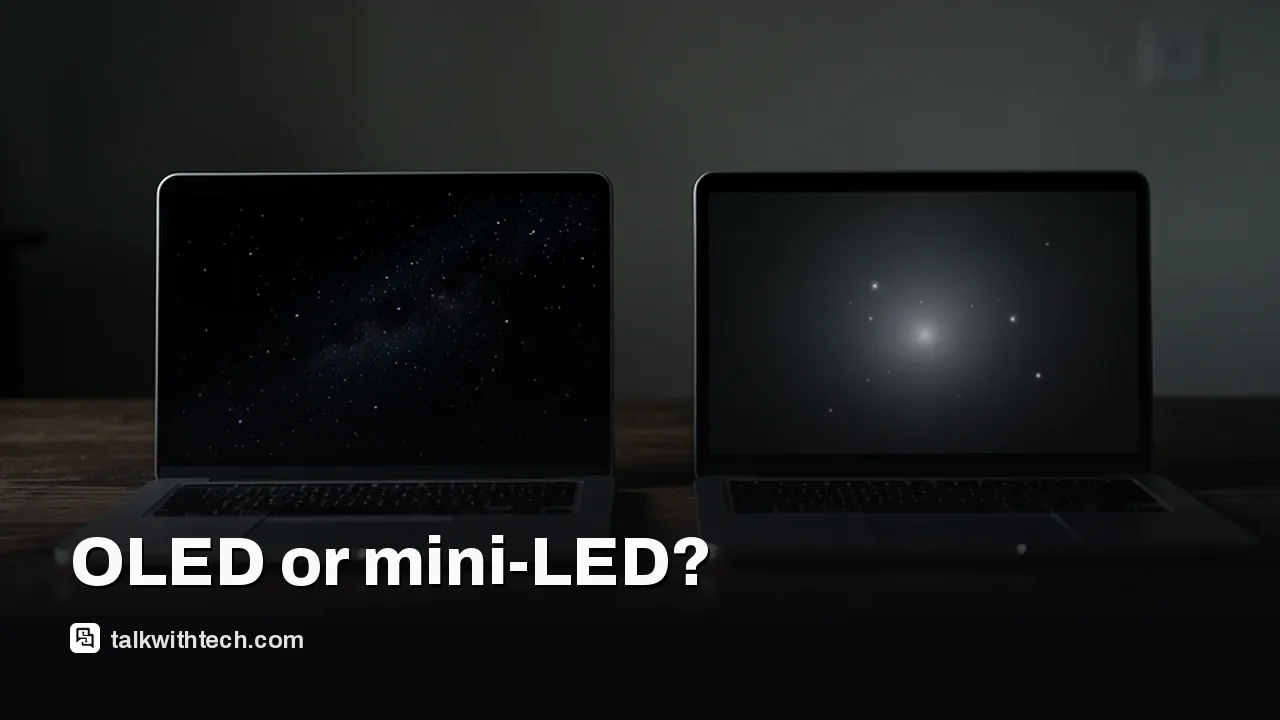
OLED wins on blacks because it can switch individual pixels fully off. A mini-LED screen, which Apple first put in the MacBook Pro in 2021, uses tiny LEDs behind the panel grouped into dimming zones. When a bright object sits on a dark background, light from its zone spills a little, creating a soft halo called blooming. Reviewers say that halo is gone on the new model.
On paper, the new panel is rated for a contrast ratio of 10,000,000:1 and up to 2,000 nits of peak brightness for HDR video. Apple’s previous mini-LED machines topped out at 1600 nits for HDR. For everyday desktop work, Apple rates the OLED at up to 1,000 nits sustained across the full screen. Tandem OLED means two OLED layers are stacked together, a trick Apple first used in the 2024 iPad Pro to push brightness higher than a single layer can manage.
Here’s the honest part. One reviewer who had spent hundreds of hours with the mini-LED models found the difference hard to spot during normal use, such as email, documents and web pages. The gap showed up in movies with dark scenes that suddenly flash bright, like fireworks against a night sky. Another reviewer called it obvious side by side but not night and day. If most of your day is spreadsheets in light mode, you will notice the OLED less than someone who edits video or watches films in bed.
Viewing angles also improve, with colors holding steady when you look from the side. And the glossy OLED handled window glare better than one reviewer expected, coming close to Apple’s matte nano-texture finish on older models. A new oil-repelling coating is meant to keep fingerprints from showing, which matters more now that people will be poking the screen.