Wednesday, 4 November 2026

iPad mini 2026 or 2024? Who should pay $699 to upgrade

OLED, a faster chip and real water resistance make the new mini better in almost every way, but most 2024 owners can keep their tablet a while longer.

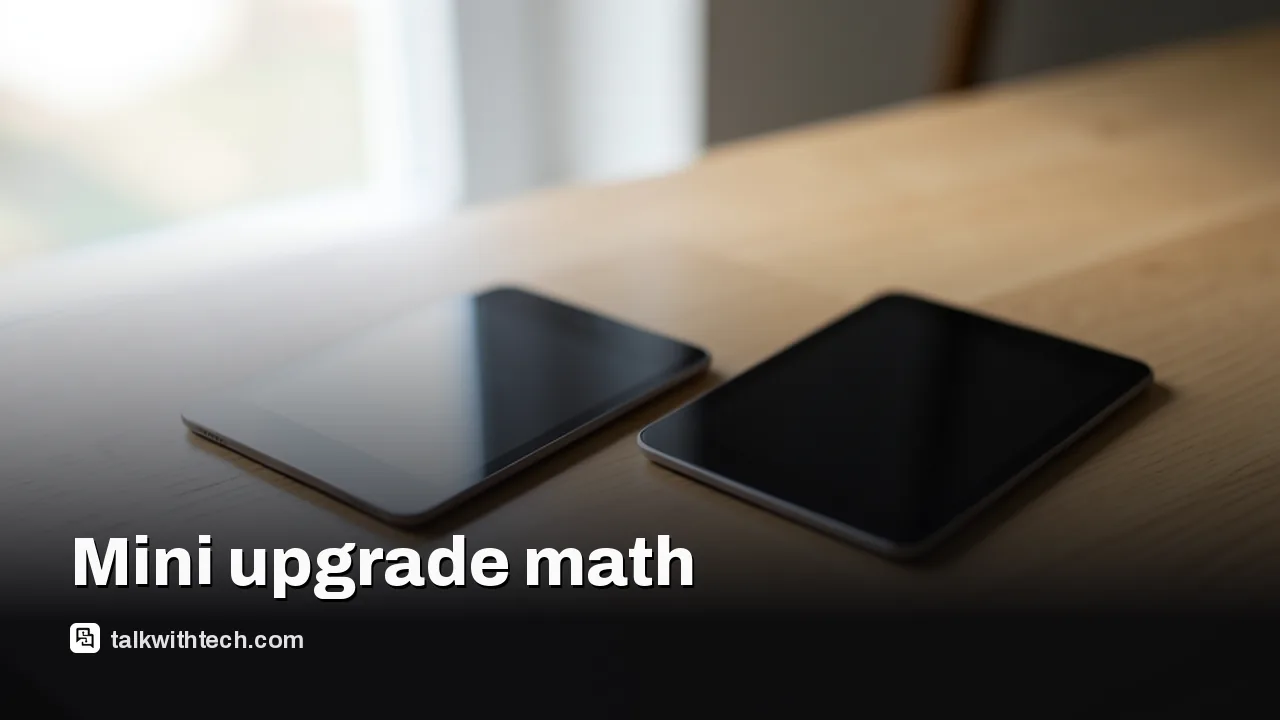
Two small tablets side by side on a wooden desk

The short version

  • The 2026 iPad mini swaps the 2024 model's LCD for an 8.5-inch OLED screen and the A20 Pro chip.
  • It is thinner at 5.4mm, lighter at 255 grams, and the first iPad rated IP67 against water and dust.
  • Prices start at $699 for 128GB, $100 above the older mini's recent price and $200 above its launch price.
  • Battery life and the 60Hz refresh rate are unchanged, so many 2024 owners have little reason to rush.
Quick read · 1 min

Apple's new iPad mini is a big step up from the 2024 model. It moves from an 8.3-inch LCD to an 8.5-inch OLED screen, swaps the A17 Pro for the A20 Pro, and becomes the first iPad rated IP67 for water and dust. It is also thinner and lighter, at 5.4mm and 255 grams.

The catch is cost. Prices start at $699 for 128GB, and a nano-texture screen pushes that to $899. Battery life is unchanged at up to 10 hours, and the screen still runs at 60Hz rather than 120Hz.

  • Upgrade if you watch lots of video, read outdoors or use your tablet near water.
  • Wait if you mainly read and browse, since your 2024 mini still handles that well.
  • Owners of an iPad mini 6 or older gain the most.

The new model goes on sale Friday, November 6.

If you own the 2024 iPad mini, the new model is better at nearly everything except the one thing you’ll notice first: the price. In the iPad mini 2026 vs 2024 matchup, the new tablet brings an OLED screen, the A20 Pro chip, an IP67 water rating and a body almost a millimeter thinner, starting at $699 when it goes on sale Friday, November 6.

That is $100 more than Apple charged for the A17 Pro model after this summer’s price increases, and $200 more than that tablet cost when it launched two years ago. Reviewers who spent a week with the new mini mostly love it, yet several said they’d struggle to tell a typical buyer to spend the money. So who should actually upgrade? It depends on how you use your current mini, and the answer is clearer than it looks.

01

iPad mini 2026 vs 2024: the specs that changed

Almost every line on the spec sheet moved, though not all by the same amount. Here’s the side-by-side, using Apple’s figures as reported in early reviews:

  • Screen: 8.5-inch OLED at 2316 x 1512 on the new model, versus an 8.3-inch LCD on the 2024 mini. Both run at 60Hz.
  • Brightness: up to 600 nits for everyday content (the old mini peaked at 500), and 1,200 nits for HDR video, twice the earlier peak.
  • Chip: A20 Pro, the same family as the iPhone 18 Pro, replacing the A17 Pro that first appeared in the iPhone 15 Pro in 2023.
  • Thickness and weight: 5.4mm and 255 grams, down from 6.3mm and 293 grams.
  • Durability: IP67 dust and water resistance, a first for any iPad. The 2024 model has no rating.
  • Battery: still rated for up to 10 hours of video or web browsing, but now with fast charging to 50 percent in 30 minutes on a 35W or stronger adapter.
  • Colors: just two, midnight and starlight. The 2024 mini came in four.

A few smaller changes round it out. The front camera, a 12-megapixel Center Stage unit, now sits on the long edge, so you’re centered in video calls when the tablet is held sideways. Apple’s N1 chip adds Wi-Fi 7 and Bluetooth 6, cellular versions use Apple’s C2 modem, and both Apple Pencil Pro and the USB-C Pencil still work.

Hands holding a small tablet for reading outdoors in sunlight
02

The OLED screen is the real reason to switch

The display is the upgrade you’ll feel every day. OLED panels light each pixel on their own, so black areas are truly black, and Apple lists a 2,000,000:1 contrast ratio. Its recent LCD iPads sit around 1000:1. Dark movie scenes, games and anything in dark mode look far richer than on the 2024 mini.

The bezels are also 24 percent thinner, which is how Apple fit a bigger screen into a footprint that’s actually about 2.2mm narrower. And because the panel is small, its pixel density is 19 percent higher than any other iPad, so text looks especially sharp.

There’s a small disagreement about the panel itself. One review describes it as a tandem OLED, the stacked type used in the iPad Pro, while another says it is not. Either way, it peaks 400 nits below the iPad Pro, so think of it as a big step up from the 2024 mini, not a Pro screen in miniature.

03

The 60Hz catch that 2024 owners will spot

The new mini still refreshes at 60Hz, exactly like the model it replaces. Every reviewer flagged this. Apple’s argument is that OLED pixels react faster than LCD ones, which cuts motion blur, and testers did find scrolling and animations a bit smoother than on the 2024 tablet.

Still, it isn’t 120Hz ProMotion, the faster refresh rate on the iPad Pro and, since last year, even the base iPhone 17. If you’re used to a ProMotion phone, scrolling text still blurs a little and Apple Pencil strokes can feel slightly juddery. If that bothered you on your 2024 mini, the 2026 model won’t fix it.

Small tablet with water droplets on its screen beside a bathtub
04

How much faster is the A20 Pro in daily use?

For most tasks, the honest answer is that you’ll notice it less than the screen. The A17 Pro in the 2024 mini is already quick for reading, streaming and browsing. Where the A20 Pro earns its keep is heavier work: big games, photo and video editing, and juggling several apps at once.

Storage decides which version of the chip you get. The 128GB and 256GB models use a trimmed A20 Pro with a 5-core CPU and a 7-core GPU, while the 512GB model gets the full 6-core CPU. Every new mini has 12GB of RAM, the same as the base iPad Pro, which should help as Apple keeps adding on-device AI features and its upgraded Siri. If you run into slowdowns on your 2024 mini today, that headroom matters. If you don’t, it’s insurance rather than a reason to buy.

05

Who should upgrade from the 2024 iPad mini, and who shouldn’t

Here’s the practical breakdown, based on what changed and what didn’t.

Upgrade if you:

  • Watch a lot of video on planes, trains or in bed. The OLED contrast and HDR brightness are a clear, everyday difference.
  • Read outdoors or under harsh lights. The new nano-texture glass, etched into the screen to scatter reflections, is offered on an iPad mini for the first time.
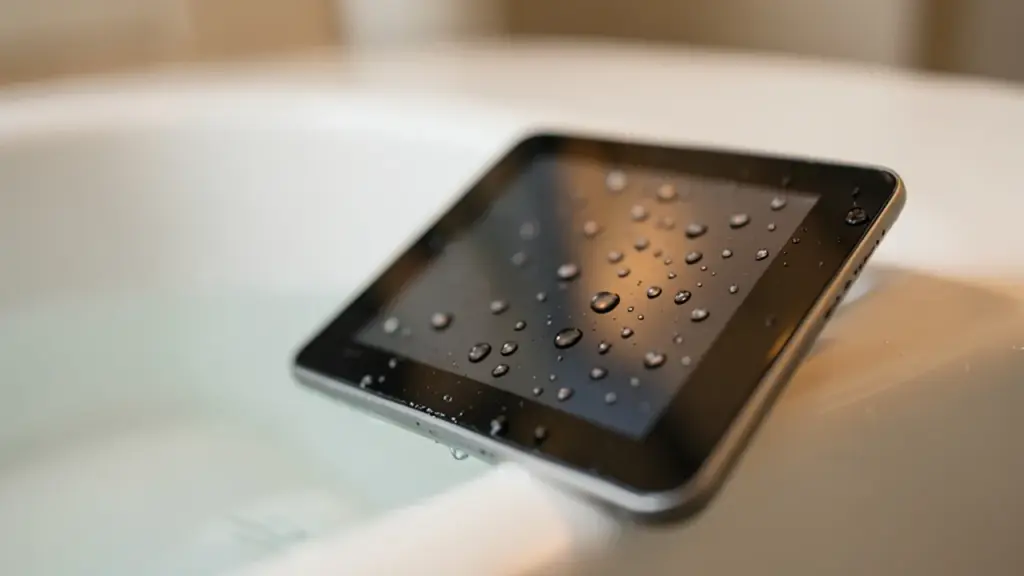
  • Use your tablet near water: in the kitchen, by the pool, in the bath or around small children. IP67 means it’s tested to survive a dunk in 1 meter of water for up to 30 minutes.
  • Hit performance limits in games or editing apps on the A17 Pro.

Keep your 2024 mini if you:

  • Mostly read, browse and stream casually. Battery life is the same, and the older screen is still good.
  • Want a faster refresh rate. Neither model has it.
  • Want Face ID. The new mini sticks with Touch ID.
  • Love the blue or purple finish. Those colors, and space gray, are gone.

For owners of an iPad mini 6 or older, the math is different. Early hands-on testers said the jump in thinness, screen, speed and water resistance easily justifies the cost for anyone still using one of those older models regularly.

06

What the upgrade really costs you

The $699 starting price buys the Wi-Fi model with 128GB and the standard glossy screen. Costs climb quickly from there:

  • $899: 256GB with nano-texture glass, which adds $100 and can’t be ordered on the 128GB model.
  • $1,049: 256GB, nano-texture and 5G.
  • $1,249: 512GB, nano-texture and cellular, the setup one reviewer tested and still couldn’t recommend at that price.

If you plan to use fast charging, you’ll need a 35W or larger power adapter, so check what you already own before you order. And if you do upgrade, selling or trading in your 2024 mini can soften the cost of the switch.

07

Quick answers

Is the 2026 iPad mini bigger than the 2024 model?

The screen is bigger, 8.5 inches versus 8.3, but the tablet is about the same size overall, slightly narrower, thinner and lighter.

Does the new iPad mini have 120Hz ProMotion?

No. Like the 2024 model, it runs at 60Hz, though the OLED panel makes motion look a little smoother.

When can I buy the OLED iPad mini?

Pre-orders are open now, and the tablet goes on sale Friday, November 6, starting at $699 in the US.

You're reading the quick version.