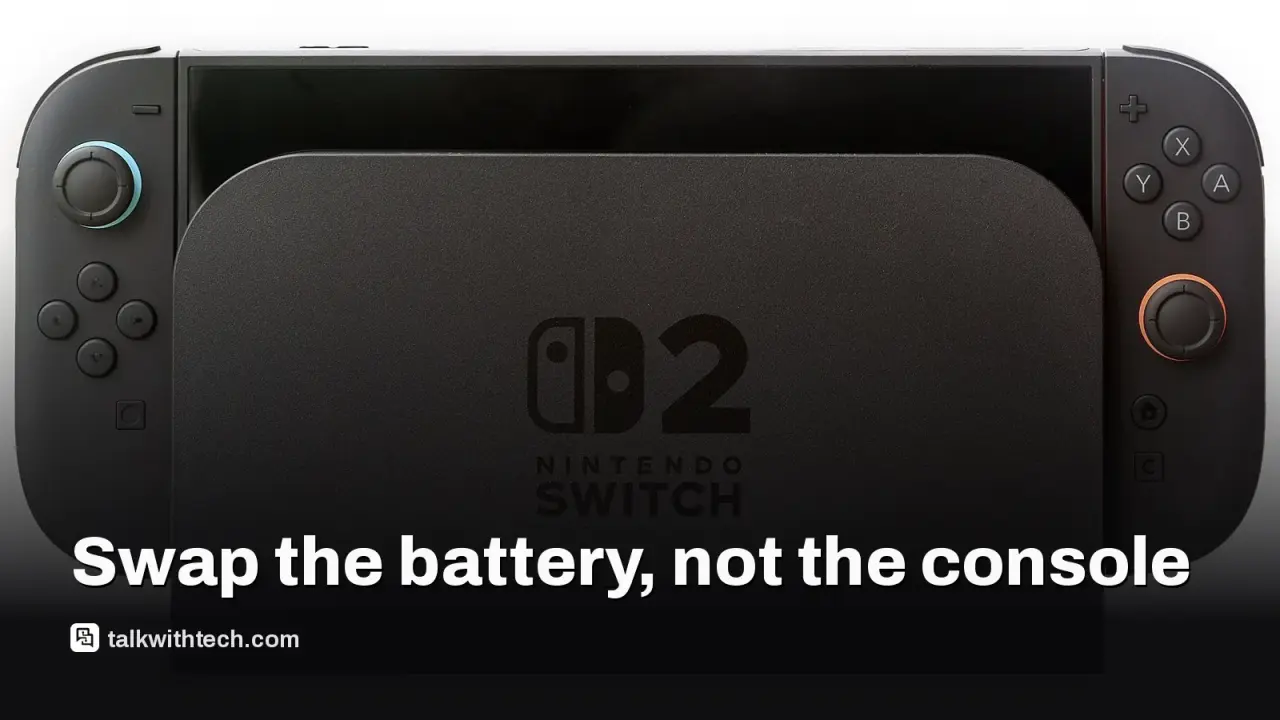
Nintendo itself lists two minor downsides. The swappable battery is rated at 5,172mAh, against 5,220mAh in the original, which Nintendo describes as about 1% smaller. In practice that should be hard to notice.
The console is also a touch heavier. Nintendo’s own figures put the new model around 10g heavier on its own, and about 14g heavier with the Joy-Con 2 controllers attached. Owners who weighed both units got similar numbers: roughly 410 grams for the new console without controllers, against around 400 grams for the original, and about 12 grams more with the Joy-Con 2 on.
Swapping still takes some care. You have to remove a series of screws and take off the housing to reach the battery. The difference is that, without adhesive, the job no longer risks damaging other parts.
That is the real point of the EU rule. Batteries in most gadgets can technically be replaced today, but it often means prying, unclipping ribbon cables and dealing with glue that can wreck a component if you slip. The law pushes makers toward designs where a normal owner can do it with basic tools. Until now, a Switch 2 owner hit by a fault such as the battery indicator bug some players have reported could end up shipping the console off and waiting for it to come back.