Wednesday, 25 November 2026

Nothing smart glasses with ChatGPT camera plus headset-only option

A leak says Nothing is building two pairs: one with a camera, ChatGPT and translation, and one that simply works like headphones. Neither is confirmed yet.

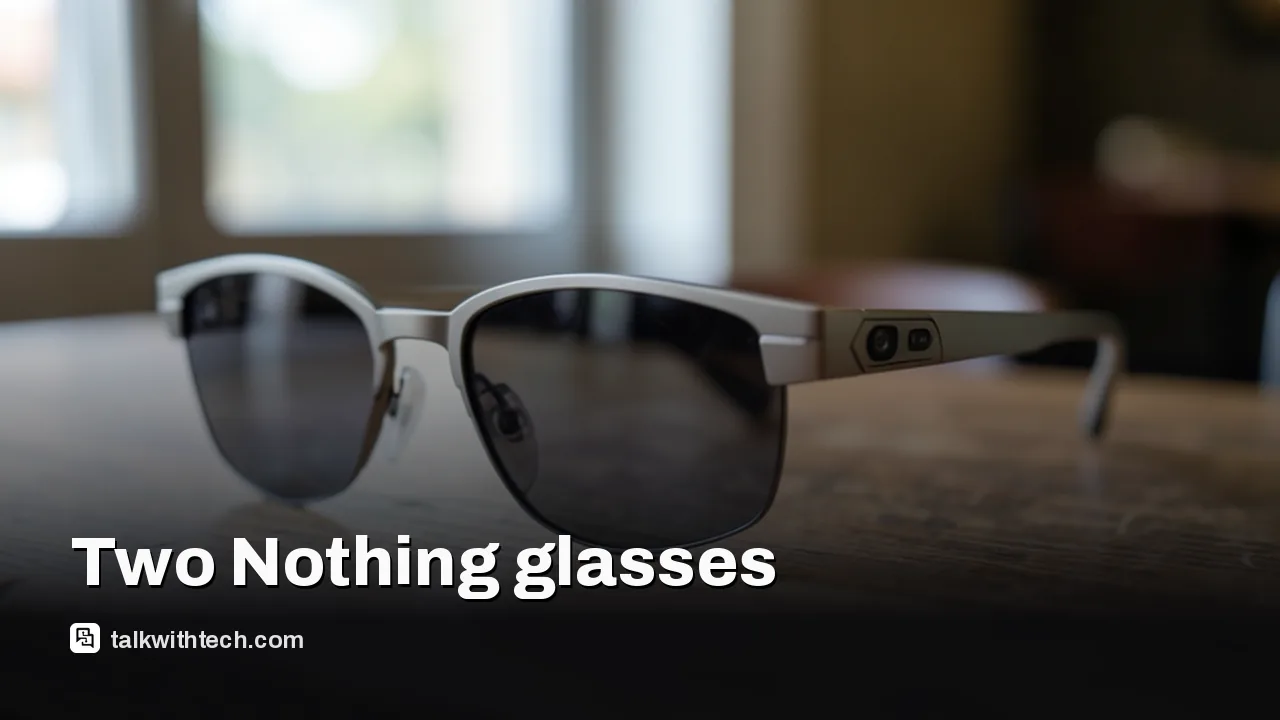
Smart glasses with small camera on temple and photochromic lenses on café table

The short version

  • Leaker Roland Quandt says Nothing is preparing two smart glasses models with very different feature sets.
  • One pair would add a camera, ChatGPT and translation, much like Meta's Ray-Ban glasses, while the other would be audio only.
  • Both are said to use photochromic lenses that darken in sunlight, and neither is reported to have a built-in display.
  • Earlier reporting pointed to a launch in the first half of 2027, and Nothing has declined to comment.
Quick read · 1 min

Nothing, the London-based maker of see-through phones and earbuds, is reportedly working on two smart glasses models. Leaker Roland Quandt says one pair would carry a camera, ChatGPT and translation features, similar to Meta's Ray-Ban glasses. The other would skip the camera and AI entirely and act like headphones for music, calls and your phone's voice assistant.

Both reportedly use photochromic lenses that darken in sunlight. Earlier reporting said the glasses would have no built-in display, would handle most AI processing off the device, and could launch in the first half of 2027.

  • No price, name or design has been revealed.
  • Nothing has declined to comment.
  • The camera-free option could appeal to people worried about recording.

Until Nothing confirms its plans, treat the details as a leak, and watch for news in the first half of 2027.

Nothing’s first smart glasses might not be one product but two, and only one of them would have a camera. That is the claim from Roland Quandt, a well-known leaker who posted on Bluesky that the London-based company is preparing a camera-equipped pair with ChatGPT built in, plus a far simpler pair that behaves more like headphones you wear on your face.

If you have been eyeing smart glasses but feel uneasy about wearing a camera to the office or the gym, that split matters. It would give buyers a choice that the biggest player, Meta, doesn’t really offer: the full AI package, or music and calls with no lens pointed at anyone. Nothing hasn’t confirmed either model, so treat this as an early look rather than a spec sheet.

01

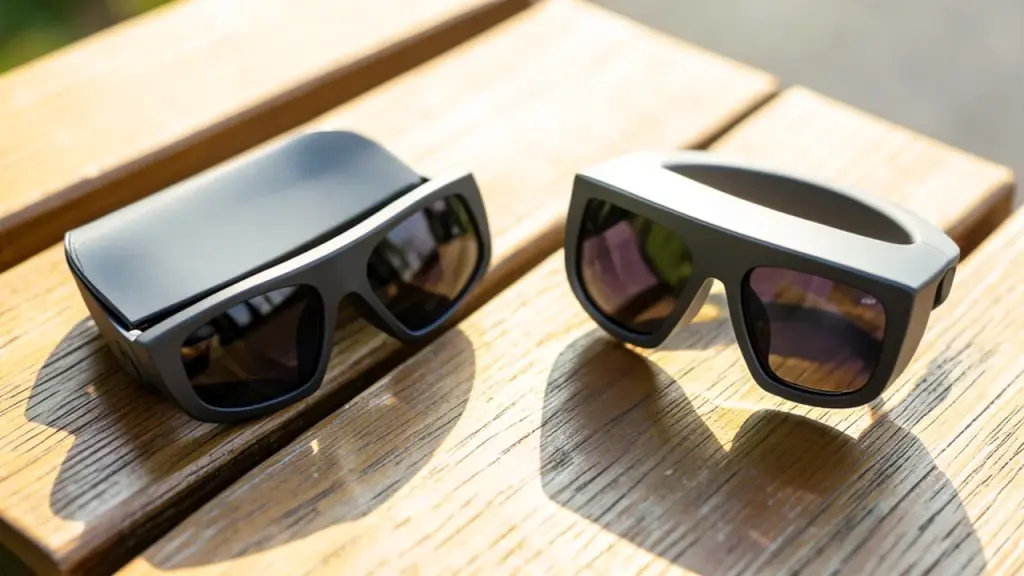
The two Nothing smart glasses, side by side

Here is how the two pairs reportedly differ.

  • The audio pair: lets you play music, take calls and talk to your phone’s voice assistant. It reportedly has no camera and no AI features of its own, so the smarts come from whatever assistant your phone already runs.
  • The camera pair: does everything the audio pair does, then adds a built-in camera, ChatGPT and translation. That puts it in the same territory as the Ray-Ban Meta glasses.

Both models are said to use photochromic lenses, often called transition lenses, which darken outdoors in bright light and clear up again inside. In practice that could mean one pair of glasses doubling as sunglasses, so you aren’t swapping between two pairs all day.

The leak doesn’t explain how the camera would be used, how translation would work, or whether it would happen in real time. Those details will matter a lot once real products appear.

Camera smart glasses and camera-free headset-style smart glasses side by side on bench
02

Why ChatGPT and not Gemini

Nothing’s phones run Android, so you might expect its glasses to lean on Google’s Gemini assistant and the Android XR platform built for headsets and glasses. The leak suggests otherwise: the camera model would integrate ChatGPT.

That fits a pattern. Nothing has been adding ChatGPT features to its other products for some time, and co-founder and chief executive Carl Pei, a former OnePlus executive, has argued that AI will eventually make traditional phone apps obsolete. The company has also launched Playground, a feature that uses AI to let people build small apps and share them with others.

One thing to expect from either AI approach: earlier reporting said most of the glasses’ AI processing would happen off the device rather than on the frames themselves. That usually means a connection to your phone and the cloud is needed for the clever features to work.

Play video: Pixelated 120: The Definitive Pixel Tier List
03

When the glasses could launch, and what we still don’t know

The first hint came in the spring, when a Bloomberg report said Nothing was planning AI glasses for the first half of 2027, citing people familiar with the plans. That report described glasses with cameras, microphones and speakers but no built-in display, so you wouldn’t see information floating in front of your eyes.

The same report said Pei was not initially enthusiastic about the idea, but came round as Nothing embraced a strategy built around several kinds of devices. Nothing declined to comment at the time.

Plenty is still missing. There is no word on price, design, battery life, or which countries would get the glasses first, and no confirmed name for either model. Nothing has not said whether the two-model plan described in the leak is final.

Person wearing camera-free headphone-style smart glasses walking in city, hands on phone
04

Nothing’s edge: design and audio

Nothing is a small company taking on giants, but it does have strengths that suit eyewear. Its products are known for a see-through look that shows off the parts inside, and transparent frames are already a familiar style in ordinary glasses.

It also started out making earbuds, and audio remains central to the brand. Its chief brand officer, Charlie Smith, who joined from the fashion house Loewe, has described the audio business as very important because of its links to music culture. Nothing has also worked with British speaker maker KEF on headphones. An audio-only pair of glasses would play directly to that experience.

The market is growing quickly. Counterpoint Research counted 139% year-over-year growth for smart glasses in the second half of 2025, with Meta well ahead of everyone else. Google, Samsung and Chinese brands such as Xreal and Rokid are also chasing the category.

Meta’s head start came partly from fashion. It teamed up with Ray-Ban and Oakley, two brands people already wear, and its Ray-Ban AI glasses now come in prescription-friendly versions too. Nothing will need its own answer to that, because glasses are something people choose with their face in mind, not just their phone.

Glasses are also not the only AI wearable on Nothing’s list. The same spring report said the company was working on new earbuds with AI-focused features, which suggests the glasses are part of a wider push to put assistants into the things you wear every day.
05

What this means for everyday buyers

For most people, the interesting part is choice. A camera-free pair would sidestep the most common complaint about smart glasses, which is that the people around you can’t easily tell whether they are being recorded. It would also likely be the simpler, lighter-feature option for anyone who mostly wants music and calls without earbuds.

The camera pair aims at the person who wants a hands-free AI helper: asking questions about what you’re looking at, translating a conversation or snapping a photo without pulling out your phone. Those features would rely on ChatGPT, so it is worth thinking about how comfortable you are sending what your glasses see and hear to an AI service.

Until Nothing makes an announcement, there is nothing to pre-order or compare on price. If the earlier timeline holds, the first half of 2027 is when to watch for a launch.

06

Quick answers

Is Nothing making smart glasses?

Reports say yes. A spring report pointed to a first-half 2027 launch, and an autumn leak described two models, but Nothing has not confirmed any of it.

Will Nothing smart glasses have a camera?

One of the two rumored models would have a camera, ChatGPT and translation. The other would be audio only, with no camera.

Do Nothing smart glasses have a display?

Earlier reporting said they would skip a built-in display and rely on speakers, microphones and, on one model, a camera.

You're reading the quick version.