AI confidence gender gap includes belief in fake AI experts
A new Harvard-backed survey finds men claim to know key AI figures more often than women, even when some names aren’t real. Here’s what it means for everyday readers.
A Harvard Kennedy School survey of 5,400+ Americans finds men report higher AI knowledge and recognition of AI figures than women.
Several named figures in the study are fictional, highlighting a mix of awareness and overconfidence.
The gap exists even for factual questions about AI and is reflected in media coverage patterns.
Experts urge more balanced representation of women as AI experts and in public discourse.
Quick read · 2 min
A new Harvard-backed survey looked at how Americans talk about AI. It found men tend to report higher knowledge of AI and recognize AI leaders more than women, even when some cited names aren’t real. The finding isn’t just about vanity; it shapes who gets asked to speak on AI and how people discuss its risks and benefits. The study urges more women to be visible as AI experts to balance the conversation. What this means for you: pause when you hear confident AI claims, check who’s being cited, and seek diverse voices in tech conversations. Expect more emphasis on diverse representation in AI panels and media coverage in the coming months.
What to do now: when you read AI news, look for multiple perspectives, and follow up with trusted sources that explain how AI actually works and who contributes to its development.
Pause before you trust bold AI claims
Look for diverse expert voices
Ask where the expertise comes from
A surprising gap hides in plain sight when Americans talk about artificial intelligence. A new survey of more than 5,400 adults, conducted with inputs from Harvard researchers, shows men consistently report higher familiarity with AI and its leaders than women do. It’s not just a brag you might expect from confidence; the study also finds a striking mismatch between who people say they recognize and who actually exists.
To be clear, the research isn’t just about who knows what. It also examines how confident people feel about AI, and how that confidence translates into how the public talks about the technology. The upshot: men are more likely to claim they know AI CEOs and researchers, while women are more likely to admit they’re unsure. That difference isn’t just about vanity, it shapes conversations, media coverage, and who gets asked to speak on panels or in news stories.
The study also points to a more unsettling wrinkle: some names cited as AI leaders aren’t real. That mix of real and fictional figures helps explain why confidence can outpace actual expertise, especially in a field where new developments come fast and don’t always line up with who you’ve seen in headlines.
Researchers interviewed participants, then asked them to identify prominent AI figures and assess how confident they were in their knowledge. They found men were more likely to say they recognized figures like well-known AI leaders, even when those names didn’t correspond to real people. In other words, confidence outpaced accuracy for a sizable share of the sample.
The broader takeaway isn’t about singling out one gender. It’s about what happens when the public thinks it knows more than it does. If men are more likely to feel certain and be quoted as AI experts, while women are more cautious about giving definitive answers, public debates and policy discussions could tilt toward the more certain voices, even when those voices aren’t the most informed.
01
Why this matters for everyday readers
For ordinary users, the lesson is simple: when you hear confident claims about AI from a few familiar faces, pause. Ask who’s actually behind the statements, and whether the person is a recognized expert in the field. The quality of public discourse matters for privacy, safety, and how quickly good AI practices spread into everyday products and services.
It also matters for who gets a seat at the table. If women are underrepresented among AI experts in media and public forums, a broader range of perspectives may be missing from discussions about how AI should be used in things we rely on every day, from health apps to hiring tools to customer service chatbots.
02
What the study says about knowledge and certainty
The report flags a general pattern: people tend to be more certain than they are accurate when discussing AI. Women, in particular, reported more uncertainty about answers, while men showed higher levels of certainty on average. That same dynamic can color how questions about AI ethics, job impact, and safety are framed in the public sphere.
03
The media angle: who gets named as an expert matters
The researchers call out that coverage often highlights male figures when AI is discussed, which can reinforce a cycle where men are seen as the default experts. The numbers suggest a feedback loop: more confident men are asked to speak, which then shapes what the public believes about who’s an expert.
04
What this means for you and your family
When you read or hear about AI breakthroughs, consider who is being cited as an authority and whether more diverse voices are included. If you’re a parent, shopper, or worker, this matters because it influences how you understand AI, what products you trust, and what questions you ask about how AI might affect jobs or privacy.
The study’s authors suggest a deliberate push for broader representation of women in AI discussions, on panels, in interviews, and as part of the broader media narrative. Expect more attention to who is invited to speak, and more checks on who’s being described as an expert in AI.
06
Quick answers
What did the study find about men’s confidence in AI?
Men reported higher confidence in AI knowledge and recognition of AI figures than women, across questions about who is who in AI.
Why do some AI figures in the study seem fictional?
The survey included real and invented names to illustrate how confidence and familiarity can diverge from actual expertise.
Google.org's Impact Challenge selects 17 groups to advance scientific breakthroughs with AI, backed by $36 million in funding and six-month accelerators.
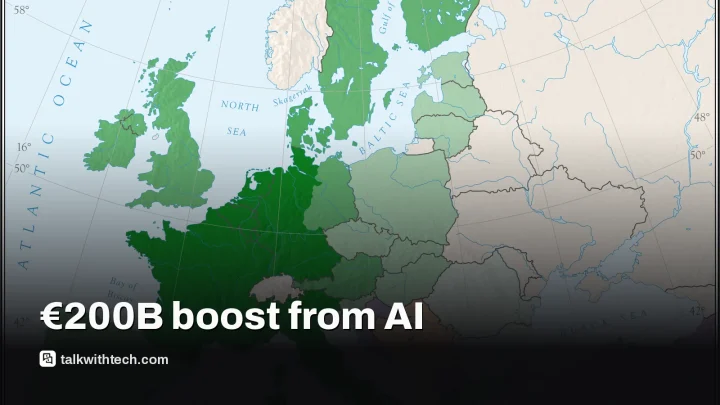
Google’s 2025 EU Economic Impact Report ties AI and cloud tools to a roughly €200 billion boost to EU GDP, underscoring how tech and regulation shape everyday business.
3 min read
We use cookies to understand how readers use Talk With Tech, so we can make it better. Is that OK? Privacy policy
The Daily Brief
Today's biggest tech stories, in 5 minutes
Every morning, the news that matters from AI, phones, apps and the people shaping tech. Explained in plain English. Free.
One email a day. No spam, unsubscribe anytime. Privacy policy