OpenAI posted a short video of Nick Baumann using ChatGPT to build a catering deck and outreach for a Toronto dumpling shop.
The clip shows ChatGPT taking over the sales paperwork that keeps a busy restaurant owner from finding catering clients.
Since then, OpenAI has added a Small Business Collection of plugins, including HoneyBook, which drafts replies and proposals for owner approval.
In November, OpenAI opened Businesses in ChatGPT in beta, letting verified firms claim a profile, starting with US ecommerce and online services.
Quick read · 2 min
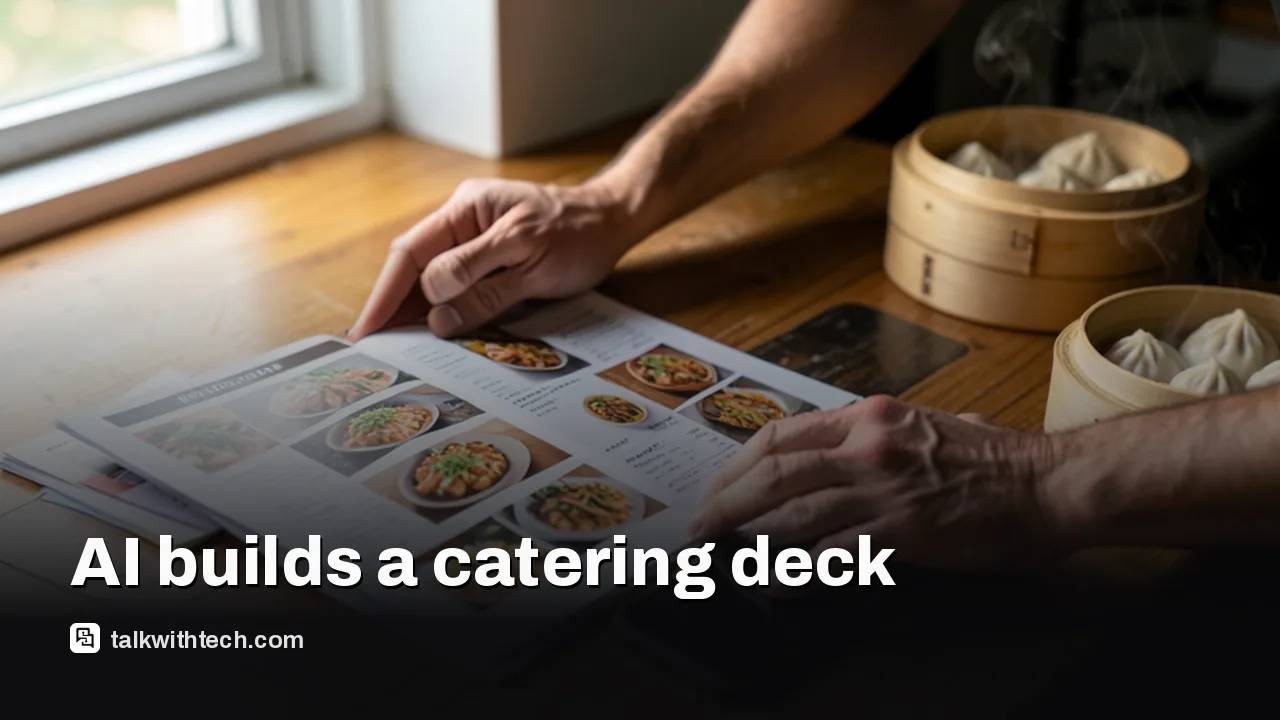
OpenAI posted a short video in which Nick Baumann visits Richard, owner of The Dumpling Prince in Toronto, and uses ChatGPT to build a catering deck and automated outreach to find new catering clients. The idea: let the chatbot handle the sales paperwork so the owner can stay in the kitchen.
OpenAI has since gone further. A Small Business Collection added tools such as HoneyBook, which lets ChatGPT draft replies, proposals and invoices from an owner's real client data, with nothing sent until the owner approves it. And on November 10, OpenAI opened Businesses in ChatGPT in beta, where verified firms can claim a profile and see how often ChatGPT mentions them.
Business profiles and agents start with US ecommerce and online service firms.
Claiming a profile doesn't boost recommendations, OpenAI says.
Always check prices and details in anything ChatGPT drafts.
A Toronto dumpling restaurant had a problem most small food businesses will recognize: plenty of demand for its food, and no time left over to chase catering work. So OpenAI sent someone over to see whether ChatGPT could do the selling.
That’s the setup of a short video OpenAI posted to its YouTube channel, and it matters for anyone who runs a small business on thin margins. Catering orders can be some of the most valuable work a restaurant gets, but landing them means writing a pitch, building a menu package and contacting strangers, which is exactly the kind of work that slips when the kitchen is busy.
01
What OpenAI’s catering video actually shows
The video follows Nick Baumann as he visits Richard, who runs The Dumpling Prince in Toronto. OpenAI’s description frames the pain point plainly: running a restaurant never stops, and hunting for catering clients turns out to eat just as much time.
The two of them put ChatGPT to work on two jobs. The first was a catering deck, the short presentation a restaurant sends to offices, event planners or wedding couples to explain what it can cook, for how many people and how ordering works. The second was automated outreach, meaning messages to potential clients that go out without the owner writing each one by hand.
OpenAI jokes in the description that the chatbot never put on an apron. That’s the real point of the clip. The cooking stays human. The paperwork around it is where the AI help lands.
OpenAI closes the description by inviting viewers to share an idea for something they wish existed, and offers to come and build it with them next. It’s a marketing piece, so it shows a success story rather than the edits and false starts that usually come with any new tool.
02
Why catering outreach suits ChatGPT so well
Catering sales work follows a pattern, and patterns are what chatbots handle best. A deck needs the same sections every time: who you are, sample menus, portion sizes, delivery or pickup details and how to book. A first outreach email follows a familiar shape too: a short introduction, why you’re writing to that person, and one clear next step.
A tool like ChatGPT can turn a messy list of dishes and notes into a clean first draft in minutes. It can also write several versions of an email for different audiences, say a law firm’s office manager versus a couple planning a wedding, which would take a busy owner an evening to do alone.
What it can’t do is know your real prices, food costs, kitchen capacity or which local businesses already order from you. Those have to come from the owner. Feed it wrong numbers and you get a polished deck with wrong numbers.
03
The new ChatGPT tools built for small businesses
Since the video went up, OpenAI has pushed further into small business work. In September it launched a Small Business Collection, a set of tools inside ChatGPT aimed at owners who handle sales, marketing, operations and money themselves.
One of them is HoneyBook, a client management service popular with independent service businesses. Once a HoneyBook member connects an account, ChatGPT can answer questions about that person’s own clients, schedule, contracts and invoices, such as which invoices are overdue or which new inquiries to answer first.
It can also draft the next step: replies to inquiries written in the owner’s style, proposals or invoices built from saved templates and pricing, and new lead forms. HoneyBook says everything ChatGPT creates arrives as a draft, and nothing is sent, issued or changed until the owner approves it. For a caterer, that’s close to what the Toronto video showed, but working from real booking data instead of a blank page.
Plenty of owners already work this way. By OpenAI’s own count, no fewer than four million Americans used ChatGPT in March 2026 for some part of planning, starting, running or growing a business.
04
Businesses in ChatGPT: the other side of outreach
The newest change flips outreach around. On November 10, OpenAI opened Businesses in ChatGPT in beta, a hub where companies can claim a profile, verify who they are and update the details ChatGPT shows about them. People have compared it to Google’s Business Profile, the listing that controls how a shop appears in Google Search and Maps.
Through the hub, a business can see aggregated numbers on how often ChatGPT mentions it, how many people view its profile and how many clicks it sends to the business website. OpenAI says it doesn’t share users’ conversations with businesses, and some figures only appear once there’s enough activity.
A second piece, Business Agents, lets eligible firms set up their own assistant inside ChatGPT that answers customer questions, clearly labeled as the business talking rather than ChatGPT. OpenAI says the 1.2 billion people who use ChatGPT each week are the audience.
There’s a catch for restaurants. For now, only eligible US online stores and online service companies are included, and eligibility depends on industry, location and OpenAI’s checks. OpenAI has not said when other categories or countries, including Canada and the UK, will get Business Agents. It also says claiming a profile or buying ads won’t make ChatGPT recommend a business more often.
If you run a restaurant, bakery, food truck or any service business, the practical lesson from the Toronto clip is modest but real. ChatGPT can take the blank page off your hands for sales materials and first-contact emails. That alone can turn a task you keep postponing into one you finish over a coffee.
A few habits keep it safe and useful:
Give it your real menu, prices, minimum order sizes and delivery area, and check every number in the result.
Rewrite the opening lines of outreach emails so they sound like you, not a template.
Think before pasting client names, phone numbers or contracts into any AI tool, and use connected services like HoneyBook only if you’re comfortable with that link.
Keep sending in your own hands. Draft-then-approve is the right default, and it’s how the newer business plugins work.
If you’re in the US and sell online, it’s also worth checking whether your business shows up correctly in ChatGPT, since more customers now ask a chatbot before they search.
06
Quick answers
What did ChatGPT do for The Dumpling Prince?
In OpenAI’s video, Nick Baumann used ChatGPT with the owner to build a catering deck and set up automated outreach to potential catering clients for the Toronto restaurant.
Can a restaurant claim its business in ChatGPT?
Not necessarily yet. The Businesses in ChatGPT beta started with eligible ecommerce and online service businesses in the US, and OpenAI says more categories and markets will follow over time.
Does ChatGPT send emails to clients on its own?
Tools like the HoneyBook plugin only prepare drafts. The owner reviews and approves anything before it goes out.
His essay makes OpenAI's pretraining scores public for the first time and asks rival labs to agree on a line none will cross until safety tools catch up.
Tesla's new driving software reached its first owners on November 21. Here is who gets it next, what Reality View shows, and the gap in the 25x safety claim.
An Anthropic mathematician says he and Claude cracked math's most famous open problem. Nobody has confirmed it yet, and the proof exists only as computer code.
7 min read
We use cookies to understand how readers use Talk With Tech, so we can make it better. Is that OK? Privacy policy
The Daily Brief
Today's biggest tech stories, in 5 minutes
Every morning, the news that matters from AI, phones, apps and the people shaping tech. Explained in plain English. Free.
One email a day. No spam, unsubscribe anytime. Privacy policy