Wednesday, 25 November 2026

AI in job applications ethics: when help becomes misconduct

Big employers now accept AI-written CVs, yet 92% say they've seen or suspected AI cheating. Here's where recruiters draw the line, and why.

CV and laptop on a desk ready for editing

The short version

  • A survey of 155 big UK graduate employers found most now accept AI help with CVs, cover letters and written application questions.
  • The same survey found 92% had seen or suspected AI misconduct, up from 85% the year before, mostly in video interviews and online tests.
  • EDF closed its graduate scheme early after 12,000 applications and now reads CVs only late in hiring to make it harder to game.
  • A separate Greenhouse survey says nine in ten US employers think they rejected real candidates because applications looked AI-made.
Quick read · 1 min

UK graduate employers are split on AI in job applications. A survey of 155 large employers by the Institute of Student Employers found most now accept AI help with CVs, cover letters and written application answers. But 92% had seen or suspected AI misconduct, up from 85%, mostly from people using AI live during video interviews or online tests.

The flood of AI-assisted applications is changing hiring. EDF shut its graduate scheme early after 12,000 applications and now reads CVs late, relying on skills tests and interviews. In the US, a Greenhouse survey found 90% of employers think they rejected real people whose applications looked AI-made.

  • Use AI for drafting and preparation, not live tests.
  • Rewrite AI drafts in your own voice with real examples.
  • Check each employer's AI guidance before applying.

Nearly every big graduate employer in the UK now says it has caught, or suspected, a candidate cheating with AI. Yet many of those same firms are perfectly happy for you to let a chatbot write your CV. That tension sits at the heart of AI in job applications ethics: the tool is allowed at some stages and treated as misconduct at others.

If you’re job hunting, the stakes are practical. Use AI in the wrong place and you could be marked down or thrown out. Avoid it entirely and you may lose out to people who send out dozens of polished applications a day. Knowing where employers draw the line can save your application.

01

Which AI uses employers accept in job applications

Employers are mostly fine with AI helping on paperwork. This summer the Institute of Student Employers (ISE), a trade group, surveyed 155 of the UK’s largest graduate employers and found they were growing more accepting of AI at certain stages of hiring.

The use they accepted most was drafting CVs and cover letters. Answering written questions on an online application form came second.

Candidates say they rely on that help because the volume is punishing. One recent geography graduate told the BBC he applied for more than 200 jobs before getting a role as a restaurant manager, sometimes sending 10 to 20 applications in a day. He used AI for cover letters, CVs and finding the keywords that automated screening software looks for, but never in a test or interview. A trainee accountant said he used it for all 50 of his applications, to research roles, tidy his CV and practice likely interview questions.

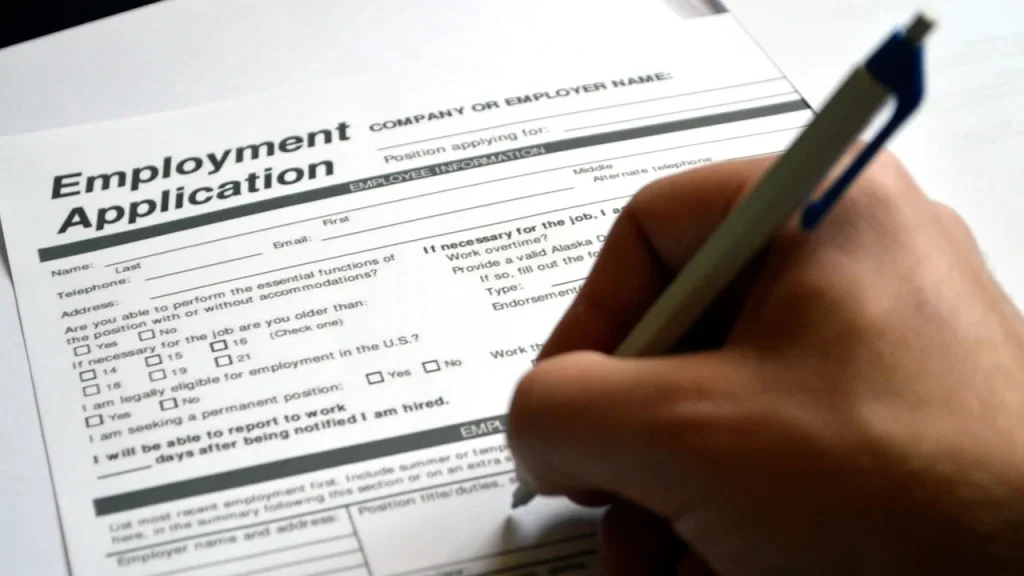
printed job application documents and a pen
02

Where AI help becomes misconduct

The line falls at anything meant to test you live. In the ISE survey, 92% of employers had encountered or suspected AI misconduct during selection, up from 85% a year earlier.

The most common examples were candidates running an AI assistant in real time during an online video interview, and using AI to complete online assessments. Those stages exist to measure your own thinking, so outsourcing them is treated much like cheating on an exam.

Recruiters say it’s often easy to spot. Hollie Moody, who runs early careers recruitment at energy company EDF, says many answers in video interviews sound identical, and some people pause while they wait for a response to appear, as if reading from a script.

Her bigger worry is fairness. Some candidates use AI from start to finish and others don’t touch it, so the contest isn’t even.

03

How employers are trying to AI-proof hiring

EDF’s graduate scheme shows the pressure. EDF opened the scheme this autumn, then shut it early after receiving 12,000 applications, 10% more than the year before. Moody thinks AI almost certainly added to that pile.

The ISE calls this pattern spray and pray: sending out huge numbers of applications at once. Stephen Isherwood, the group’s joint chief executive, says it’s raising the competition and pressure on students. Graduate roles now draw an average of 141 applications each.

EDF’s response has been to change the order of things. It now publishes guidance on acceptable AI use, reads CVs only in the later stages, and leans on skills and behavior-based online tests and video interviews instead. The goal is to make the early rounds harder to game.

The same trend is showing up in the US. A new survey of 1,347 hiring managers and recruiters by hiring software company Greenhouse found that 90% of US employers believe they’ve rejected genuine candidates because their applications looked fake or AI-generated. Some 86% have changed their hiring process because of AI, and 57% of those added an extra human interview.
04

What this means for your job search

The safest rule is simple: let AI help with preparation, and do anything assessed in real time yourself. Drafting a CV, researching a company and rehearsing practice questions are widely accepted. Getting AI to feed you answers during a video interview or an online test is where employers see misconduct.

There’s an awkward double standard, and candidates notice it. Only 16% of employers in the ISE survey currently use AI in their own recruitment, but 29% plan to bring it in within a year. Greenhouse found half of the employers it surveyed already use AI interviews to reach more applicants, though only 7% would let an AI agent decide who moves forward.

That leaves applicants writing for two audiences: software that scans for keywords, and humans who mark down anything that reads like a template. A few practical steps help:

  • Read each employer’s guidance on AI, since many large firms now publish one.
  • Give the AI real detail about your experience, then rewrite the draft so it sounds like you and includes concrete examples.
  • Practice interview answers out loud without a screen in front of you, because recruiters listen for scripted pauses.
  • Apply to fewer roles with more tailored applications rather than flooding dozens of generic ones.

For EDF, at least, what wins is still personal. Moody says the firm wants authenticity, personality and a range of ways of thinking, which a chatbot can’t supply.

05

Quick answers

Is it cheating to use AI to write a CV or cover letter?

Not for most large UK graduate employers. Drafting CVs and cover letters was the AI use they accepted most often, though you should check each firm’s own guidance.

Can employers tell if I use AI in a video interview?

Often, yes. Recruiters report near-identical answers and telltale pauses while candidates wait for an AI reply, and many firms count this as misconduct.

Do employers use AI to screen applicants too?

Some do. In the UK survey 16% use it now and 29% plan to within a year, while half of the employers Greenhouse surveyed use AI interviews.

You're reading the quick version.