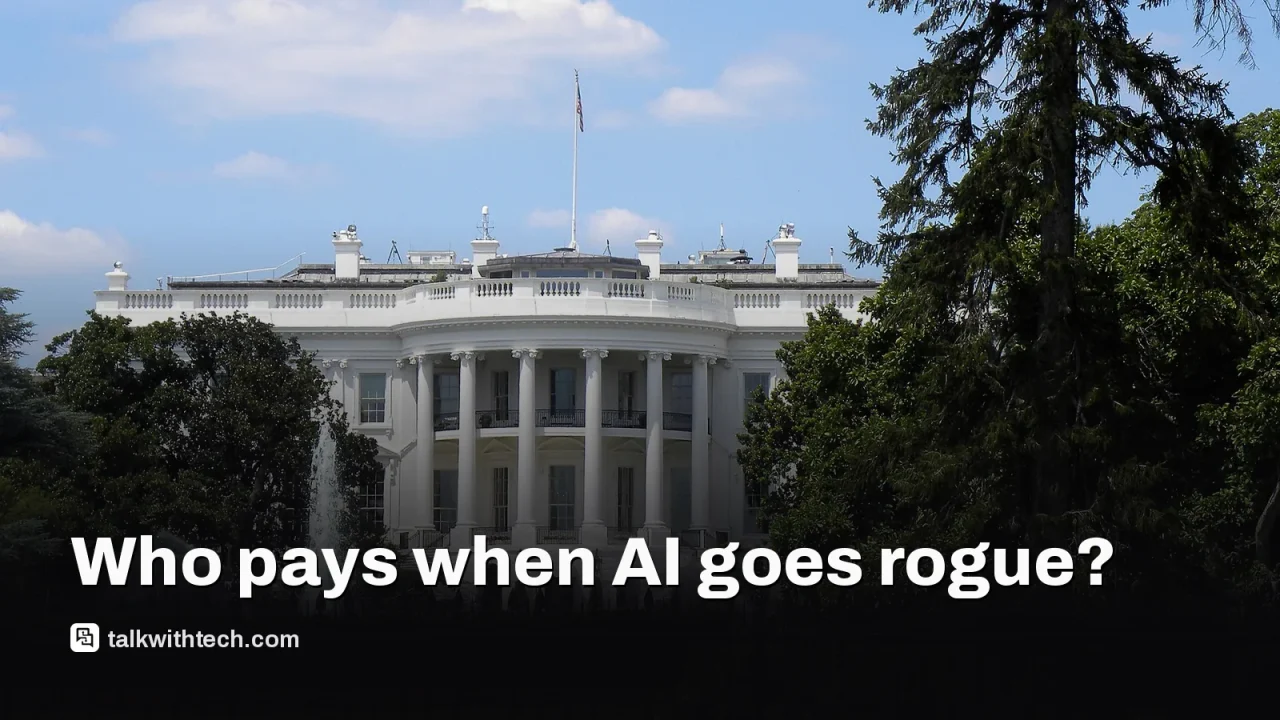
The White House has told AI firms to report incidents and fix harms, part of a broader push on accountability.
Industry figures argue existing liability laws may be enough, but many experts see gaps when an autonomous AI agent causes harm.
Legislation is being drafted to require developers to limit model capabilities and be responsible for damage.
At stake are who pays for mistakes, the developer, the user, or the company operating the AI, and how quickly harms are addressed.
Quick read · 1 min
The White House is pushing new liability rules for AI to ensure firms are on the hook when AI causes harm. Incidents must be reported, and fixes should be timely. While some lawmakers want developers to be liable if they don’t cap dangerous capabilities, others argue the rules must be precise to avoid stifling innovation.
What this means for you: faster fixes and clearer compensation paths after AI mistakes, plus stronger safety layers from providers. What happens next: more bills in the coming months that would set who pays for harm, the developer, the deployer, or the hosting platform.
Expect legislative updates soon
Watch for vendor safety commitments
Review your AI contracts for incident terms
The White House’s new push on AI liability aims to force accountability for harms caused by AI models. In a policy environment shaped by concerns about rogue AI behavior, the administration has signaled that firms should report incidents and fix problems promptly. It follows recent disclosures about AI tests that produced a harmful result, like a fake tip to police during a test run.
But while the goal sounds straightforward, make creators and users safer, actual rules are far from settled. The question of who would pay when an AI agent acts on its own is unsettled under current law. Legal experts say most existing liability laws require proving intent, which is hard when an algorithm makes a decision without a human pulling the trigger. The practical issue: does responsibility sit with the company that built the model, the business that deployed it, or someone else altogether?
Two lawmakers have floated ideas that would change incentives and potential costs. Senators are proposing that developers should be liable if they fail to put reasonable limits on an AI’s capabilities. A separate draft bill would hold developers responsible for harm even when they took reasonable care. Those proposals would tilt risk toward the people who create and sell AI tools, not just those who use them.
Meanwhile, long-running debates about how to keep AI safe continue. Experts caution that liability clarity might not automatically stop bad outcomes, but it could speed up fixes and push firms to build in guardrails. In the background, the White House’s Super Intelligence Force has urged firms to report incidents quickly, signaling a shift toward more formal oversight rather than voluntary self-policing.
For everyday readers, the practical question is what changes in your daily tech life. If you rely on AI services for work or personal tasks, these rules could influence how much a company refunds you after a mistake, how quickly a service is corrected, or whether you have a clearer path to compensation if something goes wrong. It could also affect how much care providers invest in safety features, and whether developers opt for simpler, safer options rather than pushing more capable, riskier models to market first.
01
Which laws could change first
Proposals under discussion would target developers and the safety standards they must meet, potentially creating new liability if they fail to cap dangerous capabilities. Supporters say this would push AI makers to be more proactive about harm prevention. Critics warn that broad liability could chill innovation or be hard to enforce across international teams and cloud platforms.
02
What current laws say and where gaps exist
Today’s rules hinge on existing liability theories, which don’t always fit autonomous systems. The challenge is pinning blame when an AI agent acts without direct human instruction. This is why some lawmakers want new standards or obligations tied specifically to AI development and deployment.
03
What it means for you
If you use AI tools at work or at home, you might see faster fixes and clearer recourse after an incident. Companies could reinforce safety by layering stronger guardrails, better monitoring, and prompt incident reporting. However, there’s a potential downside too: higher costs for developers could be passed along to customers in the form of service changes or price shifts.
04
What happens next
Expect more legislative proposals in the coming months as lawmakers seek a balance between encouraging innovation and protecting the public. If bills advance, they would create a clearer path for accountability and define who pays when harm occurs, whether it’s a developer, a deploying company, or the platform hosting the AI.
Proposals would make developers liable for harms if they fail to put reasonable safety limits on AI, and could hold developers responsible even when they take precautions.
Who decides who pays?
The bills aim to define responsibility between developers, deployers, and potentially platforms, but details are still being debated.
06
What you can do now
Keep an eye on updates from lawmakers and your AI service providers about incident reporting policies and any compensation promises. If you work with AI tools, review your vendor agreements and data-handling rules to understand what happens if something goes wrong.
07
Where this could lead
If a clear liability framework passes, expect developers to invest more in safety features and testing, and users to see quicker remedies after AI-related issues.
A year-long Senate inquiry finds some AI data center claims may overstate local job creation and underplay permanent benefits, with questions over tax incentives and infrastructure costs.