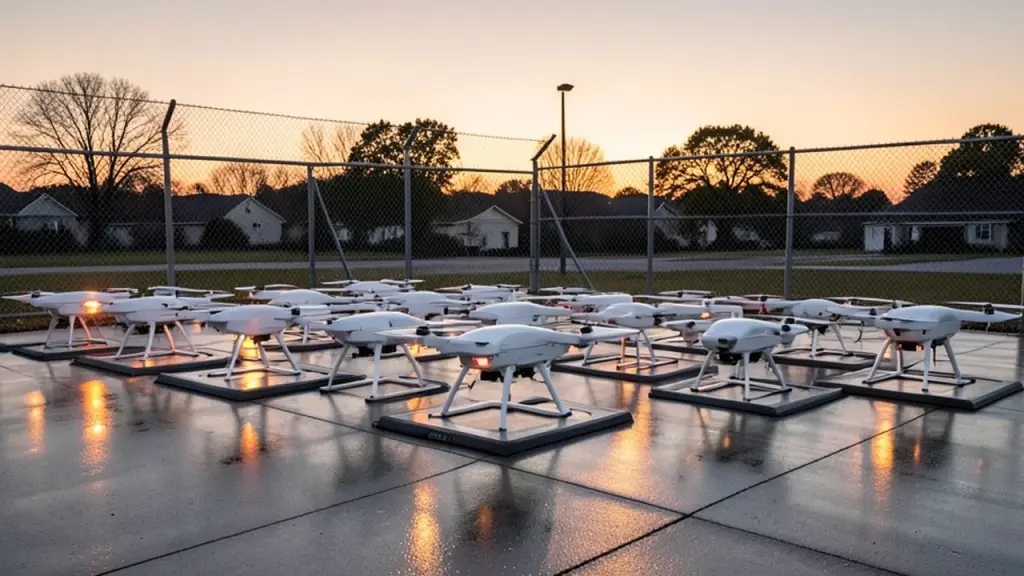
By Amazon’s numbers, failures are rare. The company says Prime Air now flies close to 6,000 deliveries a day and has delivered hundreds of thousands of packages this year. Against that volume, a handful of public mishaps is a small share.
The MK30 drone is also built with backups. Amazon points to six motors, a three-cell battery and two separate navigation software systems, so one failure shouldn’t bring it down. It can carry up to five pounds and uses an onboard sense-and-avoid system that Amazon says can spot things satellite maps miss, such as trampolines and clotheslines.
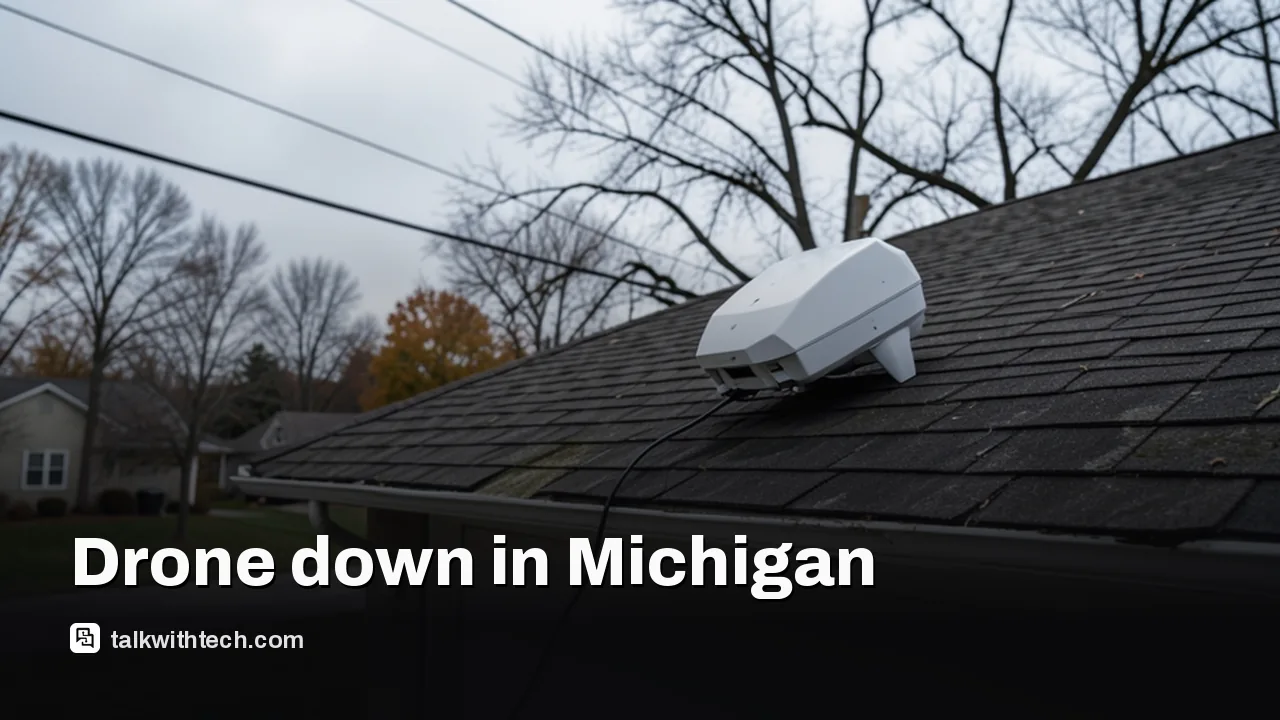
The weak spot this crash exposes is small, thin objects. A fiber line is easy for sensors to miss, especially when it is not in the mapping data. Michael Healander, chief executive of Detroit drone traffic firm Airspace Link, said low-altitude flight below 400 feet is still new for the industry, and some locations are not mapped well enough. His fix: more detection built into the aircraft. He also expects more incidents as more drones fly, while arguing overall safety stays very high.
Sources also disagree on the aircraft’s weight, with figures from just under 80 pounds to around 83 pounds. Either way, it is a heavy machine to have over a backyard, which is why neighbors are asking what would happen on a busy summer evening with children and pets outside.