Thursday, 19 November 2026

Are tech outages connected? Seven failures, one hack, one link

Microsoft, the FAA, Chase, United, Apple and the NSA all went down within six days. Officials say there's no plot, but there is a common weak spot.

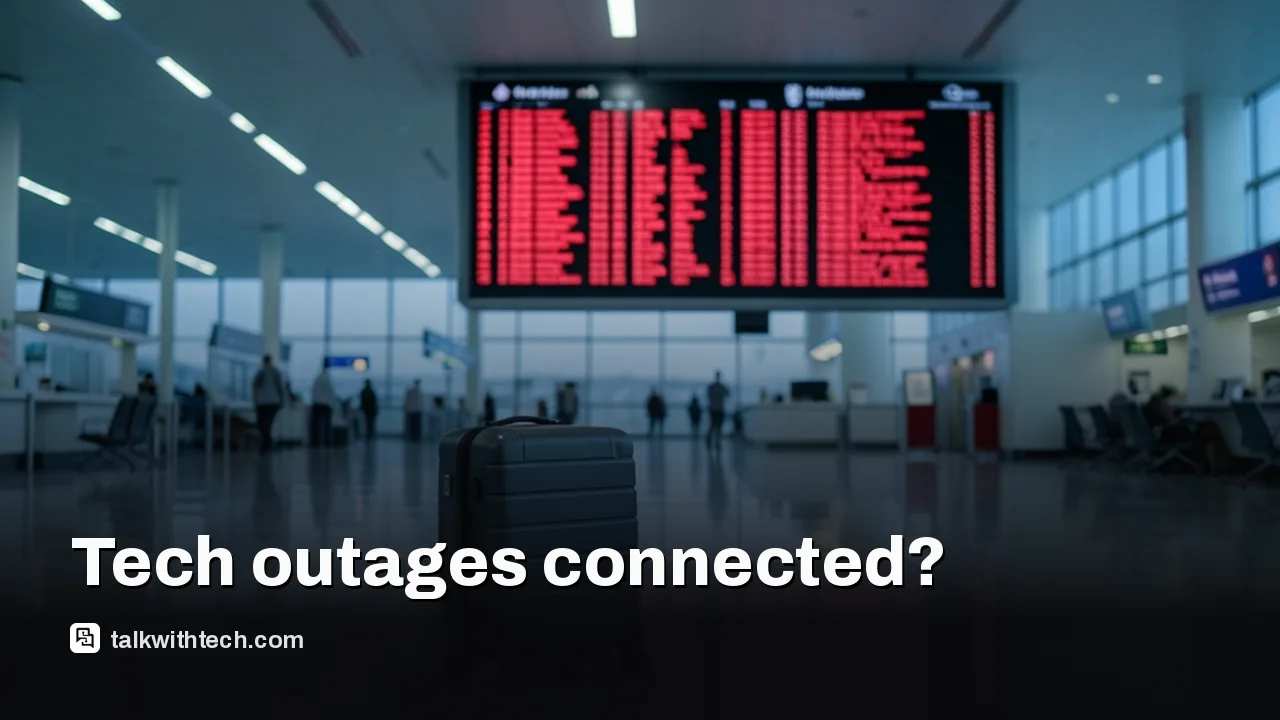
Empty airport hall with a departures board full of blurred delay rows

The short version

  • Microsoft, the FAA, Chase, United, Apple and the NSA all had outages between November 12 and November 17.
  • Each organization named a technical cause or said it saw no sign of a cyberattack; only Optimizely confirmed a breach.
  • Marco Rubio said the US is not under systemic attack, and Jay Clayton blamed system upgrades that went wrong.
  • Experts say the real link is dependence: shared vendors and networks let one failure look like many.
Quick read · 1 min

Seven big tech failures hit the US between November 12 and November 17: Microsoft 365, an FAA ground stop lasting four and a half hours, a Chase banking slowdown, United flight delays, an Apple iCloud and Apple Pay outage, an NSA network slowdown and a breach at web-testing firm Optimizely.

Officials say they aren't connected. Marco Rubio said the US is not under systemic attack, and intelligence chief Jay Clayton blamed system upgrades that didn't come back as expected. Each company named its own technical cause, and only Optimizely confirmed a hack.

Experts say the real link is dependence. Services share vendors and networks, so one failure, like the Chase bug, can look like many. They expect more outages, especially as attackers target shared suppliers. Officials, meanwhile, say they see no sign of a coordinated or state-sponsored attack.

Are tech outages connected? So far, the answer is no. In six days, Americans lost Microsoft email, sat through a nationwide flight ground stop, saw bank payments stall and watched Apple’s iCloud go dark, yet no official, company or investigator has found evidence that one attacker, one bug or one hidden system tied the failures together. Only one incident in the run was a confirmed hack: a breach at the web-testing company Optimizely.

That doesn’t make the week normal. Ookla, which owns the outage-tracking site Downdetector, says Americans filed nearly 6 million problem reports in the seven days to November 16, more than in any other week of the past year. Experts point to a quieter connection: so many everyday services now lean on the same handful of providers, and on each other, that one failure can look like ten. Here’s what broke, what each organization blamed, and what the real link is.

01

Every outage so far, and what caused each one

Here is the run in order, with the cause each organization gave.

  • Microsoft 365, Thursday, Nov. 12: Teams, Outlook, Exchange Online and other apps went down for about two days. Microsoft said several servers unexpectedly dropped offline, which piled extra load on the rest, and it did not blame a cyberattack. Ookla counted 3.9 million US reports in the first 60 hours, the biggest Downdetector event since the AWS outage of October last year.
  • FAA, Friday, Nov. 13: A telecommunications failure forced a nationwide ground stop that lasted four and a half hours, the longest halt to US air travel since September 11, 2001. The FAA said old equipment turned unstable when data flooded its network after a routine router swap, briefly hitting some radar feeds and communications. It switched off the feature involved on more than 60 similar routers and paused new installs.
  • JPMorgan Chase, Monday, Nov. 16: A software bug in the bank’s internal hardware systems slowed some transactions. Chase said customers could still reach their money, saw no sign of a cyberattack, and had payments moving normally again later that day.
  • United Airlines, Monday, Nov. 16: A separate tech failure later that day delayed about 150 departures. Planes already in the air and United Express flights weren’t affected, and United said there was no indication of a security problem.
  • Apple, Tuesday, Nov. 17: An internal update knocked out services including iCloud and Apple Pay. Apple said a cyberattack was not the cause.
  • NSA, Tuesday, Nov. 17: The National Security Agency said its classified internal network slowed for a while during scheduled maintenance, while its mission-critical systems kept running. Officials saw no evidence of an attack.
  • Optimizely, Tuesday, Nov. 17: The odd one out. The company said an intruder used a flaw in its Web Experimentation product to slip malicious JavaScript into some customers’ projects. Optimizely says it closed the hole, removed the code and locked down affected accounts.
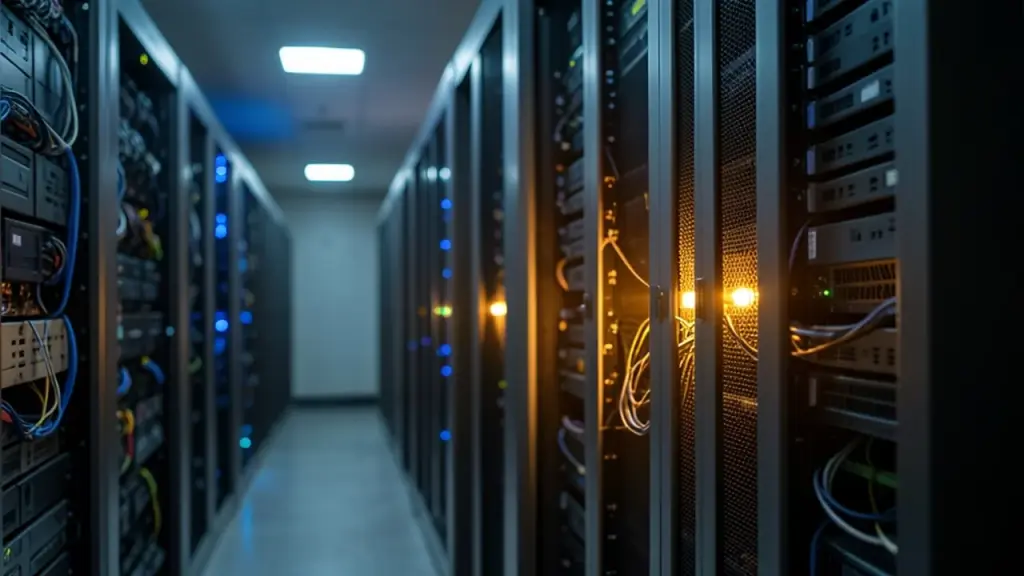
Data center aisle with one server rack showing amber warning lights
02

Are tech outages connected? What officials say

The official answer is no. Secretary of State Marco Rubio, who also serves as national security adviser, called the run unsettling but told reporters in Manila, “We are not under systemic attack.” He said there was zero evidence that hackers, criminals or a hostile country were behind any of the incidents.

Director of National Intelligence Jay Clayton offered a cause. He told Fox Business he saw no signs of a coordinated or state-sponsored attack, and said organizations rushing to upgrade their systems are finding that some don’t come back as expected. He linked the NSA problem to patches for a PHP flaw, a bug that could let attackers take over servers, which was found with the help of AI last month.

President Donald Trump played the incidents down, telling reporters that things like this happen when you’re big and powerful, and that it’s fine.

Not everyone in Washington is satisfied. Republican Senator Josh Hawley of Missouri said that if it’s all chance, it would rank as history’s greatest coincidence. Democratic Senator Jack Reed of Rhode Island urged the White House to explain quickly what’s going on.

One theory got more airtime than evidence. Homeland Security Secretary Markwayne Mullin told Fox News that an unnamed tech-industry contact believed “SI”, short for superintelligence, might be causing the failures. Officials have said AI was not involved in any of the outages.
03

The real link: everything leans on everything else

If there’s a common thread, it’s dependence, not a villain. Big online services now sit on layers of cloud platforms, telecom lines, payment networks and outside software vendors. When one link fails, services that never broke themselves can stop working too.

The Chase outage shows how that fools people. Early reports described trouble at several banks and at Zelle, and some accounts said Bank of America and Wells Fargo customers lost access as well. Later reporting traced the problem back to Chase: customers elsewhere hit errors because money moving to and from Chase accounts stalled. A one-bank bug looked like a banking-wide crash.

The same pattern played out last year when Cloudflare, which manages traffic for a huge number of websites, went down and took healthy sites with it. Ookla’s lead industry analyst, Luke Kehoe, adds a second reason this week feels so unusual: the companies that failed have enormous user bases, so each outage produced a flood of reports. Other weeks have seen more widespread trouble, just at smaller services.

Hands holding a phone beside a laptop and a paper boarding pass
04

Why experts expect more outages, not fewer

The worry isn’t that this week was a plot. It’s that the same weak spots are an open door. Optimizely’s breach shows the method: instead of attacking companies one at a time, intruders go after a vendor many of them share, a tactic called a supply-chain attack. Cybersecurity expert Tim Howard says attackers have worked this out, and he expects outages like these to keep coming, more often.

Attack numbers are climbing as well. Insurer Marsh says its clients logged 48 cyber incidents in the closing fortnight of May and 105 in the same stretch at the end of October, more than twice as many. Security firms keep finding hackers who use AI tools to run many intrusions at once.

Staffing is the other open question. The FAA lost workers in the job cuts led by Elon Musk’s team after Trump took office last year, and Congress had warned that its sped-up modernization could cause outages. United said AI helped it trim management headcount by 4% last year, with another 4% planned this year. Microsoft’s outage came a month after it offered buyouts to a quarter of its global workforce. There’s no evidence that any of these cuts caused a failure, but Liz Fong-Jones, who has spent 20 years on software resilience, says experienced people are part of what keeps systems standing.

05

What this means for you when the next one hits

For most people, the takeaway is reassuring on one point and annoying on another. Apart from Optimizely, every organization involved named a technical cause or said it saw no sign of an attack. But because services depend on each other, the app that fails in front of you may not be where the problem is.

That is what happened to customers at other banks during the Chase outage: their own bank was working, but transfers involving Chase accounts stalled. Chase said its own customers could still reach their money the whole time. United said flights already in the air kept going, and the FAA said flights resumed later that same evening.

The Optimizely case is the one with a direct risk to ordinary web users, because the malicious code landed in some of its customers’ website projects rather than staying inside Optimizely. The company says it has removed that code and fixed the flaw.

06

Quick answers

Were the November tech outages a cyberattack?

No evidence says so. Microsoft, the FAA, Chase, United, Apple and the NSA named technical causes or saw no sign of attack; only Optimizely confirmed a breach, as a separate incident.

What caused the FAA ground stop?

The FAA said a routine router replacement left old equipment unstable as data flooded its telecom network, which cut some radar feeds and communications.

Is AI to blame for the outages?

Officials say no. Jay Clayton blamed upgrades that went wrong, though he said the PHP flaw behind the NSA’s patching was found with AI.

You're reading the quick version.