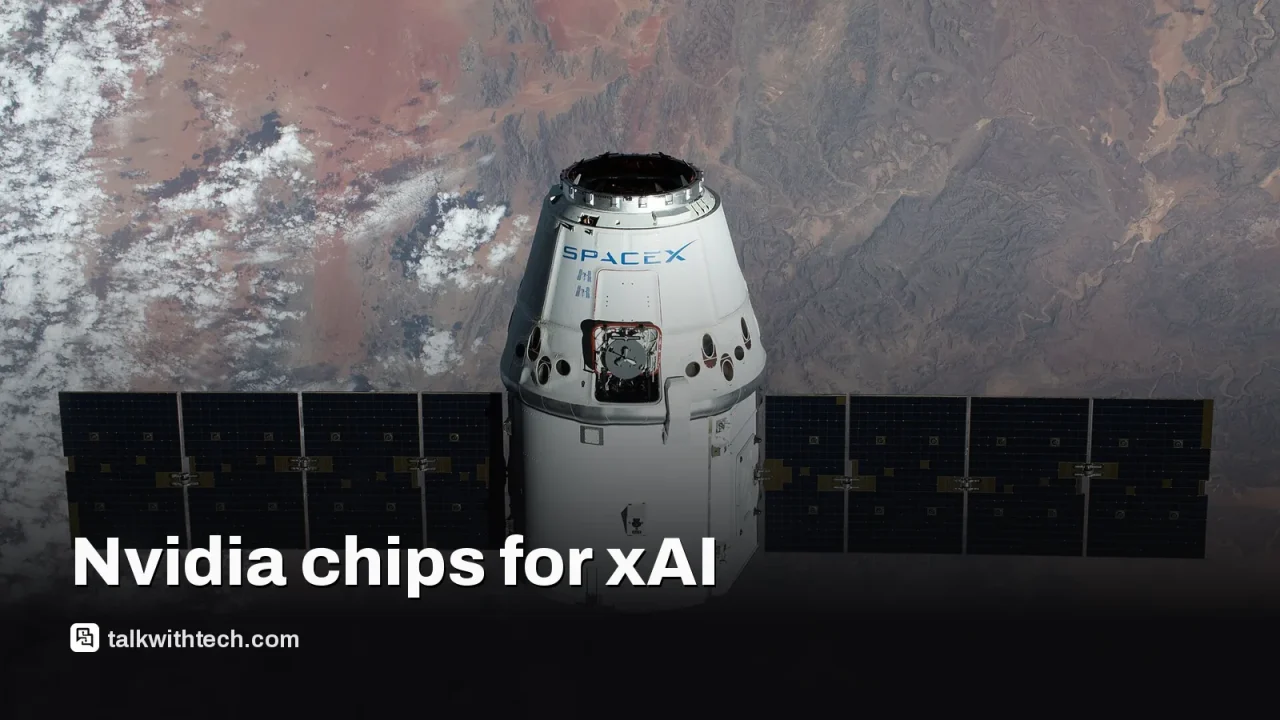
SpaceX is reportedly considering a $40 billion debt package to fund Nvidia AI hardware for its xAI project.
The plan would mix about $10B in bank loans with roughly $30B in investment-grade debt and could close in 2027.
If true, SpaceX would deploy thousands of Nvidia Rubin accelerators to boost its AI compute capacity.
Quick read · 1 min
SpaceX is reportedly seeking a $40 billion debt package to fund Nvidia AI hardware for its xAI project. Plans would mix bank loans and investment-grade debt and could close in 2027. If true, SpaceX would deploy thousands of Nvidia Rubin accelerators to power large-scale AI compute.
What this means for you is a signal that AI services and capabilities may grow faster as big buyers push the hardware needed to train and run advanced models. The situation remains unconfirmed, and we’ll watch for official statements in the coming months.
SpaceX xAI aims to expand AI compute capacity
Financing could be $10B in loans and $30B in debt
Possible 2027 close, hardware deployment to follow
SpaceX is reportedly exploring a $40 billion debt package to fund Nvidia AI hardware for its xAI project. The financing would combine about $10 billion in bank loans with roughly $30 billion in investment-grade debt and could be finalized in 2027, according to industry reporting. If the plan proceeds, xAI would be positioned to acquire a large fleet of Nvidia Rubin generation accelerators, the hardware at the heart of the company’s ambitious AI compute goals.
That scale would mark a major step in SpaceX’s bets on AI. xAI has already deployed Nvidia-based servers and rack-scale AI solutions through partnerships, and a dedicated debt raise could accelerate that strategy. Observers note that while the deal is not guaranteed to close, the size of the potential package signals SpaceX’s intent to push for substantial on-site AI processing power as it pursues larger language models, perception tasks, and other AI workloads.
For Nvidia, a deal of this magnitude would reinforce demand for its Rubin accelerator family, designed to handle large-scale AI workloads. The broader AI hardware market has been consolidating around specialized chips and high-speed data center gear, and SpaceX’s move would place the company among the top users vying for chip capacity in the coming years.
01
What SpaceX is planning
The discussions reportedly revolve around a $40 billion package that would fund Nvidia GPUs and related infrastructure. The plan breaks down into roughly $10 billion in traditional bank loans and $30 billion in debt issued to investment-grade buyers. There’s no official confirmation yet, and the parties involved have not commented publicly. If the financing materializes, Apollo Global Management is expected to play a leading role in arranging the financing, with Pimco among lenders discussed in the conversations.
02
What it means for Nvidia and AI compute
Rubin GPUs are Nvidia’s newer accelerator line designed for high-scale AI workloads. A large deployment by SpaceX would add to the ongoing demand for powerful AI hardware as more companies build private AI models and services. It also shows how big tech and aerospace firms are treating AI infrastructure as a long-term capital project, not a one-off expense.
03
What this could mean for you
For everyday readers, this signals where AI compute needs may head in the next few years. Larger, more capable AI systems require substantial compute power, and the availability of that hardware can influence the speed of new AI features, tools, and services that reach consumers and professionals alike. If SpaceX accelerates its AI roadmap, we could see faster progress on autonomous systems, data processing at scale, and new AI-assisted capabilities across SpaceX’s products and partner ecosystems.
04
What happens next
The deal remains unconfirmed. If talks advance, we could hear more formal comments from involved firms in the coming months, with potential closings penciled in for 2027. Until then, investors and tech watchers will be watching how SpaceX and Nvidia navigate the financing, regulatory questions, and the pace of AI hardware supply.
No. The package is reported and not yet confirmed by SpaceX or Nvidia. Talks are at an early stage.
Why does this matter to me as a reader?
It signals how big AI compute needs are becoming and how large institutions plan to finance future AI work, which can influence the speed and shape of consumer AI services.
When would this hardware be used?
If the deal closes in 2027, SpaceX would begin deploying Rubin GPUs for xAI workloads after that timing, depending on project needs and integration timelines.
Manus raises more than $500 million in its first funding round since Meta pulled the plug on the acquisition, signaling renewed investor confidence in AI agent tech.