Wednesday, 4 November 2026

Data center ballot measures: voters back limits in 33 places

From outright bans in Ohio to a 180-day pause in Maine, voters chose limits almost everywhere. Power bills, not AI itself, drove the vote.

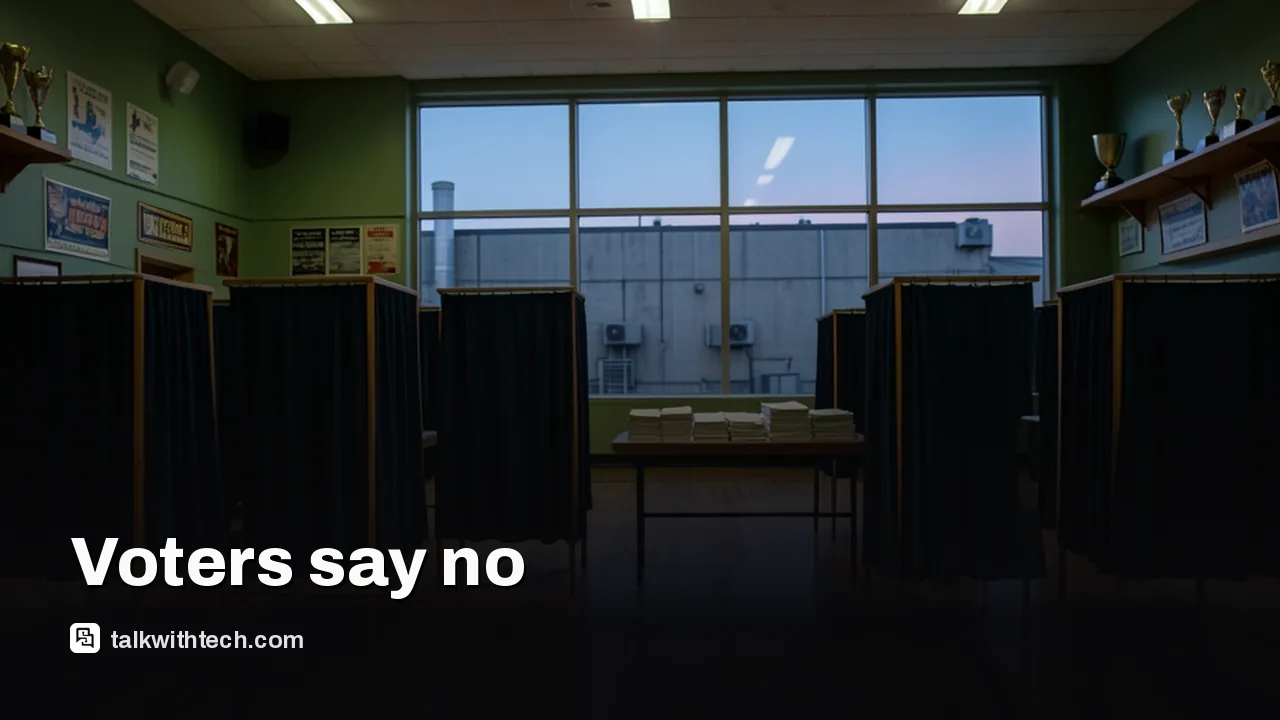
Empty voting booths with a large industrial building visible through the window

The short version

  • Voters in 10 states faced 45 local data center ballot measures, and 33 restrictions had passed by Wednesday morning.
  • Only one measure failed, in Harwood, North Dakota, while six more restrictions were projected to pass.
  • Ohio saw the strongest pushback, with bans in Urbana and Hubbard winning by 76 and 77 percent.
  • Rising electric bills on the PJM grid were the main complaint, though existing projects are rarely stopped by local bans.
Quick read · 1 min

Tuesday's midterms doubled as a referendum on AI data centers, and the facilities lost badly. Of 45 local data center ballot measures in 10 states, 33 restrictions had passed by Wednesday morning, six more were on track, and only Harwood, North Dakota, voted the other way.

The rules vary from town to town:

  • Full bans in Urbana and Hubbard, Ohio, with about three in four voters in favor
  • Size caps, such as no sites above 10MW in El Dorado, Kansas, for 10 years
  • A 180-day pause in Wells, Maine

Electric bills drove much of the anger. On the PJM grid, data centers were blamed for most of a huge jump in capacity prices, adding around $16 a month to typical Ohio bills. Projects already underway are rarely stopped by local bans, but AI companies are now hunting for smaller sites, and the new Congress may target tax breaks.

Voters in 10 states faced 45 data center ballot measures on Tuesday, and almost everywhere the answer was the same: slow down. By Wednesday morning, 33 measures limiting the facilities had passed, six more were projected to pass, and just one, in the small city of Harwood, North Dakota, had gone down, according to the tracking site Data Centers on the Ballot.

If you live near a planned AI campus, or you’ve opened an electric bill lately, this matters. The votes ranged from outright bans to temporary pauses, caps on power use and rules that make local officials get the public’s approval first. Together they’re the clearest sign yet that the AI building boom has run into the people who live next to it, and that could change where, and how fast, the next wave of data centers gets built.

01

What voters actually decided on data center ballot measures

The data center ballot measures weren’t one question asked 45 times. Each town wrote its own, and the results show local voters reaching for whatever tool they had.

  • Outright bans: Urbana and Hubbard, two Ohio cities, voted to keep data centers out entirely, by margins of 76 and 77 percent.
  • Size limits: Several Ohio cities banned data centers over 25MW. El Dorado, Kansas, barred facilities with a peak load above 10MW for 10 years.
  • Pauses: Wells, Maine, voted for a 180-day pause on big data centers that reaches back to mid-June 2026.
  • Public sign-off: Other measures require elected officials to win public approval before a project can move ahead.

The lone loss came in Harwood, where voters turned down a rule that would have forced the city to hold public hearings before approving big industrial projects, such as a 100-megawatt data center. Five places hadn’t posted any results by Wednesday morning.

A second tracker, which counts 46 measures, tells the same story from the other side. All 33 measures there that limit data centers are on course to pass, while 11 of the 13 measures that would have allowed or encouraged construction look set to fail.

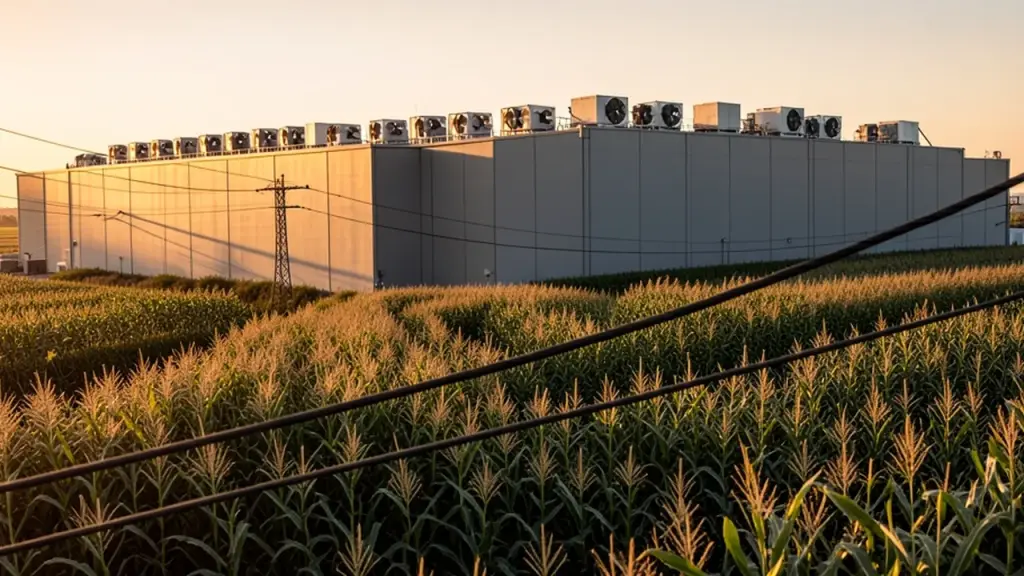
Large data center next to farmland and power lines
02

Why Ohio became the center of the fight

Ohio is where the pushback hit hardest. The state already hosts 257 data centers, and 20 of Tuesday’s ballot questions were there. Restrictions won, or were projected to win, in every one of them.

One of those towns is Sunbury, where the new ban targets a data center Amazon had planned. Amazon has declined to say whether Tuesday’s results will change its expansion plans, and says its commitment to the communities where it operates is unchanged.

The issue spilled into Ohio’s US Senate race, too. Democrat Sherrod Brown, who won the seat back, made data centers a centerpiece of his campaign and branded Republican Senator Jon Husted “the face of data centers.” As lieutenant governor, Husted had helped set up tax breaks for the industry, though in Congress he later backed a bill meant to make big data centers pay for their own grid upgrades and power. In the race for governor, both Democrat Amy Acton, who won, and Republican Vivek Ramaswamy proposed moratoriums.
03

The power bill problem behind the vote

For most voters, this wasn’t really about AI. It was about the monthly electric bill.

The clearest example is PJM Interconnection, the grid operator that serves 13 states from New Jersey to northern Illinois. On its grid, capacity prices (payments that guarantee power plants will be available in the future) jumped from $28.92 per megawatt-day in 2024-25 to $329.17 for 2026-27. PJM’s independent market monitor estimated that data centers caused 63% of the increase in the 2025-26 auction. The Institute for Energy Economics and Financial Analysis says that came to $9.3 billion recovered from customers, or roughly $16 a month on the average home bill in Ohio and $18 in western Maryland.

It may not stop there. Consulting firm ICF estimates residential rates across PJM could rise between 30% and 60% by 2030. In an October Consumer Reports survey, 81% of longtime residents (three years or more at one address) reported higher power bills, and 84% backed a separate rate category for heavy users like data centers.

Not everyone accepts the link. The Ohio Manufacturers’ Association rejects the idea that data centers are pushing up energy costs and says the state has no data center cost crisis. People living near existing sites also cite other problems: constant noise, water shortages, air pollution and worries about falling property values.

Electricity bill on a kitchen table beside a calculator
04

What this means for your town and your electric bill

If you live in one of the places that voted, the effect is direct: new projects now face a ban, a pause, a size cap or a public vote. Everywhere else, the effect is slower but real.

  • More local fights are likely: More than 70% of Americans would oppose a data center planned for their area, a Heatmap poll found, with rising electricity prices the top reason. In an NBC News exit poll, 76 percent of voters said they opposed data centers in their communities.
  • Utility regulators matter more now: Utility commission races in 10 states, including Georgia, Arizona and Oklahoma, help decide how data centers plug into the grid. Democrats flipped Georgia’s commission, which Republicans had controlled for 30 years.
  • Don’t expect a quick refund: The ballot measures deal with future projects. The PJM capacity prices for 2026-27 have already been set.

Concern also shows up in how people voted for Congress. In the same NBC exit poll, 56 percent of voters said AI and data centers were a major factor in their choice.

05

Will AI companies stop building data centers?

Not right away. More than 300 local data center bans are already on the books across the US, yet only three developments, totaling 2.3 gigawatts, have been delayed by them. Some 38 gigawatts of capacity is still expected to come online by 2027, and the amount under construction nationwide is up 48%.

The bigger change is in strategy. OpenAI and Anthropic have been chasing smaller sites in the 20 to 30 megawatt range as their giant gigawatt campuses run into delays. Elon Musk responded on X on Wednesday morning by suggesting that putting data centers in space now looks attractive. Goldman Sachs strategists think a Democratic Congress could cut back the tax breaks these projects enjoy, but they doubt a national moratorium will happen.

Politicians in both parties are drifting the same way. In Michigan, Senate winner Abdul El-Sayed says data centers should pay for their own energy demand, while his Republican opponent Mike Rogers had backed a one-year state moratorium. Florida’s Republican governor-elect, Byron Donalds, opposed a ban but introduced a bill in Congress to make developers cover their own energy and water. In Texas, which has just under 600 data center projects, Democrat Gina Hinojosa won the governor’s race after promising an immediate moratorium.

06

Quick answers

How many data center ballot measures passed?

Of 45 local measures in 10 states, 33 restrictions had passed by Wednesday morning, six more were projected to pass and one failed, in Harwood, North Dakota.

Do data centers raise electricity bills?

On the PJM grid, the market monitor blamed data centers for 63% of one capacity price jump, about $16 a month on a typical Ohio bill by one estimate. Some industry groups dispute that.

Does a local ban stop data centers already being built?

Usually not. Across more than 300 local bans so far, only three projects totaling 2.3 gigawatts have been delayed.

You're reading the quick version.