Sunday, 11 October 2026

iPhone Clock app shows current time on its icon and more

A couple of small but persistent quirks in the Clock app, an alarm list with a definitive end and a clock icon that keeps time, shape how some users interact with their iPhone each day.

Close-up of an iPhone home screen with the Clock app icon

The short version

  • The Alarm scroll in the Clock app has a visible end point when you scroll through hours and minutes.
  • The Clock app icon has shown the current time since iOS 7, a visual cue that the clock is accurate.
  • Low Power Mode can change the animation of the clock’s second hand, switching from a smooth sweep to a ticking motion.
  • Stopwatch offers digital and analog faces without needing extra apps.
Quick read · 1 min

The iPhone Clock app has a couple of hidden quirks that pop up for some users. First, the alarm scroll isn’t truly endless; it has a fixed end. You can still set alarms beyond that point by selecting the exact time. Second, the Clock app icon shows the current time, a feature dating back to iOS 7. In some software versions, Low Power Mode can make the second hand tick once per second instead of sweeping. You can also switch Stopwatch faces from digital to analog without extra apps. For a bigger bedside clock, use StandBy mode with a charger, and enable Always-On Display if your device supports it. These quirks don’t change core use, but they’re handy to know.
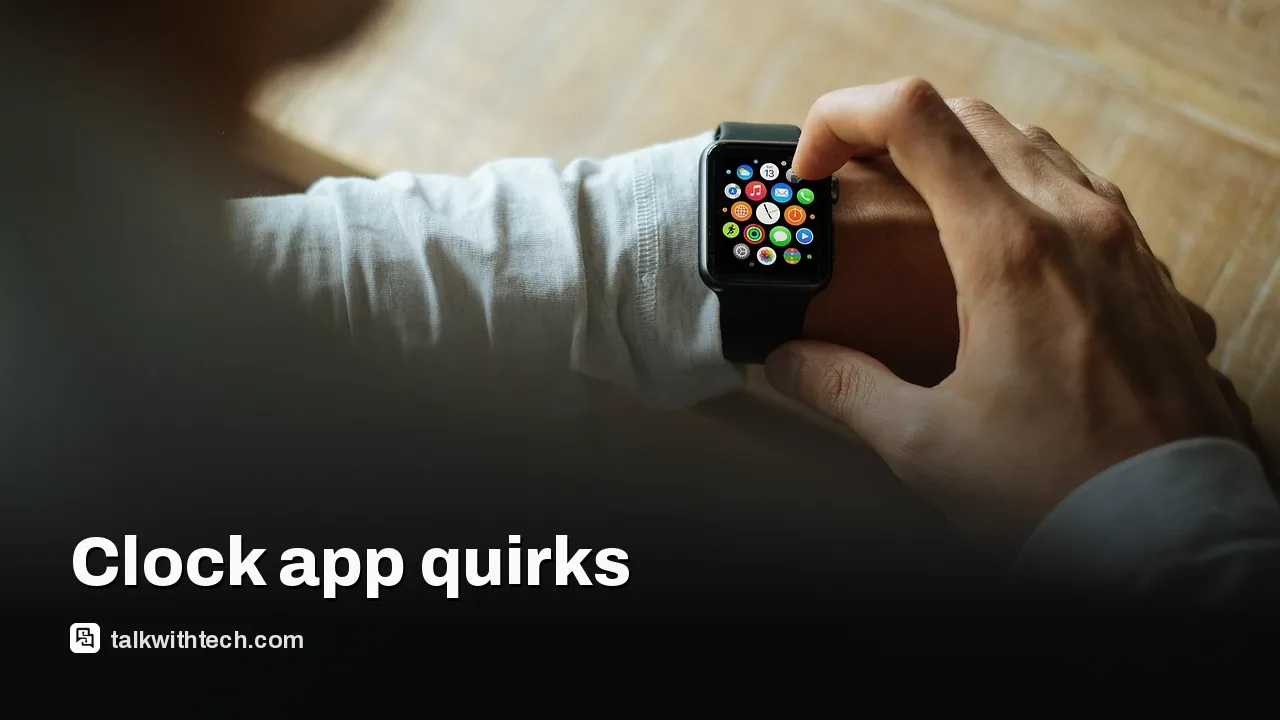
The Clock app on iPhone isn’t just a simple timer and alarm tool. It hides a few small quirks that pop up for curious users and can change how you use it day to day. Here’s what’s going on and what it could mean for you.

01

Where the alarm hour and minute scroll actually ends

When you open Alarm and start scrolling through the hours and minutes, there’s a real end to the list. It isn’t infinite. Once you reach that limit, you can still save alarms by choosing a time beyond the boundary, but the scrolling itself stops at a specific point. It’s a quirky detail that most people don’t notice unless they actively push the list to its edge.

Smartphone in hand
02

The clock icon that always shows the time

Since the early days of iOS, the Clock app icon has represented the current time. It’s a tiny but persistent reminder that the clock is keeping the time in the background, even when you’re not actively looking at the app.

03

Low Power Mode changes the clock’s animation

In some iPhone software versions, Low Power Mode alters the Clock app’s animation. The second hand may switch from a continuous sweep to a tick every second. The time itself remains accurate, but the motion changes to save a bit of battery life.

Computer keyboard
04

Secret options in Stopwatch

Inside Stopwatch you can switch between digital and analog faces just by swiping across the display. No extra apps are needed, and it’s a handy way to change the look of your timer on the fly.

05

How to make your iPhone a bigger bedside clock

For a larger bedside clock, place your iPhone on a charger and stand it up. That puts the device in StandBy mode, which can display widgets, photos or a clock. If your iPhone supports it, you can enable Always-On Display for a persistent clock view.

06

What this means for everyday users

These quirks don’t change core functions, but they’re worth knowing if you rely on precise alarm behavior, enjoy a small design detail, or want a steadier bedside clock experience at night. The Clock app remains a simple tool, with a few subtle touches added over the years.

07

What happens next

If you’re curious about any changes in future software updates, keep an eye on iOS release notes. Apple sometimes adjusts small UI quirks and animations, which can affect things like alarm scrolling or how the clock looks on your home screen.

08

Quick answers

Does the alarm really end at a fixed point when you scroll?

The scrolling ends at a fixed point, but you can still set alarms beyond that boundary by selecting the time directly and saving it.

Why does the clock icon show the current time?

That’s a long-running design feature dating back to iOS 7, meant to reassure users the clock is keeping time.

You're reading the quick version.