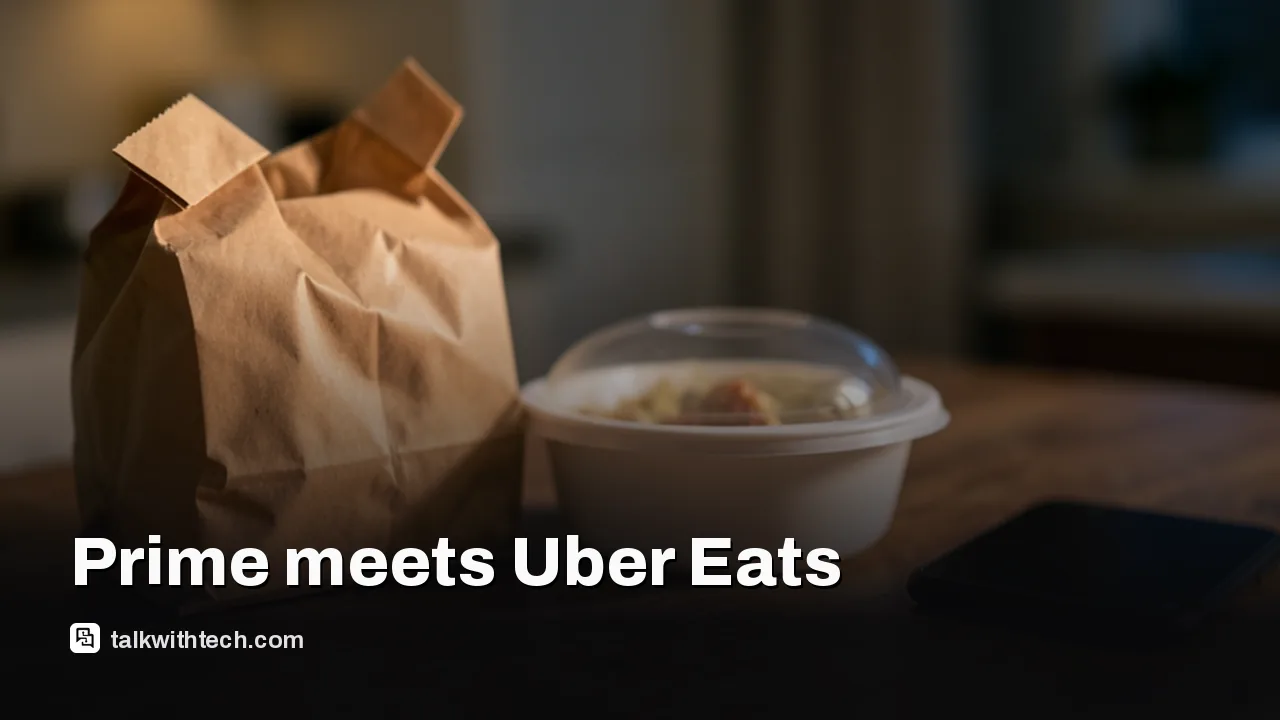
Amazon says Prime members could save more than $175 a year with the Uber Eats perk. That’s more than the $139 annual Prime fee, which is clearly the point of the number. But Amazon built it from August 2026 order data and compared it with ordering on Uber Eats without Uber One. In plain terms, you’d need to order delivery fairly often, likely several times a month, to get anywhere close.
There are a few short-term sweeteners on top:
- Launch discount: $20 off each of your first two Uber Eats orders of $25 or more, if you place them within 14 days.
- Prime Visa: cardholders earn 5% back on Uber Eats orders until December 5, 2026.
- Prime-only offers: Amazon promises deals that are only available when you order on Amazon.
For a household that already orders takeout every week, this is a real saving. For someone who orders once a month, the $20 launch credit is the main prize.
Why Amazon dropped Grubhub for Uber
The short answer is reach. Market estimates put Uber Eats at roughly a quarter of US food delivery, while Grubhub holds a single-digit share. A Prime perk is there to make the yearly fee feel worth paying, and a bigger delivery network makes that easier.
Amazon and Uber were already close. They work together on cloud computing, on Zoox robotaxis and on putting Uber Eats inside Alexa+, Amazon’s AI assistant. Amazon also tried running its own food service, Amazon Restaurants, and shut it in 2019. Partnering is cheaper than building a fleet for hot meals.
For Uber, the prize is tens of millions of Prime shoppers who are used to having things delivered. Delivery is already Uber’s fastest-growing large business, with delivery gross bookings up 22% to $28.5bn in the third quarter. The deal also lands a week after DoorDash agreed to buy Instacart, and on the same day Lyft launched a membership bundled with DoorDash’s DashPass. The delivery wars just picked new teams.