Microsoft is reorganizing the Azure leadership, with Arun Ulag taking on a broader role that could include core Azure business and engineering teams.
Scott Guthrie announced the changes to staff as part of a broader push to integrate Maia AI chips into Microsoft’s AI strategy.
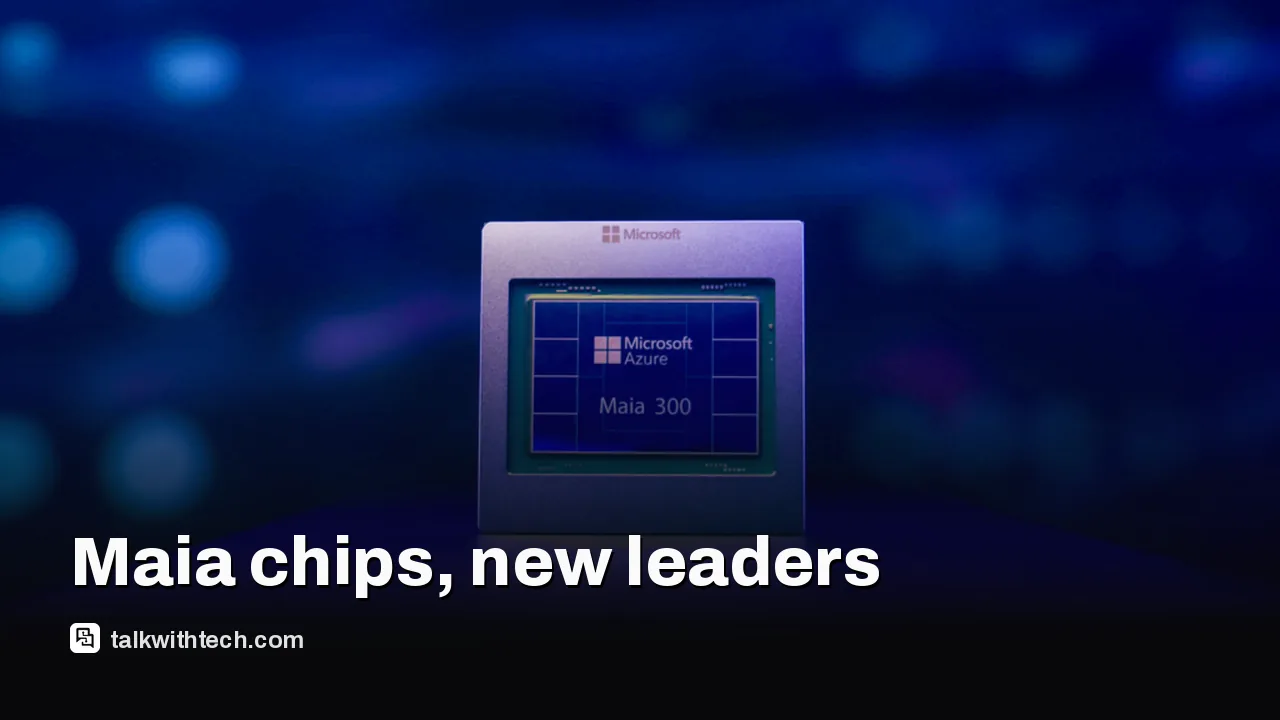
Microsoft plans to expand its Maia chip family, with Maia 300 announced as the next generation and deployments set to scale in the coming years.
Details on how many teams are affected and when the changes take effect have not been disclosed.
Quick read · 1 min
Microsoft is reorganizing Azure’s leadership, moving Arun Ulag to a broader role that could include core Azure business and engineering teams. This comes as Microsoft expands Maia AI chips and plans to run more AI workloads on Maia, with broader deployments expected in the coming years. Details on timing and scope are not fully disclosed, but Ignite in San Francisco next month is expected to reveal more about the changes and Maia’s rollout. For users, this could mean tighter integration of AI features and more predictable performance as Microsoft leans on its own silicon.
Microsoft is reorganizing the leadership of its Azure cloud unit, merging some teams and broadening responsibilities for key executives. The changes, described to staff, were communicated by Scott Guthrie, who runs Microsoft’s cloud and AI group. A central figure in the shake-up is Arun Ulag, formerly in charge of Azure’s databases. He is expected to take on a wider remit that could include leading the core Azure business and its engineering teams, according to discussions described in the report.
The move comes as Microsoft pursues a deeper integration of its own silicon and AI stack into Azure. On the same day the leadership notes circulated, Guthrie publicly outlined a plan to expand Microsoft’s Maia family of AI chips, signaling that these chips will play a bigger role in powering AI workloads across services such as Copilot, beginning in 2027.
Microsoft also introduced Maia 300, the next generation of its in-house AI processor. The company described Maia 300 as a scalable option for large-scale AI tasks, with deployments planned to ramp up in the coming years. The goal is to use Maia chips to underpin more of Microsoft’s cloud and AI offerings going forward.
Beyond the leadership changes, Microsoft recently restructured its business reporting. In September, the company reduced its reporting segments from three to two and began presenting a separate Azure figure for the first time in the new scheme. The cloud business booked $29.4 billion in the June quarter, a 42% year-over-year rise, which underscores Azure’s growing importance to Microsoft’s overall revenues.
Azure leadership has turned over previously this year as well. Earlier in the year, Eric Boyd, who led the Azure AI platform, left to become head of infrastructure at Anthropic, a transition noted in related coverage. The current changes add to a calendar of moves that suggests Microsoft is recalibrating who runs what inside its cloud empire rather than launching a fresh product line or a new external policy.
Microsoft says it will share more details during Ignite, the company’s annual conference in San Francisco next month, where executives typically outline product roadmaps and strategic shifts. For now, the internal notes point to a potential consolidation of Azure teams and a more integrated leadership structure as the company bets on hybrid cloud and in-house AI hardware.
01
Which parts of Azure might be affected?
While Microsoft has not provided a full list of affected teams, the aim appears to bring databases, core Azure services, and engineering leadership under a single umbrella. Arun Ulag’s expanded role hints at a unified approach to Azure’s database services, infrastructure, and cloud engineering, areas central to growth and reliability as customers demand AI-powered workloads.
Maia is at the heart of Microsoft’s plan to run more AI tasks on its own hardware. By making Maia the backbone for AI services like Copilot, Microsoft hopes to reduce third-party hardware dependence and improve performance and cost efficiency for large-scale AI deployments. Maia 300’s rollout signals a steady shift from external accelerators to Microsoft-managed silicon across cloud and AI offerings.
03
What this means for customers
For customers, the reshuffle could lead to tighter integration of AI features across Azure services and more predictable performance as Microsoft leans on its own chips. Businesses relying on Azure databases, AI-infused workloads, and large-scale cloud infrastructure may see more coordinated updates and fewer silos between database tech and core cloud services over time.
04
What happens next
Microsoft plans to share more during Ignite in the coming weeks. If you run Azure workloads or are evaluating cloud options for AI-heavy apps, keep an eye on Ignite updates for details on any new leadership norms, service milestones tied to Maia, and potential changes to product roadmaps or support structures.
Arun Ulag is taking on a broader remit that could include leading the core Azure business and its engineering teams; Scott Guthrie announced the changes to staff.
Why now?
Microsoft is expanding Maia AI chips and signaling a more integrated cloud strategy, with Ignite likely to reveal more details.
Azure leadership realignment
Maia chips expansion and broader AI platform role
Azure’s separate Azure figure in new reporting scheme
At Paris 2026, Fiat showcases Multiplay, a 4.45-meter concept that reconfigures from a family car into a pickup with a bike rack and flexible interior ideas.
Ithaca Holdings is reportedly negotiating to acquire Bumble and remove it from public markets, with a valuation near $1 billion. No deal is confirmed yet.