Monday, 19 October 2026

Orionid meteor shower: a bright Moon means you should look at dawn

The Orionids peak on the night of Oct. 21 to 22, but a bright Moon will spoil the early evening. Here's the darker window worth waking up for.

A bright meteor streaking across a starry sky above a dark hillside

The short version

  • The Orionid meteor shower peaks on the night of Oct. 21 to 22, 2026.
  • Under dark skies you might see 10 to 20 meteors an hour, but a bright Moon will hide many.
  • The best viewing is in the hours before dawn, after the Moon sets.
  • The meteors are dust from Halley's comet hitting the atmosphere at about 41 miles per second.
Quick read · 1 min

The Orionid meteor shower peaks on the night of Oct. 21 to 22. The meteors are tiny bits of dust from Halley's comet, hitting the atmosphere at about 41 miles per second and flaring into shooting stars.

Under dark skies, you could see 10 to 20 an hour, but a bright waxing gibbous Moon will hide the fainter ones this year. The best time to look is after the Moon sets in the early hours and before dawn.

  • Find a dark spot away from streetlights.
  • Lie back with your feet toward the southeast.
  • Give your eyes up to 30 minutes to adjust.

No telescope is needed, and the shower is visible across the US, UK and Canada. If you miss the peak, the nights just before and after can still be worth a look, since the Orionids have a broad peak.

Each streak you’ll see this week is a speck of dust from Halley’s comet burning up at about 41 miles per second. The Orionid meteor shower peaks on the night of Oct. 21 to 22, and it’s one of the few chances to see a piece of the most famous comet in history without waiting until 2061.

The bad news is a bright Moon. The good news is that it sets in the early hours, leaving a darker stretch before sunrise. If you’re willing to set an alarm, that window is where the show is.

01

When the Orionid meteor shower peaks in 2026

The peak falls on the night of Wednesday, Oct. 21, into the morning of Thursday, Oct. 22. One US forecast puts the exact peak at 2 p.m. on Oct. 21, in daylight, so the nights on either side are the ones to watch. The Orionids are known for a broad peak, so you can still catch good numbers a night or two before or after.

The shower itself runs for weeks. One widely used astronomy calendar lists it from Sept. 26 to Nov. 22, while other guides give a shorter run of Oct. 2 to Nov. 7. Either way, the busiest nights are this week.

A person lying on a blanket in a dark field looking up at the stars
02

How many meteors you can realistically expect

Under ideal, truly dark skies, the Orionids produce about 10 to 20 meteors an hour. That’s a modest shower, roughly one every few minutes. This year won’t be ideal.

A waxing gibbous Moon, more than half lit and growing, will be up for much of the night around the peak. Its glare washes out the fainter meteors, so you’ll mostly see the brighter ones. In London, moonset comes at about 3 a.m. BST. From then until sunrise the sky is much darker, and Orion is riding high by that point. Across the US and Canada the pattern is the same: the darkest stretch comes after moonset and before first light.

The upside is that the Orionids are fast and often bright. They can leave glowing trails that hang in the sky for a few seconds, and sometimes they flare into fireballs, which are unusually bright meteors.
03

Where to look and how to see them

You don’t need a telescope or binoculars. Your eyes are the best tool, because meteors can appear anywhere in the sky.

  • Get away from lights. Find a spot away from city glow and streetlights. A park, a backyard with the porch light off or a rural road all help.
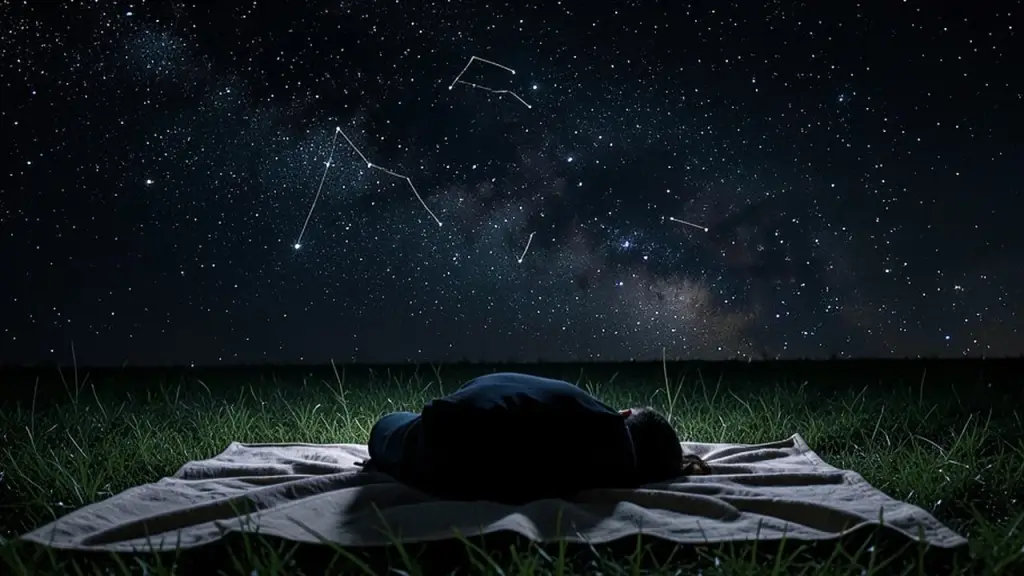
  • Lie back. Bring a blanket, sleeping bag or reclining chair and take in as much sky as you can.
  • Face southeast. In the Northern Hemisphere, which covers the US, UK and Canada, NASA suggests lying with your feet toward the southeast and looking up.
  • Don’t stare at Orion. The meteors seem to come from near the constellation Orion, which is how the shower gets its name, but they’re easier to spot 45 to 90 degrees away from that point, where their trails look longer.
  • Give it time. NASA says your eyes adapt to the dark in less than 30 minutes. Stay off your phone screen while you wait, since its light resets your night vision.

To find Orion, look for the three bright stars in a row that form Orion’s Belt.

A smartphone on a small tripod pointed at a starry night sky
04

Why Halley’s comet keeps putting on a show

The Orionids happen every October as Earth passes through a trail of dust shed by Halley’s comet. The comet takes about 76 years to orbit the Sun, and each time it swings close, its icy core releases dust and rock that spread along its path.

When those tiny particles, called meteoroids, slam into our atmosphere at around 148,000 mph, they heat the air around them and flash into the streaks we call shooting stars. Any piece that survives the trip and reaches the ground is called a meteorite.

Halley itself was last seen in 1986 and won’t be back for casual observers until 2061. In the meantime, Earth crosses its debris twice a year: in October for the Orionids and in May for the Eta Aquarids.

05

How to photograph the Orionids with your phone

Catching a meteor on a phone is hard, but not impossible. The trick is to let the camera do the waiting.

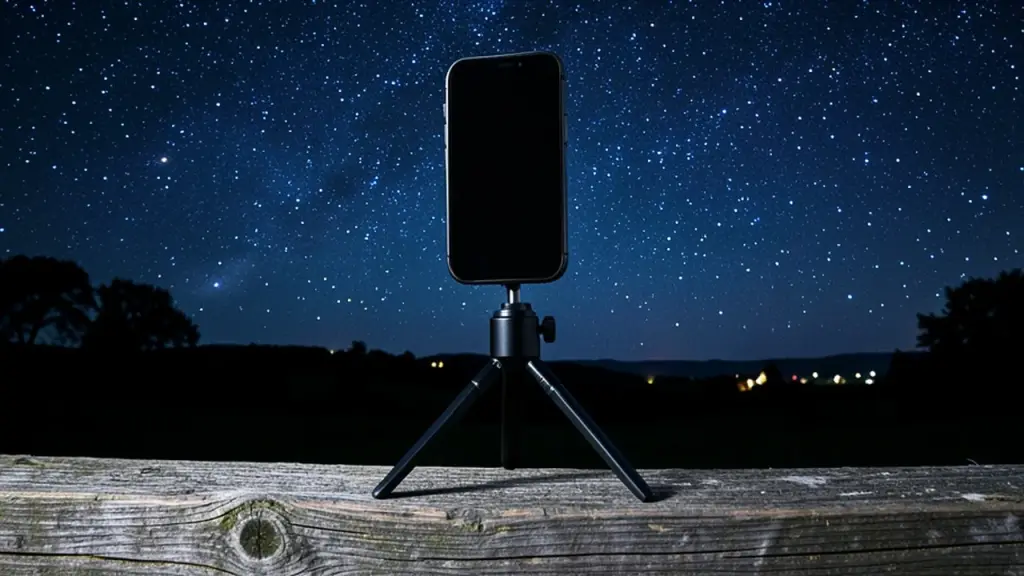
  • Keep it still. Use a small tripod or prop the phone on something solid. Any shake ruins a night shot.
  • Use night mode or a long exposure. Many recent iPhones and Android phones offer a night or astrophotography mode that keeps the shutter open longer.
  • Go wide. Use the standard or ultra-wide lens rather than zoom, so you cover more sky.
  • Shoot a lot. Take frame after frame, or use a timelapse, and check later. Most shots will be empty. That’s normal.
  • Aim away from the Moon. Its glare will flood the frame.

Honestly, if you want the best experience, watch first and photograph second. The brightest Orionids are over in a second or two.

06

Quick answers

What time is the Orionid meteor shower tonight?

The best viewing is between midnight and dawn, especially after the Moon sets in the early morning hours. The peak night is Oct. 21 to 22.

Can you see the Orionids in the UK and Canada?

Yes. The Orionids are visible from both hemispheres, including the US, UK and Canada, as long as skies are clear.

What direction should I look to see the Orionids?

Face southeast and look up, taking in as much sky as possible. Meteors can appear anywhere, not just near Orion.

You're reading the quick version.