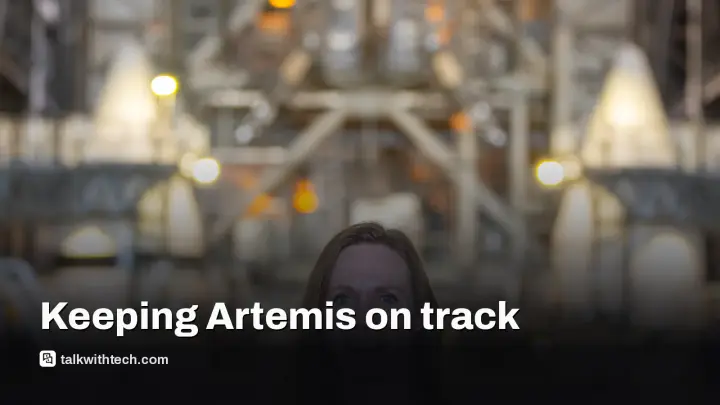
Stephen Cash will become director of NASA's Marshall Space Flight Center in Huntsville, Alabama, starting Oct. 19.
Cash is a longtime engineer and aerospace leader returning to Marshall to guide propulsion, nuclear power, and related programs.
The center supports NASA's Artemis efforts and pivotal propulsion work, including the Space Launch System and the Human Landing System Program.
Quick read · 1 min
Stephen Cash will lead NASA's Marshall Space Flight Center in Huntsville, Alabama, starting Oct. 19. A longtime engineer, he began his career at Marshall and has remained active in spaceflight leadership roles since retirement.
Marshall drives key propulsion work for Artemis, including systems and safety programs. Cash’s past roles include directing safety and propulsion offices, and he was honored by the Alabama Engineering Hall of Fame in 2024.
Readers should expect continued momentum in U.S. space exploration and steady updates from NASA as the leadership transition unfolds and Artemis milestones proceed.
NASA has tapped Stephen Cash to lead the Marshall Space Flight Center in Huntsville, Alabama, with the official start set for Monday, Oct. 19. Cash is a seasoned engineer and aerospace executive who began his career at Marshall and has remained active in the field since retirement.
NASA Administrator Jared Isaacman praised Cash as the kind of leader who knows the people and hardware at Marshall well, calling him a “Marshall legend” who can guide the center through its next chapter. Rae Ann Meyer will return to her role as Deputy Center Director after serving as acting director since 2025.
As director, Cash will oversee more than 5,000 civil service and contractor workers and manage a portfolio spanning propulsion, space systems, scientific research, and technology development. Marshall is central to Artemis, contributing to the Space Launch System rocket, the Human Landing System Program, and other propulsion and nuclear power initiatives aimed at expanding human exploration beyond Earth orbit.
Cash has held leadership positions at Marshall in the past, including directing the Safety and Mission Assurance Directorate from 2011 to 2016 and leading the Space Shuttle Propulsion Office during the final years of the shuttle program. After retiring in 2016, he remained active in the industry and most recently worked with a defense-focused firm focusing on advanced space systems. In recognition of his engineering contributions, he was inducted into the Alabama Engineering Hall of Fame in 2024.
With Cash at the helm, Marshall will continue its focus on propulsion and structural systems while supporting NASA’s broader push into nuclear power and next-generation spaceflight technologies. The center’s direction will shape how NASA pursues long-term exploration goals, including missions beyond the Moon.
For readers, the practical takeaway is simple: a veteran propulsion leader is taking charge of a center that underpins critical spaceflight milestones. The leadership change comes as Artemis milestones advance and propulsion programs move through lifecycle planning and testing.
What happens next: Cash starts his new duties on Oct. 19, guiding Marshall through Artemis milestones and ongoing propulsion and power research as NASA maps its future beyond the Moon.
01
What this means for everyday readers
Leadership at Marshall signals ongoing momentum for U.S. space exploration and the technologies that could shape future missions, energy research, and STEM opportunities across the country.
Oct. 19 marks the official start of Stephen Cash as Marshall Space Flight Center director. NASA will share updates as the leadership transition settles in and Artemis-related work progresses.
03
What happens next for the Artemis program
With Cash in place, Marshall will continue its work supporting the Space Launch System, the Human Landing System Program, and other propulsion and nuclear initiatives tied to future crewed exploration beyond the Moon.
Marshall’s propulsion and safety work underpins U.S. plans to send people farther into space, with potential ripple effects on tech, jobs, and STEM education nationwide.
A new model using satellite radar shows warm seawater pushing miles under Antarctica's Doomsday Glacier, doubling its expected sea level impact by 2100.
4 min read
We use cookies to understand how readers use Talk With Tech, so we can make it better. Is that OK? Privacy policy
The Daily Brief
Today's biggest tech stories, in 5 minutes
Every morning, the news that matters from AI, phones, apps and the people shaping tech. Explained in plain English. Free.
One email a day. No spam, unsubscribe anytime. Privacy policy