Meet the NASA engineer keeping Artemis grounded for liftoff
Allison Mjoen plans the work that happens before an Artemis rocket ever reaches the pad. Here is what her ground job involves, and where Artemis goes next.
Allison Mjoen is an operations manager in NASA’s Exploration Ground Systems program at Kennedy Space Center in Florida.
She builds integration plans and oversees ground processing of the boosters and the Orion spacecraft before launch.
Her 20-year Kennedy career runs from the Space Shuttle through the space station to Artemis I and Artemis II.
Artemis II flew four astronauts around the Moon in April; NASA is now working toward Artemis III, planned for late 2027.
Quick read · 1 min
Allison Mjoen is one of the Kennedy Space Center engineers who get NASA’s Moon rockets ready long before launch day. As an operations manager in the Exploration Ground Systems program, she writes the plans for processing the SLS boosters and the Orion spacecraft and supervises that work, coordinating engineers, technicians and planners.
Her 20-year career at Kennedy spans the Space Shuttle, the International Space Station and Artemis I, where she first worked a firing-room console. On April 1 she watched Artemis II, which she helped prepare, lift off with her children.
Artemis II sent four astronauts, including Canada’s Jeremy Hansen, around the Moon on a 10-day flight.
Artemis III is planned for late 2027 and will test docking with commercial lunar landers in Earth orbit.
A crewed landing could come as early as 2028.
On April 1, 2026, Allison Mjoen stood on Florida’s Space Coast with her children and felt the ground shake as NASA’s Space Launch System rocket lifted off. Her kids were watching a launch. She was watching years of her own work leave the planet.
Mjoen is one of the people who make Artemis ground operations happen: the planning, stacking and checking that turn a pile of rocket parts into a vehicle ready to carry astronauts. Most people only see the final ten seconds of a countdown. Her story shows how much has to go right long before anyone presses a button, and why NASA leans on people who have spent decades learning its launch site.
01
What an Artemis ground operations manager actually does
Mjoen plans and supervises the ground work that gets Artemis vehicles ready to fly. NASA lists her as an operations manager in its Exploration Ground Systems program, the Kennedy Space Center team that runs the buildings, launch platforms and procedures used to prepare and launch the SLS rocket and the Orion crew capsule.
Her specific role is spacecraft offline operations manager. “Offline” here means the work done away from the launch pad, before the full rocket is put together and rolled out. She writes integration plans, which are detailed schedules for how each piece is processed and joined, and she oversees that processing for two big parts of the stack: the side boosters and the Orion spacecraft.
She doesn’t do it alone. Mjoen supports Matt Czech, the program’s senior vehicle operations manager, and her day is mostly coordination. Engineers, technicians and planners from different groups all touch the same hardware, and someone has to make sure their work fits together in the right order.
Mjoen has spent about 20 years at Kennedy, and her path tracks the recent history of American human spaceflight.
Space Shuttle: she started as a flight crew systems engineer with United Space Alliance. Her team set up each shuttle cabin for a specific mission, from the crew’s meals and spacesuits to the cargo and experiments going up.
International Space Station: once the shuttle retired, she worked as a payload integration engineer, linking the scientists behind station experiments with the groups building their hardware.
Artemis I: after a stint in the project office of a test and operations support contract, she moved to NASA’s Operations Project Engineering Office and led the team handling spacecraft payload integration for the uncrewed first Artemis flight.
Artemis I was also where she first worked in a firing room, the control rooms at Kennedy where launch teams run tests and countdowns. She had earned certification as an operations project engineer, and using it in real time felt different from passing the test. She said every call and decision she made fed directly into the wider team’s ability to carry out the test procedure safely.
03
Why the ground team matters for every launch you watch
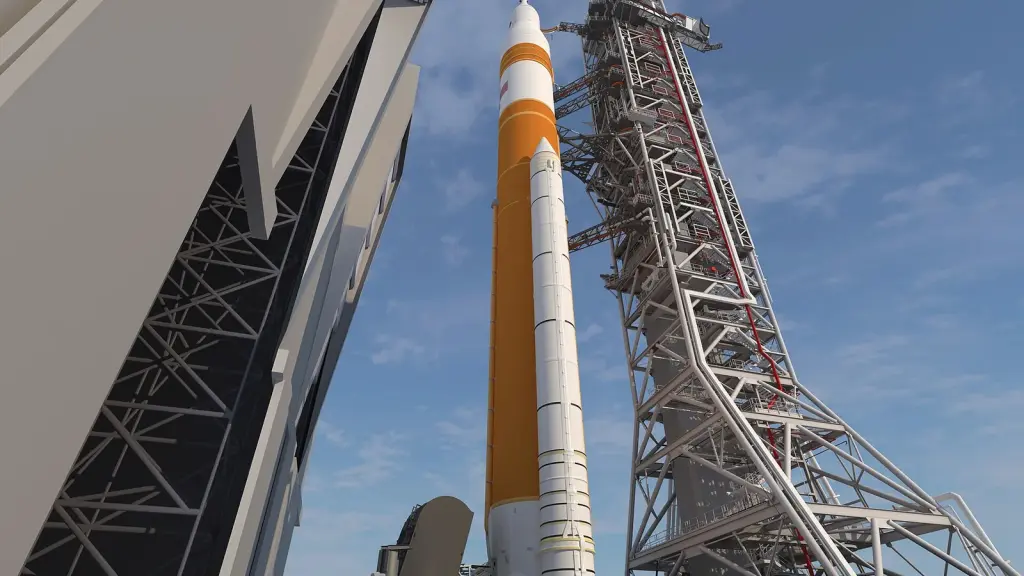
The launch you see on TV is the end of a long chain, and a weak link anywhere can scrub a mission. Kennedy’s ground systems team looks after the giant Vehicle Assembly Building, where the rocket is stacked upright; the Launch Control Center and its firing rooms; the crawler-transporters that haul a rocket to the pad; the mobile launcher it stands on; and Launch Complex 39B, the pad rebuilt for Artemis. Charlie Blackwell-Thompson, NASA’s first female launch director, leads the countdown itself.
The scale is hard to picture. The SLS that flew in April stands 322 feet tall and produced about 8.8 million pounds of thrust at liftoff, roughly 15% more than the Saturn V that carried Apollo crews. Every bolt, valve and cable in that machine passed through ground teams like Mjoen’s first.
For ordinary viewers, that work is the difference between a launch that happens on the day it’s announced and one that slips for weeks. It also connects to things that touch daily life. Researchers in Taiwan have since reported that the Artemis II launch and Orion’s later engine burns left large disturbances in the ionosphere, the upper layer of the atmosphere that GPS signals pass through, big enough that they could have affected GPS accuracy. That study has not yet been peer reviewed.
04
What Artemis II proved, and what comes next
The rocket Mjoen helped prepare carried NASA astronauts Reid Wiseman, Victor Glover and Christina Koch, plus Canadian Space Agency astronaut Jeremy Hansen, on a 10-day trip around the Moon. It was the first time people had flown near the Moon in more than 50 years. The crew traveled 252,756 miles from Earth, beating the distance record set on Apollo 13 in 1970, and passed about 4,067 miles above the lunar surface. Hansen became the first Canadian picked for a Moon mission, Koch the first woman and Glover the first Black man.
Artemis III is next, now planned for late 2027. It won’t land. Instead, a new crew (NASA’s Randy Bresnik, Andre Douglas and Frank Rubio, with Luca Parmitano of the European Space Agency) will launch on SLS and Orion into Earth orbit and dock with lunar landers from Blue Origin and SpaceX. A crewed Moon landing could follow as early as 2028.
That means more stacking campaigns at Kennedy, and more of the planning work Mjoen does.
Asked what she would tell her younger self, Mjoen said she used to believe every decision had to be perfect. She now sees each job, even ones that seemed unrelated at the time, as preparation for the next. Her advice is to stay curious, work hard and build relationships.
She says the best part of the work is the people: a large team of skilled colleagues pulling toward one goal, and knowing their combined effort shows up in a mission’s success. Looking back at the first Apollo landing, she said it showed what people can do together, and that Artemis is building that kind of moment for a whole new generation, this time with the aim of staying.
06
Quick answers
Who is Allison Mjoen?
She is an operations manager in NASA’s Exploration Ground Systems program at Kennedy Space Center, where she plans and oversees the ground processing of Artemis boosters and Orion spacecraft.
What does Exploration Ground Systems do?
It runs Kennedy’s launch infrastructure for SLS and Orion, including the Vehicle Assembly Building, the firing rooms, the crawler-transporters, the mobile launcher and Launch Complex 39B.
When is the next Artemis launch?
NASA is working toward Artemis III in late 2027, an Earth-orbit mission to test docking with commercial lunar landers before a possible crewed landing as early as 2028.
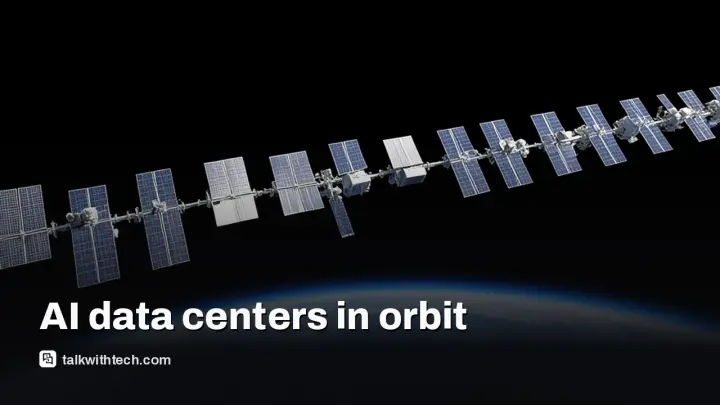
SpaceX now has US permission to fill orbit with flying AI computers. Here is how Starmind would work, the deadlines it must hit, and why astronomers are upset.
The FDA cleared Neuralink's first late-stage brain implant study, for people with ALS. It is not a green light to sell the device, and big questions remain.