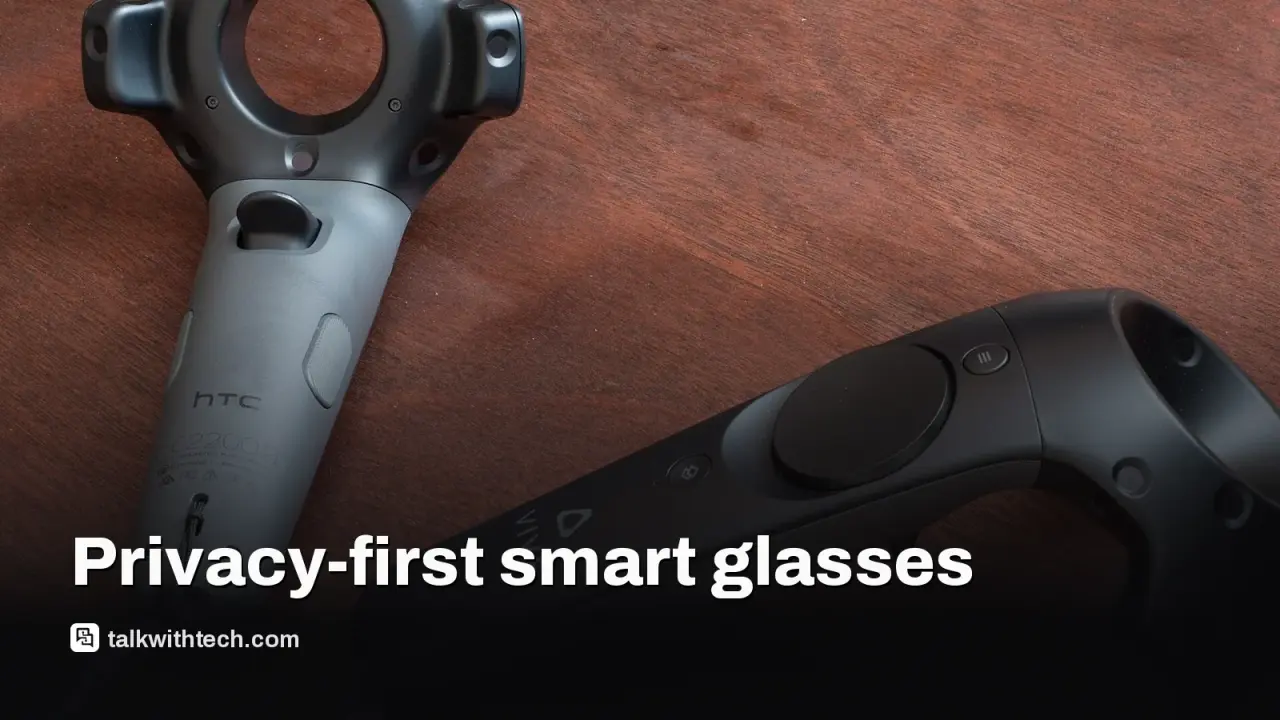
HTC released the Vive Eagle smart glasses in the US for $499, emphasizing privacy controls and de-identified AI features.
The glasses include cameras, speakers, and an on-device AI assistant that can run without logging personal data to services.
Footage is encrypted and stored on the glasses, with manual transfer to a device; a visible indicator light helps signal when recording.
A Power Boost clip-on battery is available for $49, extending use without charging on the fly.
Quick read · 2 min
HTC’s Vive Eagle smart glasses hit the US market at $499 with a privacy-first pitch. The glasses include cameras, speakers, and an on-device AI assistant that can work without tying your data to cloud services. Footage stays encrypted on the glasses and must be transferred by you, not automatically sent to the cloud. A visible recording indicator helps you see when video is being captured. There’s also a $49 clip-on Power Boost battery for longer outings.
HTC says the AI can run with OpenAI’s ChatGPT or Google’s Gemini while keeping your information de-identified. The company stresses it’s not a social media company and aims to protect both users and bystanders. For shoppers, the big question is whether you value AI help on-device and clear privacy signals over cloud-based personalization. What happens next depends on how well HTC convinces people this is truly different from other smart glasses.
Price: $499 in the US
On-device AI with de-identified data
Footage encrypted, manual transfer only
HTC is trying to set a privacy-friendly bar for camera-equipped wearables with its new Vive Eagle smart glasses. They’re priced at $499 in the United States and come with built-in cameras, speakers, and an on-device AI assistant that can answer questions and help with tasks. The twist? HTC is leaning into privacy from the start, a move aimed at quieting the privacy concerns that have shadowed Meta’s competing smart glasses.
HTC emphasizes that the glasses don’t require tying your data to a login for basic functions. The company says Vive AI can work with OpenAI’s ChatGPT or Google’s Gemini, but it operates in a way that keeps users’ personal information de-identified and not retained for personalizing future interactions. In practice, that means you can get AI help without the system scraping your emails or messages to tailor responses.
Footage captured by the glasses is encrypted and stored on the device itself. Importing photos or videos to your phone requires a manual transfer, and there’s a bright indicator light near the cameras to show when recording is happening. If someone covers the light or asks you to stop, the camera’s indicator and software respond accordingly. HTC has previously faced questions about camera privacy, and the company says it’s built protections into the hardware and software to avoid the privacy missteps other glasses have faced.
The practical tradeoffs are clear. The Eagle glasses offer microphone and camera features that creators will want, but privacy-minded users can opt to avoid cloud-based personalization that some AI services offer by default. HTC’s Dan McDowell frames the company’s stance this way: “We’re not a social media company. There’s no benefit to me to have any of your info. We don’t train our AI model or any third-party AI models with any of the information that is used on the glasses.”
Battery life is a factor for real-world use. In continuous music playback, HTC says the glasses last about 4.5 hours, and they can stay on standby for up to 36 hours. For longer outings, HTC sells a companion Power Boost clip-on battery for $49 that attaches to the frame and adds noticeable heft without becoming unwieldy.
HTC’s privacy-centric approach mirrors a broader industry push toward opt-out protections and visible indicators, rather than hidden data collection. For shoppers, the question isn’t just what the glasses do, but how they do it and what data stays on-device. The Vive Eagle is available now in the US, with other regions to follow as HTC rolls out its privacy-friendly narrative alongside the hardware.
So what’s next? If you’re curious about camera wearables, the Eagle sets a template: protect the user and bystander privacy, offer an on-device AI experience, and keep data handling transparent and local whenever possible. Whether that approach resonates with everyday users will depend on how convincingly the brand can separate itself from the more controversial lines of sight in the glasses market.
External attackers used stolen credentials to reach Meta's GitHub repos, lifting code and personal data for roughly 1,500 individuals, mostly US employees.
3 min read
We use cookies to understand how readers use Talk With Tech, so we can make it better. Is that OK? Privacy policy
The Daily Brief
Today's biggest tech stories, in 5 minutes
Every morning, the news that matters from AI, phones, apps and the people shaping tech. Explained in plain English. Free.
One email a day. No spam, unsubscribe anytime. Privacy policy