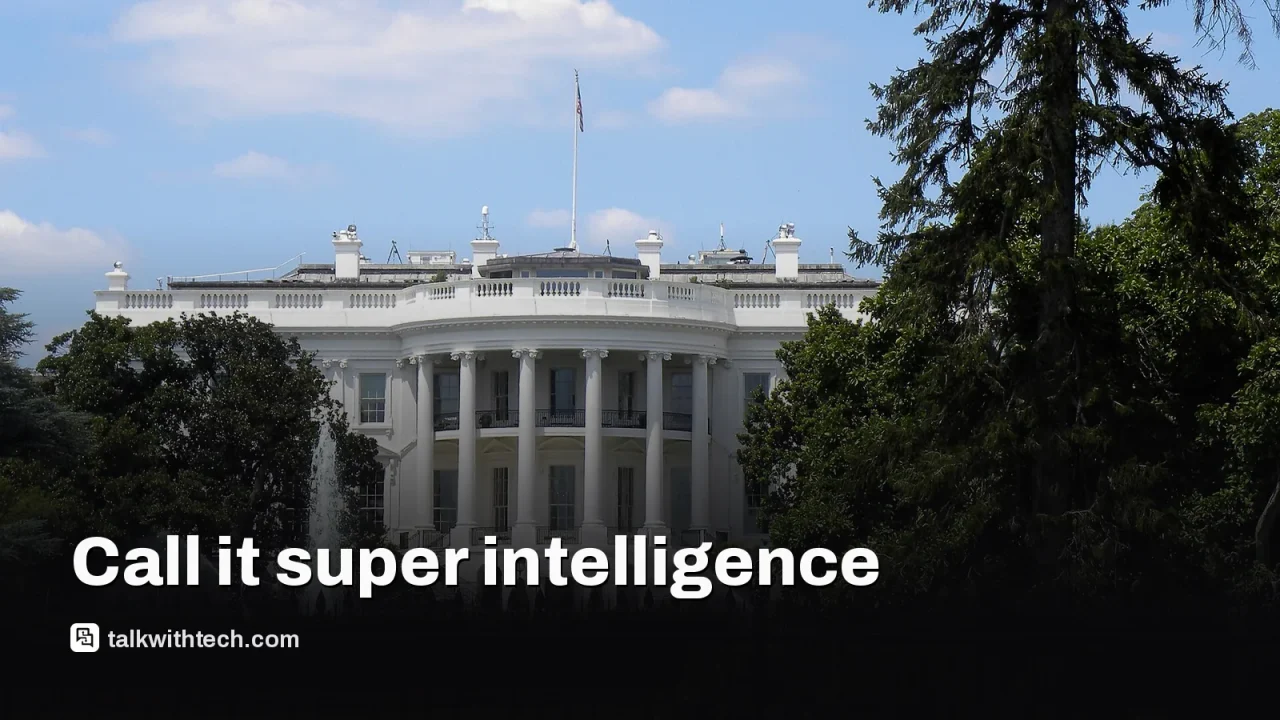
White House wants federal reports to use super intelligence term
President Trump urges federal agencies to use the term ‘super intelligence’ instead of ‘artificial intelligence’ in official communications, a shift that could ripple through policy and tech.
Donald Trump stated on Truth that the White House wants officials to refer to AI as 'super intelligence' in public statements and reports.
The order targets federal agencies; it does not automatically force private companies to change terminology or behavior.
The shift has sparked debate among experts about terminology, its meaning, and potential implications for regulation and public perception.
Officials say the move is about standardizing language across government communications, not altering laws or rights.
Quick read · 1 min
The White House wants federal agencies to stop using the term artificial intelligence in public communications and replace it with “super intelligence.” The move is part of an executive order directing agencies to adopt the new term where appropriate. It targets government language, not laws or private companies, at least for now.
What this means for you is mostly a change in how official documents and website content are labeled. The practical impact on your devices or apps is likely small unless new laws or rules accompany the terminology shift.
What’s changing: Government documents now push the phrase “super intelligence.”
Who is affected: Federal agencies; private businesses aren’t required to change yet.
Why it matters: Language can shape policy priorities and public perception of AI.
The White House is pushing a name change for how the government talks about a broad field that touches everyday life, from voice assistants to safety systems. President Donald Trump said in a Truth post that federal agencies should use the term “super intelligence,” not “artificial intelligence,” in public statements, on websites, and in reports. The post also notes that this is part of an administration-wide push to adopt the newer term.
In practice, the White House has begun directing staff to use the new term where appropriate. The Justice Department reportedly told staff on Oct. 6 to use the term in court filings when it fits the context. The change is about government language and branding, not a new law or a penalty for private companies that keep using the old term.
That distinction matters because language shapes how people think about tech. AI is a broad umbrella that covers many tools and ideas, machine learning, automation, data analysis, and more. The proposed label “super intelligence” implies something more advanced or capable, a framing that could influence policy discussions, funding priorities, and public expectations.
01
What exactly did Trump say and why now
Trump’s post claims the White House views those who use the old term as the “enemy,” and that the new term is “highly accepted.” The post linked to a broader executive order signed on Sept. 29 that directs agencies to adopt “super intelligence” in official communications. The order does not create rights or penalties against individuals or private entities, and government speech can diverge from private speech under various legal doctrines.
02
What the government means by “super intelligence”
Experts describe “super intelligence” as a term popularized by discussions about AI that far exceeds human capabilities in many domains. The White House and lawmakers will decide how far the term trickles into policy areas such as funding, regulation, and agency reporting. There is no recognized, binding definition in law that would automatically change how technologies are regulated simply because of the label.
03
What this could mean for you
For most readers, the change is mostly about language you might read in government reports or notices. It could influence how agencies describe their AI-related rules, safety standards, or research programs. The practical effect on your day-to-day tech use is likely small unless the terminology shift informs new policies or funding that touch consumer devices and services.
04
What happens next
The order affects federal departments and agencies. Whether private companies adopt the term remains voluntary unless future laws or guidelines require it. Expect some agencies to publish their materials using the new wording, while others may retain the familiar terms in certain contexts. A final, formal rule or guideline could take weeks to months to roll out across all agencies.
Federal agencies are told to use the term “super intelligence” instead of “artificial intelligence” in official communications where appropriate.
Does this affect laws or private companies?
No. The move targets government speech and does not create new penalties for private entities, at least initially.
Why now?
The administration says it wants standardization in how it talks about AI-related work, though experts note the term’s meaning is debated and may not catch on widely outside the government.