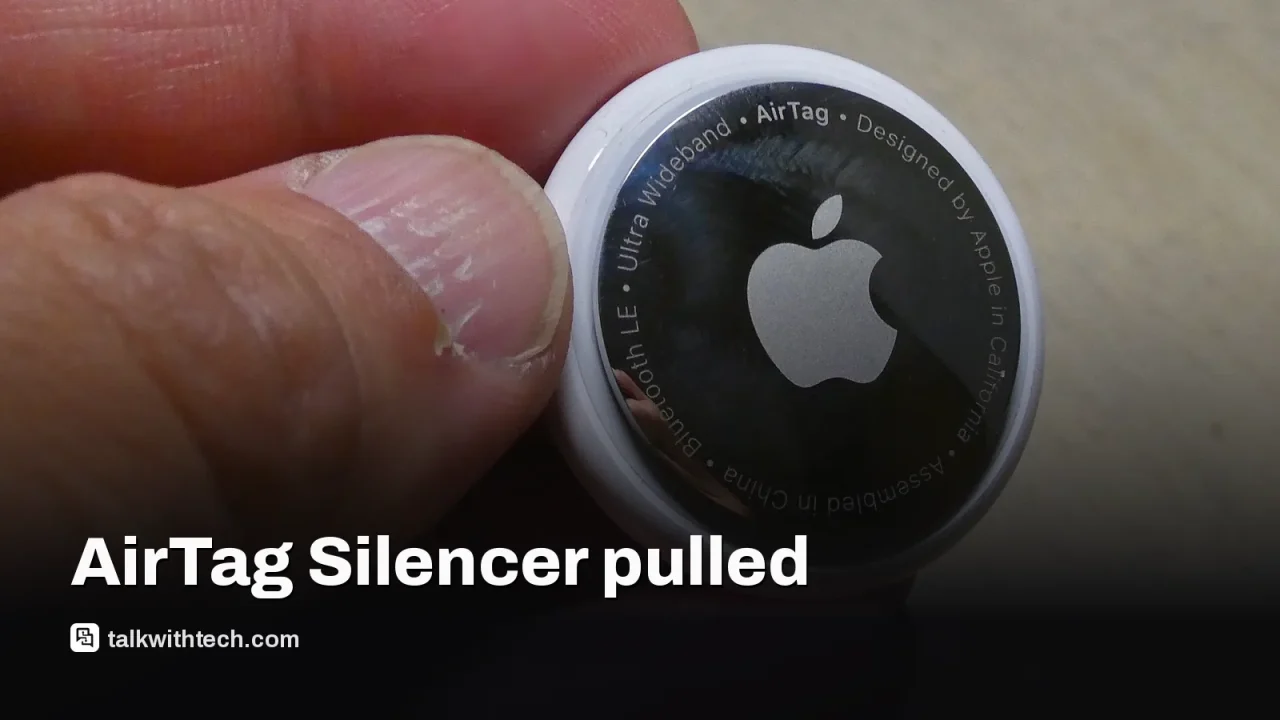
Elevation Lab introduced a device called the Silencer meant to disable AirTag speakers, potentially quieting alerts on valuables.
Critics argued such a tool could be misused by stalkers to avoid detection, undermining built-in safety features.
The company has stopped selling the Silencer and intends to use its patent to block similar accessories.
Apple’s safety safeguards for AirTag remain in place, stressing audible alerts as a privacy measure.
Quick read · 1 min
Elevation Lab has pulled its AirTag Silencer after concerns it could help stalkers silence AirTag alerts. The Silencer was meant to pierce the AirTag’s speaker, making the tracker harder to hear. Apple has long built in privacy safeguards, including louder speakers on newer AirTags and notifications when an unknown AirTag is near you. Elevation Lab says it will use its patent to block similar products. For users, the main message is to rely on AirTag’s official safety features and keep devices updated.
What to do now:
Check your iPhone for AirTag safety updates
Keep AirTag alerts enabled in Settings
Be cautious of third‑party accessories that alter tracker features
Elevation Lab has stopped selling its AirTag Silencer after pushback over safety concerns. The Silencer was designed to pierce the AirTag’s speaker, effectively silencing the tracker’s alarm. Supporters argued it could help thieves hide a tracker on valuable items, while critics warned it could also make stalking harder to detect.
AirTag, first released in 2021, has received multiple safety updates over the years. Apple has added louder speakers in newer models and expanded anti-stalking protections, including notifications when unknown AirTags travel with a person. Critics say removing or quieting the alarm could sidestep these safeguards.
Elevation Lab said it heard objections from customers and observers and that it will discontinue the product. The company plans to repurpose its patent to block others from producing a similar accessory in the future.
01
What exactly was the Silencer supposed to do?
The Silencer was designed to pierce the AirTag’s speaker by placing a small device over it and using a pin mechanism. This would disable the audible alert, potentially reducing the chance a user would hear a tracker nearby.
02
Why this drew criticism
Many safety advocates argued that silencing AirTag alerts defeats a key privacy feature. Audible alerts help people spot unwanted trackers, and current safeguards push notifications to your phone when an unknown AirTag is nearby. Critics noted that removing that alert could increase misuse risk.
03
What this means for users right now
AirTag users can continue to rely on the built‑in safety tools and alerts. The Silencer is no longer on sale, and Elevation Lab intends to block similar devices via its patent. For most people, the best practice remains to use AirTags as designed and keep your devices updated to access the latest protections.
04
What happens next
The move signals a broader concern about third‑party tools that try to alter privacy protections on tracking devices. If you own an AirTag, stay current with iPhone safety features and keep notifications enabled to maximize protection against unwanted tracking.
Tracking devices can help you recover items, but they also raise privacy questions when tools undermine safety features. This episode shows how even small accessories can affect personal security. The practical takeaway is to avoid tools that silence warnings and to keep devices updated for the latest protections.
06
Quick answers
What happened to the Elevation Lab Silencer?
Elevation Lab says it has stopped selling the Silencer and will use its patent to block similar products in the future.
Should I stop using AirTags?
No. Continue using AirTags with the built‑in safety features and alerts. Keep your iPhone updated to access the latest protections.
Anthropic researchers warn that small AI models could someday copy themselves across everyday devices, creating a distributed workload without data centers.
Pluto Security just closed a $42 million funding round as it pitches a new class of security tools that monitor and control how employees use AI inside business networks.
3 min read
We use cookies to understand how readers use Talk With Tech, so we can make it better. Is that OK? Privacy policy
The Daily Brief
Today's biggest tech stories, in 5 minutes
Every morning, the news that matters from AI, phones, apps and the people shaping tech. Explained in plain English. Free.
One email a day. No spam, unsubscribe anytime. Privacy policy