Google Play will let users run vibe-coded Android apps on their own devices via a new private 'Your personal library' on the Play Store.
Apps created with Google AI Studio can be private, not searchable, and shared only with a select group before possibly moving to the public Play Store.
New features include Game Finder, Sprints, and Ask Play enhancements to improve discovery and social gaming experiences.
Quick read · 1 min
Google Play is adding a new private path for vibe-coded Android apps built with Google AI Studio. You can launch these private apps on your own devices via a new Your personal library and keep them off the public catalog.
These apps can be shared with a small group and may later be published publicly after safety checks. Alongside private apps, Google is boosting game discovery with Game Finder and social features like 48-hour Sprints and 30-second gameplay clips.
What this means for you is easier, private experimentation with AI-generated apps for personal tasks, without immediately exposing your ideas to the public Play Store. Availability is rolling out in the US and other markets, with broader access to follow.
The Play Store is getting a major AI-driven refresh. Google today announced that vibe-coded Android apps, built with Google AI Studio, can be launched and run on users’ own devices without first going public in the Play Store. A new “Your personal library” section will give people access to these private apps across multiple devices, and the apps will remain private and separate from the public catalog.
In practical terms, this means you can generate an app with prompts to Gemini and then run it on your Android phone, tablet, or compatible device without publishing it for everyone to see. The apps are kept private and can be shared only with a small group of trusted people. If the creator eventually wants broader distribution, there will be a path to move the project into the standard Play Store after a security review.
01
Which apps stay private and how you share them
Initially, your vibe-coded apps live only in your personal library on the Play Store and aren’t searchable by others. Google says they’ll stay private and separate from the public catalog. Over time, you’ll be able to share apps with friends or family through a controlled network. If that network grows and the app proves stable and safe, there will be a way to graduate the app to a public listing after a trust and safety review.
Alongside private apps, Google is rolling out features to improve how you discover and manage games. Game Finder analyzes your play style and preferences to suggest titles, while you can build Game Playlists to curate a set of games for yourself or others. The Play Store’s social tools are also getting a boost with Sprints, 48-hour in-game challenges that pair players by skill, and a 30-second gameplay clip feature in the Sidekick overlay.
03
How this affects everyday users
For everyday Android users, the change lowers the barrier to building and testing apps tailored to personal needs or small groups. You can experiment with AI-generated apps for tasks like personal productivity, study aids, or hobby projects without exposing them to the public store. The private pathway also means you don’t have to share every prototype with the world while you refine it.
04
What happens next and what you can do now
Google says the private vibe-coded app feature is rolling out in the US and select markets, with broader availability to come. If you’re curious, you can start by exploring App Studio prompts to generate a basic app and see how it behaves on your own device. Monitor for updates on when sharing options widen and when the option to publish to the public Play Store becomes available for your project.
They’re private to your account and not searchable in the public Play Store; you can share with a limited group and move to public publishing later if you pass safety checks.
Can I publish a vibe-coded app to everyone?
Yes, there will be a path to graduate a private app to the Google Play Store after a trust and safety review.
What’s new besides private apps?
New discovery tools like Game Finder, social features such as Sprints, and a 30-second gameplay clip feature for sharing are part of the broader Play Store refresh.
Apple explains HomeView will support some third‑party audio and video apps from your iPhone, but details are still murky and depend on CarPlay compatibility.
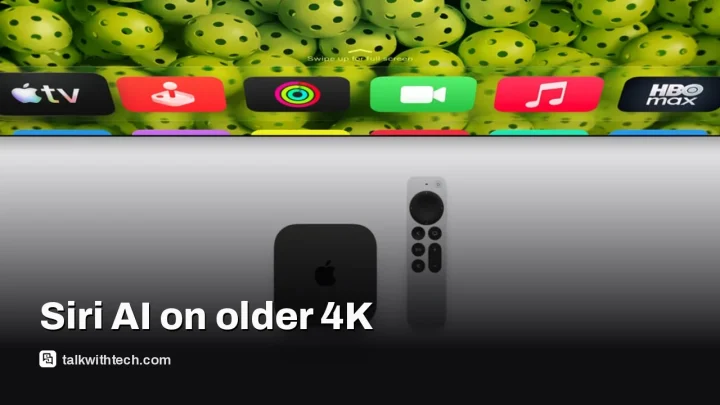
Apple says Siri AI will reach select older Apple TV 4K models through tvOS 27.2, letting more homes try the hands-free assistant without buying a new box.
4 min read
We use cookies to understand how readers use Talk With Tech, so we can make it better. Is that OK? Privacy policy
The Daily Brief
Today's biggest tech stories, in 5 minutes
Every morning, the news that matters from AI, phones, apps and the people shaping tech. Explained in plain English. Free.
One email a day. No spam, unsubscribe anytime. Privacy policy