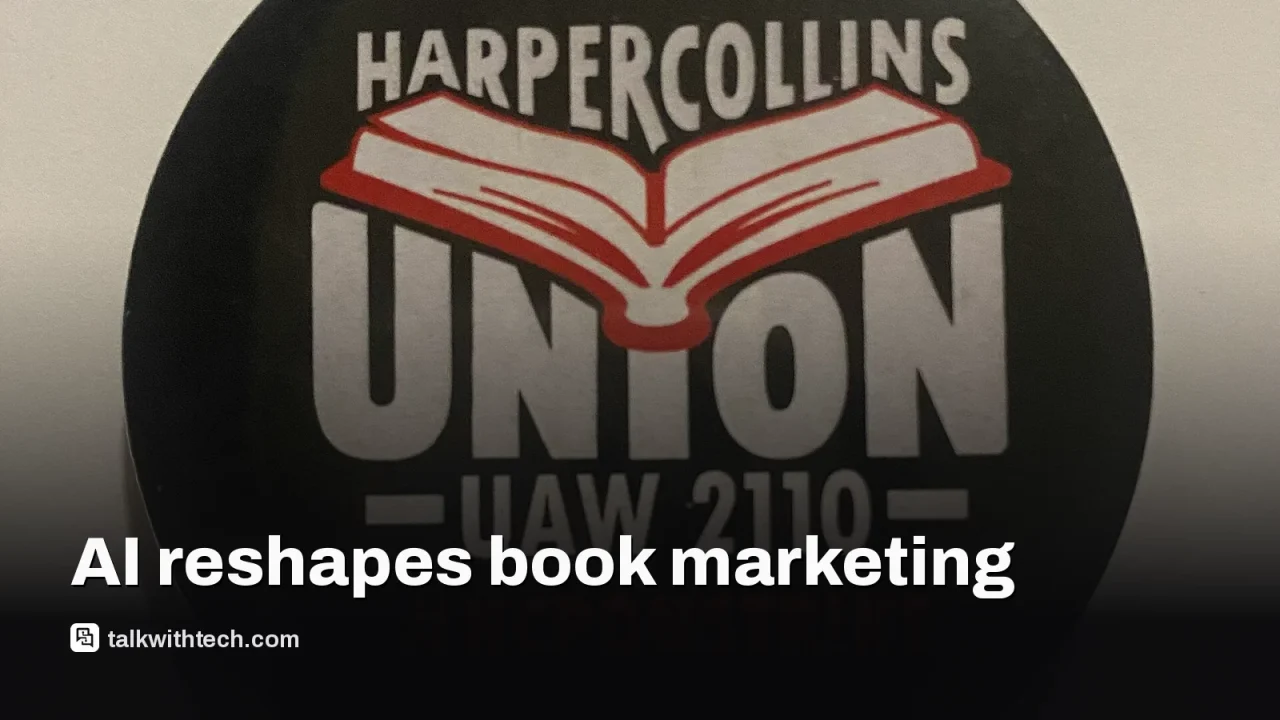
Big US book publishers are quietly integrating AI tools into marketing, cover design, and publicity work without broad public disclosure or author consent.
Staff across several imprints report AI adoption ramped up by executives, with AI Champions and enterprise licenses guiding usage.
Editors and publicists say AI use is common for creating publicity copy, back-cover text, and promotional videos, raising ethical and legal questions.
The trend highlights a broader push to automate routine publishing tasks, while workers stress the need for clear policies and human oversight.
Quick read · 1 min
Three major US book publishers are quietly using AI tools for marketing, publicity, and design work. Employees say AI licenses and “AI Champions” guide how tools are used, but authors and the public aren’t always told when AI contributes to materials about their books. This could speed up campaigns and reduce costs, but raises concerns about consent and transparency. Look for upcoming policies that clarify when AI is used and how authors are informed.
In the near term, readers may see more AI-generated marketing content and faster campaigns. Authors should watch for notices from publishers about AI usage in marketing materials.
What’s changing: AI tools integrated into publicity and marketing workflows
What to watch for: disclosure practices and policy updates
What’s next: formal governance to guide AI use
Three of the biggest US book publishers, HarperCollins, Simon & Schuster, and Hachette, have quietly started using AI tools in their day-to-day publishing work. From drafting publicity copy to generating marketing materials and even helping with cover art, employees say AI is now part of the workflow in multiple divisions. Yet there, public disclosures and author consent aren’t always front and center, creating tension inside companies that for years have guarded editorial secrets and decision-making processes.
Staff who spoke to us described a shift that happened behind the scenes. Executives reportedly bought licenses for AI tools and pushed staff to experiment with them in monthly brainstorming sessions. Some workers say AI is being treated as a business efficiency play rather than a creative partner, with roles or responsibilities redefined to accommodate automation. In at least one instance, internal communications highlighted AI’s environmental footprint as a minor concern within the broader digital workload.
Publishers say AI can handle repetitive, high-volume tasks so human teams can focus on more nuanced work. The practical upshot is faster turnaround on marketing materials, quicker outreach to booksellers and media, and a more scalable way to test different copy across campaigns. Critics caution that relying too heavily on AI for creative tasks, like publicity pitches or cover design, could diminish authors’ voices and blur accountability when errors or ethical questions arise.
01
Which parts of publishing are using AI?
People involved in publicity, marketing, and front-line outreach describe AI as a tool for drafting emails, publicity blurbs, and cover-ready copy. It’s also being used to generate marketing videos and other promotional assets. The aim, staff say, is to free up time for human teams to focus on relationship-building with authors, media, and booksellers, rather than replace them entirely.
Staff at several imprints express unease about how AI is rolled out. They point to a lack of clear governance, questions about whether AI-created work is appropriately vetted, and whether authors are informed when AI contributes to marketing or cover design. Some workers worry about environmental and legal risks tied to AI tools, especially around copyright and the integrity of publicity materials. The push to adopt AI is not universally embraced, and some editors and publicists say changes are being made without broad consultation.
03
What this means for readers and authors
For readers, the shift could speed up how quickly books are marketed and reach audiences with more tailored pitches. For authors, it raises questions about consent and transparency. If AI already helps write back-cover copy or craft a publicity email, authors might want more visibility into how their work is represented in marketing materials. The biggest impact may be on how publishers balance efficiency with the human touch that many readers feel is essential to storytelling.
04
What happens next
Publishers are likely to roll out clearer AI governance and disclosure practices in the coming months. Expect more formal policies about when AI is used and how authors are informed. In the meantime, readers who care about transparency can watch for author notices in book marketing materials and keep an eye out for statements from publishers about AI use in specific titles.
OpenAI released hundreds of AI-generated math results across hundreds of papers, leaving researchers to sort truth from touting and decide what’s actually correct.